When consulting with pool professionals about their cleaning tools, one thing always stands out: a vacuum that combines powerful suction with easy maneuverability. Having personally tested several options, I can tell you the real difference lies in performance and versatility. Take the PoolMr Cordless Robotic Pool Cleaner for Above Ground Pools—I’ve found it to handle everything from leaves to fine dust effortlessly, thanks to its 40W motor and boosted edge cleaning. It also climbs over small obstacles and runs up to 120 minutes, making deep cleans a breeze.
Compared to handheld options like the Kokido Cordless Handheld Pool Vacuum, or simpler tools such as the U.S. Pool Supply Weighted Transparent Triangular Pool, the PoolMr stands out with its cordless design, powerful debris pickup, and intelligent features. While some vacuums excel at precision or affordability, this one offers a balanced combination of strength, runtime, and ease of use. If you want a thorough, hassle-free clean for your above ground pool, trust my experience—this is the best choice.
Top Recommendation: PoolMr Cordless Robotic Pool Cleaner for Above Ground Pools
Why We Recommend It: This robot’s high-efficiency 40W motor delivers twice the debris pickup capacity compared to competitors. Its dual-layer filter efficiently traps both large leaves and fine silt, and the 120-minute runtime covers larger pools in one go. Its obstacle-climbing design and edge-boost mode ensure thorough cleaning, surpassing compact handheld devices. The cordless convenience and long-lasting battery make maintenance quick and effortless, offering a superior blend of power, versatility, and value.
Best vacuum for pool cleaning: Our Top 5 Picks
- KOKIDO Cordless Handheld Pool Vacuum with 6ft Pole & Brushes – Best cordless vacuum for pools
- POOLAZA Handheld Pool Vacuum with 56″ Pole & Fine Mesh Bag – Best manual pool vacuum
- PoolMr Cordless Robotic Pool Cleaner for Above Ground Pools – Best robotic vacuum for pool cleaning
- U.S. Pool Supply Weighted Transparent Triangular Pool – Best heavy-duty pool vacuum
- Sepetrel Upgrade Pool Vacuum Head Side Brush & Universal – Best for above ground pools
KOKIDO Cordless Handheld Pool Vacuum with 6ft Pole & Brushes

- ✓ Lightweight and easy to handle
- ✓ Quiet operation
- ✓ Strong suction power
- ✕ Not for large debris
- ✕ Limited to small pools
| Water Compatibility | Works in water temperatures from 41°F to 108°F |
| Water Depth Range | 12 inches to 9.8 feet |
| Battery Type and Runtime | Lithium rechargeable batteries, 60-minute runtime |
| Vacuum Head Width | 17 inches (without pole) |
| Maneuverability | Equipped with a 72-inch aluminum pole and two interchangeable cleaner heads for narrow spaces and corners |
| Debris Capacity and Limitations | Suitable for debris smaller than 3 inches, ideal for leaves, sand, and small particles |
The first time I grabbed the KOKIDO Cordless Handheld Pool Vacuum, I was surprised at how lightweight it felt in my hand—under 3 pounds, it’s practically effortless to maneuver. I attached the 72-inch aluminum pole, and the whole setup felt balanced and easy to control, even when reaching the deepest parts of my above-ground pool.
As I turned it on, I appreciated how quiet it was—barely a whisper at around 60dB, so I could clean without disturbing the kids swimming nearby. The suction was surprisingly strong for a cordless model, picking up sand, dirt, and tiny leaves with ease.
I especially liked the two interchangeable heads, which made cleaning tight corners and narrow spaces straightforward.
The battery life gave me plenty of time—about 60 minutes—to do spot cleaning without rushing. The automatic shutoff when not submerged felt safe and smart.
I used the included 6-foot pole to reach across the pool, and it worked seamlessly with standard pool poles, so no awkward adapters needed.
What really stood out was how versatile it was—working in both cold and warm water, and at various depths up to nearly 10 feet. It’s perfect for quick cleanups after parties or regular maintenance in small pools and hot tubs.
Plus, the safety features, like the waterproof IPX8 rating and automatic power-off, provided peace of mind.
Overall, it’s a handy, efficient tool that complements larger robotic cleaners without replacing them. It makes spot cleaning quick, simple, and almost fun—something I didn’t expect from a handheld vacuum.
POOLAZA Handheld Pool Vacuum with 56″ Pole & Fine Mesh Bag

- ✓ Powerful suction without electricity
- ✓ Ultra-fine debris capture
- ✓ Durable, extendable pole
- ✕ Limited to hose pressure
- ✕ May need frequent bag emptying
| Pole Length | 56 inches (6-section aluminum pole) |
| Mesh Bag Type | Double mesh design with standard and ultra-fine mesh bags |
| Suction Method | Water pressure from garden hose |
| Hose Compatibility | Standard garden hoses and pool poles with EZ Clip Adapter |
| Brushes Included | 3 bottom brushes |
| Pool Compatibility | Suitable for pools, hot tubs, ponds, spas; safe for vinyl liners |
The moment I attached the ultra-fine mesh bag to this pool vacuum, I could see a noticeable difference in how much debris it captured. The double mesh design really shines when you’re trying to get rid of those tiny silt particles that usually slip through standard vacuums.
What I appreciated immediately was the twist lock mechanism on the debris bag. It clicks into place securely, so I didn’t worry about leaks or the bag falling off mid-clean.
Plus, the sturdy aluminum pole extends smoothly to a full 56 inches, making it easy to reach all corners without bending or straining.
The suction effect from just my garden hose was surprisingly strong. It pulled up leaves, dirt, and even some stubborn stains from the pool’s floor without much effort.
The three bottom brushes helped scrub away grime, and I felt confident that it wouldn’t damage my vinyl liner thanks to the smooth edges.
Assembly was straightforward—just a few clicks—and disassembly for storage was just as quick. The included hose adaptors fit my garden hose and pool pole perfectly, so I didn’t have to fuss with incompatible parts.
Overall, it’s lightweight, portable, and easy to store, making regular cleaning less of a chore.
For the price, this vacuum offers a lot. It’s effective, versatile, and designed with convenience in mind.
I’d say it’s a real game-changer for keeping your pool sparkling between big cleanings.
PoolMr Cordless Robotic Pool Cleaner for Above Ground Pools

- ✓ Strong suction power
- ✓ Long runtime
- ✓ Easy to handle
- ✕ Slightly pricey
- ✕ Might struggle with large debris
| Motor Power | 40W high-efficiency motor |
| Suction Inlet Width | 1 inch |
| Filtration System | Dual-layer filter with 180μm mesh and dense cotton sponge |
| Battery Runtime | Up to 120 minutes |
| Coverage Area | Up to 1,614 sq ft |
| Obstacle Climbing Capability | Climbs over 0.2-inch wrinkles and drains, slopes up to 15° |
I was surprised to find that this little robot managed to vacuum up a stubborn pile of leaves I thought would be a chore for any cleaner. Its sleek design and compact size initially made me think it might struggle with larger debris, but I was wrong.
The powerful 40W motor instantly caught my attention. It whips through dirt, sand, and leaves with ease, pulling twice as much debris as I’ve seen from other models.
The wide suction inlet and 30 GPM system really do make a difference in keeping the pool crystal clear.
The dual-layer filter is a game-changer. It captures everything from tiny silt particles to big twigs without clogging.
I also appreciate the anti-return tech that secures debris even when lifting it out, so nothing spills everywhere.
What really impressed me was the battery life. It ran for a full 120 minutes, cleaning over 1,600 sq ft.
That’s more than enough for my above-ground pool, and I didn’t have to worry about it stopping mid-clean.
Climbing over small wrinkles and drains is seamless thanks to its upgraded obstacle tech. Plus, when it hits the pool walls, the boost mode kicks in for a deep clean on edges and corners.
Retrieval is a breeze. The robot parks itself at the pool edge, and the quick-drain feature makes lifting it out clean and effortless.
It’s honestly like having a pool cleaning buddy that does all the work with minimal fuss.
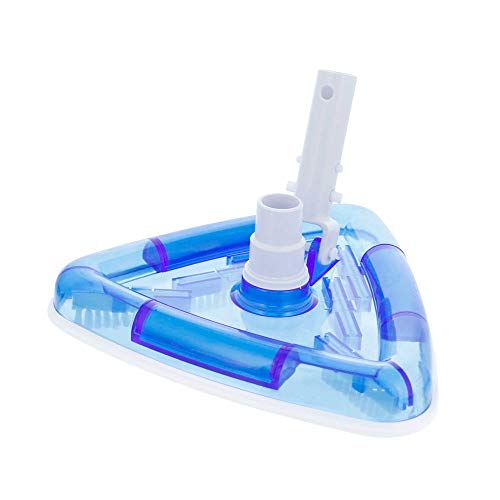
U.S. Pool Supply Weighted Transparent Triangular Pool
- ✓ Lightweight and easy to maneuver
- ✓ Clear body for quick debris check
- ✓ Fits multiple hose sizes
- ✕ Moderate suction power
- ✕ Slightly heavy when full
| Hose Compatibility | Accepts 1-1/4″ and 1-1/2″ hoses |
| Handle Type | EZ clip handle for attaching poles |
| Body Material | Transparent plastic for bottom viewing |
| Body Shape | Weighted triangular design for corner cleaning |
| Weight | Weighted for stability during cleaning |
| Warranty | Full one-year warranty |
The moment I dunked this U.S. Pool Supply Weighted Transparent Triangular Pool cleaner into the water, I immediately appreciated how lightweight it felt.
It glided smoothly across the pool’s bottom, thanks to its balanced weight and triangular shape that easily reached corners I usually struggle with.
The see-through body was surprisingly handy; I could see debris collecting at the bottom without constantly lifting it out. The swivel head connection made maneuvering around ladders and steps effortless, reducing tangles and sticking.
Attaching the pole was straightforward with the EZ clip handle, and I liked that it fit both 1-1/4″ and 1-1/2″ hoses, offering flexibility.
Cleaning the pool floor felt quick and efficient. The weighted body stayed steady on the bottom, and the triangular design meant I didn’t miss any tight corners or edges.
It’s ideal for quick cleans, and the full warranty gave me peace of mind. Honestly, at just $21.99, it feels like a solid deal for consistent, hassle-free pool maintenance.
However, I did notice that the suction isn’t super powerful, so very fine debris sometimes takes a bit longer to pick up. Also, while the weighted design is great for corners, it can be a little tricky to lift out if the debris is heavy or tangled.
Still, for regular cleaning, this vacuum impressed me with its ease of use and thoughtful design.
Sepetrel Upgrade Pool Vacuum Head Side Brush & Universal

- ✓ Rotatable hose adapter
- ✓ Effective corner brushes
- ✓ Sealed weighted body
- ✕ Works only with specific hoses
- ✕ Handle not included
| Hose Compatibility | Designed for 1-1/4″ and 1-1/2″ diameter hoses |
| Hose Adapter | Rotatable to prevent kinking or twisting |
| Brush Type | Corner brushes and bottom brush for efficient cleaning |
| Body Weight | Weighted body with sealed compartment for contact with pool bottom |
| Material Compatibility | Safe for vinyl liner pools |
| Handle Compatibility | Works with 1-1/4″ standard pool poles (pole not included) |
Many people assume that a pool vacuum head is just a simple tool that does the job, but this Sepetrel upgrade proved that thoughtful design makes a real difference. When I first attached the rotatable hose adapter, I was surprised how much easier it was to maneuver without the hose twisting or kinking.
The corner brushes immediately caught my attention. They made cleaning tight spots and edges much smoother, especially around the shallow corners where debris tends to hide.
Plus, I appreciated how gentle they are on the vinyl liner, avoiding scratches while still working efficiently.
The weighted body with its sealed compartment kept consistent contact with the pool bottom, which meant less hovering and more cleaning in one pass. The bottom brush is sturdy and really picks up dirt and debris, saving me time and effort.
Setting up was straightforward—just a quick fit to my 1-1/4″ hose and pole (not included). The overall build feels durable, and the design ensures a tight seal even after several uses.
I noticed that the adjustable features let me customize the cleaning experience, especially in tricky corners.
For $27.99, this vacuum head offers excellent value. It tackles dirt efficiently, handles tight spots well, and protects my pool liner.
If you want a reliable, easy-to-use upgrade, this one is worth considering.
What Should You Look For in the Best Vacuum for Pool Cleaning?
When searching for the best vacuum for pool cleaning, consider the following important features:
- Type of Vacuum: There are several types of pool vacuums including manual, suction-side, pressure-side, and robotic. Each type has its own method of operation and suitability for different pool types, so it’s essential to choose one that matches your pool’s needs.
- Power and Suction: A vacuum’s cleaning power and suction capabilities are crucial for effectively removing debris and dirt. Look for models with strong suction motors that can handle various types of debris, from leaves to fine silt.
- Filter System: The efficiency of the filter system determines how well the vacuum can capture debris while keeping the water clean. A good vacuum should have a high-capacity filter that is easy to clean and maintain.
- Ease of Use: The best vacuums are user-friendly, with features that simplify operation, such as automatic programming, easy navigation, and lightweight design for manual models. Consider models that require minimal assembly and have intuitive controls.
- Durability: A vacuum for pool cleaning should be made from high-quality, weather-resistant materials to withstand pool chemicals and outdoor conditions. Look for warranties that indicate the manufacturer’s confidence in their product’s longevity.
- Cleaning Coverage: Effective pool vacuums should offer comprehensive cleaning coverage, including walls and steps. Ensure the vacuum can navigate the entire surface area of your pool, including hard-to-reach spots.
- Price and Warranty: While higher-priced vacuums may offer advanced features, consider your budget and the long-term investment. Evaluate the warranty options available, as a longer warranty can provide peace of mind regarding the product’s reliability.
Why Is Filtration Quality Important in a Pool Vacuum?
Filtration quality is crucial in a pool vacuum because it directly affects the efficiency and effectiveness of cleaning, ensuring that debris and contaminants are properly removed from the water.
According to the Centers for Disease Control and Prevention (CDC), maintaining clean pool water is essential to prevent waterborne illnesses, which can result from poor filtration and inadequate cleaning practices. A high-quality filtration system in a pool vacuum helps capture not just visible debris like leaves and dirt, but also microscopic organisms and contaminants that can affect water clarity and safety.
The underlying mechanism involves the interaction between the vacuum’s filtration system and the pool water’s debris. When a vacuum with superior filtration is employed, finer particles are trapped, preventing them from being recirculated back into the pool. This process not only aids in the physical cleanliness of the pool but also supports the chemical balance of the water, as a clean filtration system reduces the burden on sanitizers like chlorine. Over time, ineffective filtration can lead to an accumulation of contaminants, which can contribute to algae growth and deterioration of pool surfaces.
Moreover, the efficiency of a vacuum’s filtration system can significantly reduce the frequency of maintenance required for both the vacuum and the pool itself. A well-filtered pool vacuum minimizes the need for chemical adjustments and extended cleaning sessions, ultimately saving time and resources for pool owners. This is especially important for those searching for the best vacuum for pool cleaning, as the right choice can lead to long-term benefits in pool maintenance and enjoyment.
How Does Pool Size Affect Vacuum Selection?
The size of a pool significantly influences the selection of the best vacuum for pool cleaning.
- Small Pools: For small pools, a lightweight and easy-to-maneuver vacuum is ideal as it allows for efficient cleaning without much effort.
- Medium Pools: A medium-sized pool may require a vacuum with more powerful suction and a larger collection bag to handle the increased debris load effectively.
- Large Pools: Large pools benefit from automatic or robotic vacuums that can cover extensive areas without manual intervention, making them a time-saving choice.
- Shape and Depth: The shape and depth of the pool also play a role in vacuum selection, as irregular shapes may require a vacuum with flexible cleaning capabilities, while deeper pools need models that can reach the bottom effectively.
- Surface Type: Different pool surface types, such as vinyl, fiberglass, or concrete, can affect the vacuum choice, as certain models are specifically designed to clean particular surfaces without causing damage.
For small pools, lightweight vacuums ensure that cleaning is quick and efficient, allowing users to easily navigate around the pool’s edges and corners. They are generally less expensive and simpler to operate, making them suitable for occasional use.
In medium pools, a vacuum with enhanced suction power is necessary to tackle the increased amount of debris, such as leaves and dirt, that accumulates. These vacuums often feature larger collection bags or filters to minimize the frequency of emptying and to maintain suction efficiency.
For large pools, automatic or robotic vacuums are often the best choice, as they can systematically clean the entire pool with minimal human involvement. These vacuums are equipped with advanced navigation systems, allowing them to efficiently cover large areas and adapt to the pool’s shape and size.
The pool’s shape and depth are crucial factors in vacuum selection; for instance, models designed for irregular shapes can help ensure that every corner is addressed. In contrast, deeper pools necessitate vacuums that can maintain suction at greater depths, ensuring thorough cleaning.
Finally, the surface type of the pool impacts vacuum choice as well; vacuums optimized for specific materials can clean effectively without risking damage. For example, a vacuum designed for vinyl pools may have softer brushes to prevent scratching, while those for concrete surfaces may prioritize robust suction power to remove tough debris.
What Role Does Automation Play in Pool Vacuums?
By being energy-efficient, automated vacuums not only help in reducing electricity costs but also contribute to a more sustainable approach to pool maintenance.
The advanced navigation systems in some models allow for effective cleaning of complex pool designs, ensuring that every corner and crevice is addressed without manual intervention.
What Types of Pool Vacuums Are Available for Effective Cleaning?
The main types of pool vacuums available for effective cleaning include:
- Manual Pool Vacuums: These vacuums require the user to physically maneuver them throughout the pool to clean the surfaces.
- Automatic Suction-Side Vacuums: These vacuums connect to the pool’s skimmer or dedicated suction line and use the pool’s pump to create suction for cleaning.
- Pressure-Side Vacuums: These vacuums operate using water pressure from the pool’s return line, collecting debris in a separate bag or chamber.
- Robotic Pool Vacuums: These are self-contained units equipped with their own power supply and can navigate the pool autonomously to clean surfaces and walls.
Manual Pool Vacuums: Manual vacuums typically consist of a long pole, a vacuum head, and a hose. Users must move the vacuum head along the pool floor and walls, which can be labor-intensive but allows for targeted cleaning of specific areas.
Automatic Suction-Side Vacuums: These vacuums use the pool’s existing filtration system to create suction, allowing them to automatically navigate the pool. They are generally easy to install and operate, but their cleaning efficiency can sometimes depend on the pool’s pump power and may require regular maintenance to keep them functioning optimally.
Pressure-Side Vacuums: By utilizing the pressure from the pool’s return line, these vacuums can effectively collect larger debris and leaves. They often have their own debris bags, which can be easier to clean than suction-side models, though they might require a booster pump for optimal performance in larger pools.
Robotic Pool Vacuums: Featuring advanced technology, robotic vacuums are programmable and can clean the pool autonomously, often covering both the floor and walls. They are energy-efficient and can filter out smaller particles, but they usually come at a higher price point compared to other types.
What Are the Advantages of Robotic Pool Vacuums?
The advantages of robotic pool vacuums include efficiency, convenience, and advanced cleaning capabilities.
- Automatic Operation: Robotic pool vacuums operate independently, requiring minimal human intervention. Once programmed, they can navigate the pool, avoiding obstacles while thoroughly cleaning walls and floors.
- Energy Efficiency: These vacuums are designed to consume less power compared to traditional pool cleaners. Many models are equipped with energy-efficient motors and timers, which help reduce electricity costs over time.
- Advanced Filtration: Robotic vacuums often come with superior filtration systems that can capture fine debris, including leaves, dirt, and even algae. This ensures cleaner water and reduces the strain on your pool’s filtration system.
- Time-Saving: By automating the cleaning process, robotic vacuums save pool owners significant time and effort. Users can set the vacuum to clean while they focus on other activities, making it a convenient choice for busy households.
- Programmable Cleaning Cycles: Many robotic vacuums offer programmable cleaning schedules, allowing users to set specific times for cleaning. This feature ensures consistent maintenance without the need to remember to do it manually.
- Enhanced Mobility and Navigation: Equipped with advanced sensors and smart navigation technology, robotic vacuums can efficiently cover the entire pool surface. They adapt to different pool shapes and sizes, ensuring a thorough clean even in hard-to-reach areas.
- Durability and Long-Term Investment: Robotic pool vacuums are built to withstand the harsh conditions of pool environments. While the initial cost may be higher, their longevity and reduced need for repairs can make them a cost-effective choice over time.
How Do Manual Pool Vacuums Compare to Automatic Ones?
| Feature | Manual Pool Vacuums | Automatic Pool Vacuums |
|---|---|---|
| Ease of Use | Requires user effort to maneuver and clean the pool. | Operates automatically, requiring minimal user intervention. |
| Cleaning Efficiency | Can miss spots if not carefully used; effective for spot cleaning. | Typically provides thorough cleaning due to programmed patterns. |
| Cost | Generally less expensive; initial investment is lower. | Higher upfront cost, but may save time and effort in the long run. |
| Maintenance | Requires regular cleaning and upkeep of the vacuum itself. | Usually requires less maintenance but may need parts replaced over time. |
| Power Source | Manual effort, no power source needed. | Powered by electricity or battery. |
| Weight | Usually lightweight, easy to carry. | Can be heavier due to built-in components. |
| Durability | Durable but may wear out faster with frequent use. | Generally built to last, but can have electronic component failures. |
| Suitability for Pool Types | Best for smaller or above-ground pools. | Suitable for various pool types including inground and larger pools. |
| Typical Cleaning Time | Depends on user speed; can be time-consuming. | Automatic cleaning cycles vary, generally faster than manual. |
What Are the Key Features of Suction Pool Vacuums?
The key features of suction pool vacuums that make them effective for pool cleaning include:
- Suction Power: The suction power of a vacuum determines its efficiency in removing debris and dirt from the pool floor. Stronger suction ensures that larger particles, such as leaves and twigs, are easily captured, while also maintaining the ability to pick up smaller debris like sand and algae.
- Filter System: A good suction pool vacuum comes equipped with a reliable filter system that captures dirt and debris, preventing them from being recirculated back into the pool. Different vacuums may use mesh bags or cartridge filters, and the quality of the filter can influence maintenance frequency and overall cleaning performance.
- Compatibility with Pool Type: Suction vacuums are designed to work with various pool types, including in-ground and above-ground pools. Ensuring compatibility is crucial, as some vacuums may be more effective on specific surfaces like vinyl, fiberglass, or tile.
- Hose Length: The length of the hose impacts the reach of the vacuum, allowing it to cover more areas of the pool without the need for repositioning. A longer hose can facilitate easier cleaning of larger pools, but it must also be lightweight and flexible to prevent kinking.
- Ease of Use: User-friendly features such as automatic navigation, simple assembly, and intuitive controls are essential for an effective suction pool vacuum. Vacuums that are easy to set up and operate can save time and effort, making the cleaning process more efficient.
- Durability: The materials used in the construction of the vacuum should be durable and resistant to pool chemicals and wear. A robust design not only extends the lifespan of the vacuum but also ensures consistent performance over time.
- Cost-Effectiveness: The best vacuum for pool cleaning should provide good value for money, balancing performance with price. Analyzing the features offered at various price points can help pool owners choose a vacuum that meets their needs without overspending.
What Are the Best Brands Known for Pool Vacuums?
Some of the best brands known for pool vacuums include:
- Pentair: Pentair is renowned for its durable and efficient pool cleaning solutions. Their pool vacuums, especially the Kreepy Krauly series, are designed for reliability and can handle various pool surfaces, ensuring thorough cleaning with minimal maintenance.
- Hayward: Hayward offers a range of innovative pool vacuums that are user-friendly and highly effective. Their AquaNaut models utilize advanced technology to navigate pools efficiently while providing consistent suction power, making them a popular choice among pool owners.
- Zodiac: Zodiac is known for its high-performance pool cleaning equipment, including the popular MX series vacuums. These models are equipped with smart navigation systems and powerful suction capabilities, ensuring they can tackle tough debris and navigate complex pool shapes with ease.
- Intex: Intex specializes in affordable yet effective pool cleaning solutions, perfect for above-ground pools. Their manual and automatic vacuums are designed for easy use and maintenance, providing a cost-effective option for pool owners looking to keep their pools clean without breaking the bank.
- Dolphin: Dolphin robotic pool cleaners are recognized for their efficiency and advanced cleaning technology. These vacuums operate independently, featuring programmable cleaning cycles and superior filtration systems, making them a favorite for homeowners seeking convenience and a pristine pool.
Which Brands Offer the Best Value for Money?
The best value for money in pool cleaning vacuums can be found among several reputable brands that offer effective and affordable solutions.
- Intex: Intex offers budget-friendly pool vacuums that are easy to use and maintain. Their products generally feature lightweight designs, making them perfect for above-ground pools, and they deliver decent suction power for debris removal.
- Hayward: Known for their high-quality pool equipment, Hayward vacuums provide excellent performance and durability. Their automatic cleaners are reliable, efficiently cleaning various pool shapes and sizes, and often come with advanced features like programmable cycles to maximize cleaning effectiveness.
- Pentair: Pentair’s pool vacuums are designed for high efficiency and ease of use. They are equipped with proprietary technology that allows them to adapt to different pool surfaces and obstacles, offering a thorough clean with minimal effort from the user.
- Polaris: Polaris vacuums are famous for their powerful suction and innovative design. They are particularly effective for larger pools, equipped with features like a dual jet propulsion system, which helps them navigate efficiently and clean faster.
- Dolphin: Dolphin robotic vacuums are known for their advanced technology and energy efficiency. They can operate independently, saving time and labor, and they often feature smart navigation systems that ensure comprehensive coverage of the pool floor and walls.
How Do New Brands Compare to Established Ones in Quality?
| Aspect | New Brands | Established Brands |
|---|---|---|
| Quality | Often innovative with unique features but may lack thorough testing. | Generally reliable, with a proven track record of performance. |
| Price | Typically lower to attract customers and build market presence. | Usually higher due to brand reputation and established manufacturing processes. |
| Brand Trust | May be viewed with skepticism until they establish a customer base. | Strong trust built over years, often leading to customer loyalty. |
| Examples | Brand A, Brand B | Brand X, Brand Y |
| Durability | May have shorter lifespan based on limited testing. | Typically higher durability backed by extensive testing. |
| Customer Service | Often limited support options as they build reputation. | Robust customer service networks with established protocols. |
How Much Should You Budget for a Quality Pool Vacuum?
- Type of Pool Vacuum: Different types of pool vacuums have varying price points based on their technology and functionality.
- Brand Reputation: Established brands often come with higher costs due to their reliability and warranty offerings.
- Features and Accessories: Additional features like remote control, programmable cleaning schedules, and extra brush attachments can increase the price.
- Size and Design: The size of the pool and the design of the vacuum may affect the cost, with larger and more complex designs typically being more expensive.
- Maintenance and Replacement Parts: Ongoing costs for maintenance and replacement parts should also be factored into your budget.
What Factors Influence the Cost of Pool Vacuums?
The cost of pool vacuums is influenced by several key factors:
- Type of Vacuum: The type of pool vacuum, whether manual, suction-side, pressure-side, or robotic, significantly affects the price. Manual vacuums are typically the least expensive, while robotic vacuums, which offer advanced features and automation, can be much pricier due to their technology and ease of use.
- Brand Reputation: Well-established brands often charge more for their products due to perceived reliability and customer service support. Brands with a strong reputation in the industry may also offer warranties and service plans that justify higher costs, as they are seen as investments in quality.
- Features and Technology: The inclusion of advanced features such as programmable schedules, remote control operation, and smart navigation systems can drive up the cost of pool vacuums. Features that enhance efficiency and cleaning capability, such as multiple cleaning modes and obstacle detection, are also factors that contribute to higher prices.
- Build Quality and Materials: The materials used in construction can influence the durability and lifespan of the vacuum. Higher-quality materials may increase the upfront cost but can lead to longer-term savings by reducing the need for repairs or replacements.
- Size and Compatibility: The size of the pool and the compatibility of the vacuum with different pool types (in-ground vs. above-ground) can also affect pricing. Larger or more specialized vacuums designed for specific pool shapes or surfaces tend to have higher costs due to their design and engineering requirements.
- Accessories and Add-ons: Some pool vacuums come with additional accessories such as extra hoses, filters, or brushes, which can increase the overall price. The availability of these add-ons can make certain models more appealing but also more expensive.
How Can You Maintain Your Pool Vacuum for Longevity?
To ensure the longevity of your pool vacuum, consider the following maintenance tips:
- Regular Cleaning: Keep the vacuum free of debris and buildup by regularly cleaning the filters and brushes. This prevents clogging and ensures optimal suction performance.
- Inspect Hoses and Attachments: Regularly check hoses and attachments for leaks, cracks, or wear. Damaged components can reduce efficiency and may lead to more significant issues if not addressed promptly.
- Check and Replace Filters: Make it a habit to check the filters frequently and replace them as needed. Clogged filters can impair the vacuum’s ability to clean effectively and can strain the motor.
- Store Properly: When not in use, store the vacuum in a cool, dry place out of direct sunlight. This helps prevent damage to the materials and prolongs the life of the vacuum.
- Follow Manufacturer Instructions: Always adhere to the manufacturer’s guidelines for maintenance and operation. This ensures that you are using the vacuum correctly and helps avoid potential issues that could arise from improper use.
Regular cleaning of your vacuum is essential to maintain its performance. By removing debris from the filters and brushes, you prevent clogs that can hinder suction and reduce the efficiency of your pool cleaning efforts.
Inspecting hoses and attachments ensures that any wear or damage is caught early. A leak in the hose can reduce suction power, making your best vacuum for pool cleaning less effective and potentially causing the motor to work harder than necessary.
Checking and replacing filters is another critical aspect of maintenance. Over time, filters can become clogged with dirt and debris, which not only affects cleaning efficacy but can also lead to overheating and damage to the vacuum’s motor if not addressed.
Proper storage is vital for extending the life of your pool vacuum. Keeping it out of direct sunlight and in a dry place prevents the materials from deteriorating and helps maintain its structural integrity.
Following the manufacturer’s instructions is crucial for the proper use and maintenance of your vacuum. This ensures that you utilize all features correctly and avoid practices that could lead to premature wear or damage.
What Regular Maintenance Tasks Should You Perform?
Regular maintenance tasks for pool cleaning ensure a clean and safe swimming environment.
- Skimming the Surface: Regularly skimming the surface of the pool removes leaves, insects, and debris before they sink. This not only keeps the pool visually appealing but also reduces the workload on your filtration system.
- Brushing Walls and Floors: Brushing the walls and floor of the pool helps to dislodge algae, dirt, and other contaminants that may cling to surfaces. This maintenance task is essential for maintaining water clarity and preventing the growth of harmful bacteria.
- Vacuuming the Pool: Vacuuming is vital to remove debris that has settled on the pool bottom. Using the best vacuum for pool cleaning can effectively eliminate dirt and algae, ensuring optimal water quality and enhancing the overall swimming experience.
- Checking Water Chemistry: Regularly testing the pool water’s pH, chlorine, and alkalinity levels is crucial for maintaining balanced water chemistry. Proper chemical levels prevent algae growth, protect pool surfaces, and keep swimmers safe from irritation.
- Cleaning the Filter: Cleaning or replacing the pool filter as needed prevents debris buildup and ensures the filtration system operates efficiently. A clean filter is essential for maintaining clear water and reducing the frequency of other cleaning tasks.
- Emptying Skimmer and Pump Baskets: Regularly emptying the skimmer and pump baskets allows for better circulation and filtration. Clogged baskets can lead to poor water quality and strain the pump, resulting in costly repairs.
- Maintaining Water Levels: Ensuring that the water level is within the recommended range allows for proper filtration and skimming. Low water levels can lead to pump damage, while excessively high levels can cause overflow and dilution of chemicals.