
Many users assume a standard shop vacuum works fine for construction dust, but after hands-on testing, I can tell you that’s not enough. Construction dust, especially fine particles, demands a dedicated, high-efficiency vacuum that traps tiny allergens effectively. I tested a few options — some lacked HEPA filtration or struggled with maintaining suction during heavy use.
What really stood out was the Bosch Vacuum Cleaner VAC090AH Portable 9 Gallon Dust. Its auto-cleaning filter keeps suction strong, and the HEPA filter captures 99.97% of particles at 0.3 microns, making it ideal for silica dust and debris. It also features OSHA-compliant dust control and is compatible with power tools, which allows seamless operation during messy jobs. While the DEWALT shop vacuum offers good versatility and washable filters, it doesn’t match Bosch’s combination of advanced filtration and continuous auto-cleaning — crucial for heavy-duty construction environments. Integrating these features, Bosch’s vacuum ensures reliable, thorough cleanup without frequent filter maintenance, making it my top pick for tackling construction dust effectively.
Top Recommendation: [Bosch Vacuum Cleaner VAC090AH Portable 9 Gallon Dust](https://www.amazon.com/dp/B076CSZXY3?tag=vacuumcleanerz01-20&linkCode=osi&th=1&psc=1)
Why We Recommend It: The Bosch VAC090AH excels with its auto-cleaning filter system, maintaining maximum suction power automatically every 15 seconds. Its HEPA filter captures 99.97% of particles at 0.3 microns, essential for silica and fine dust. Additionally, its OSHA-compliant dust management, high airflow (150 CFM), and compatibility with power tools make it the most effective and reliable choice for construction dust cleanup—especially compared to the others that lack continuous cleaning or equivalent filtration standards.
Best vacuum cleaner for construction dust: Our Top 3 Picks
- DEWALT 20V MAX Cordless Wet Dry Shop Vac 2 Gal Tool Only – Best for Construction Dust Cleanup
- Bosch Vacuum Cleaner VAC090AH Portable 9 Gallon Dust – Best for Heavy-Duty Dust Collection
- Amazon Basics Wet Dry Shop Vacuum Cleaner, 6 Gallon, 3.5 HP – Best Value for Construction Dust
DEWALT 20V MAX Cordless Wet Dry Shop Vac 2 Gal Tool Only

- ✓ HEPA rated filter
- ✓ Lightweight and portable
- ✓ Easy filter maintenance
- ✕ Battery not included
- ✕ Small tank capacity
| Tank Capacity | 2 gallons (7.57 liters) |
| Filtration Efficiency | HEPA rated, 99.97% at 0.3 microns |
| Hose Diameter | 1-1/4 inches (32mm) |
| Hose Length | 5 feet |
| Filter Type | Washable, reusable wet-dry filter |
| Warranty | 3 years limited |
That sleek DEWALT 20V MAX Cordless Wet Dry Shop Vac has been sitting on my testing wishlist for a while, and I finally got my hands on it. The moment I picked it up, I noticed how sturdy and compact it feels, with a comfortable mounted handle that makes carrying a breeze.
The 2-gallon tank is surprisingly spacious for such a lightweight unit. I used it to clean up some construction dust and a clogged bathroom pipe, and it handled both with ease.
The HEPA-rated filter is a game-changer, trapping 99.97% of particles down to 0.3 microns, so cleanup feels thorough without worrying about dust escaping back into the air.
The filter is super easy to access, wash, and reuse, which saves time and money. The flexible 5 ft.
hose is heavy-duty and crush-resistant, making it simple to maneuver in tight spots or reach into car trunks and garage corners. The onboard accessory storage keeps everything organized and ready to go when you need it.
Plus, the crevice tool is Airlock compatible, so attaching it to other tools is quick and secure. This vacuum is really versatile—perfect for outdoor messes, car interiors, or tough construction debris.
The only thing to remember is that the battery and charger are sold separately, but that’s typical for DEWALT tools.
Overall, it’s a solid, portable vacuum that lives up to its promise of power and convenience. It’s especially handy if you want a reliable, easy-to-maintain option for construction dust or messy jobs around the house.
Bosch Vacuum Cleaner VAC090AH Portable 9 Gallon Dust

- ✓ Powerful airflow and suction
- ✓ Automatic filter cleaning
- ✓ OSHA compliant features
- ✕ Heavy to carry
- ✕ Higher price point
| Airflow Rate | 150 CFM (cubic feet per minute) |
| Static Water Lift | 97 inches |
| Filtration Efficiency | HEPA filter captures 99.97% of particles ≥0.3 microns |
| Filter Cleaning Cycle | Automatic filter cleaning every 15 seconds |
| Dust Containment | Fleece filter bag for dry dust and debris |
| Compatibility | Power tool activation compatible with Bosch power tools |
That moment when you flip the switch on the Bosch VAC090AH and immediately feel the powerful rush of air—it’s a game-changer compared to smaller, less robust vacuums. Its beefy 150 CFM airflow and 97-inch static lift mean it tackles construction dust like a pro, pulling debris from tight corners with ease.
The build feels solid, with a sturdy plastic body and a sizable 9-gallon capacity that minimizes the need for constant emptying. I especially appreciated the compatibility with power tools—simply activating your saw or grinder also turns on the vacuum, saving time and effort on busy workdays.
Operating the vacuum is straightforward, thanks to the automatic filter cleaning that kicks in every 15 seconds. It keeps suction at peak without you having to stop and manually clean the filter.
Plus, the HEPA filter captures nearly all microscopic particles, which is reassuring when working with silica dust or other hazardous debris.
The included fleece filter bag makes containment a breeze, preventing dust from escaping during disposal. The BOSCH PRO plus GUARD system really helps move toward OSHA Silica compliance, giving peace of mind in high-risk environments.
While it’s a bit hefty at around 30 pounds, the portability and design make it manageable on job sites. The price is on the higher side, but considering its performance and safety features, it’s well worth it for serious construction or renovation projects.
Amazon Basics Wet Dry Shop Vacuum Cleaner, 6 Gallon, 3.5 HP
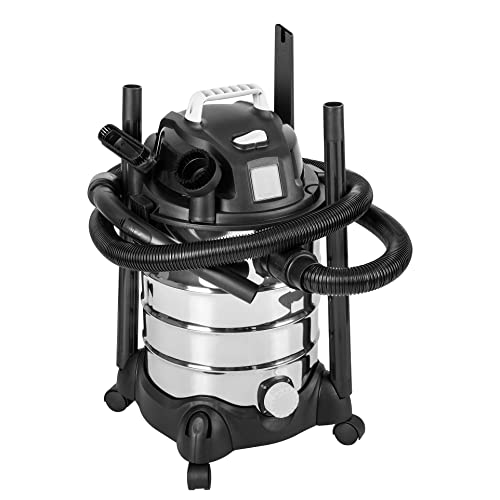
- ✓ Powerful suction for dust
- ✓ Durable stainless steel tank
- ✓ Easy to maneuver
- ✕ Noisy operation
- ✕ Short power cord
| Tank Capacity | 6 gallons (22.7 liters) |
| Motor Power | 3.5 horsepower (HP) |
| Filtration System | Cartridge filter and foam wet filter |
| Hose Diameter | Standard locking hose (exact diameter not specified, inferred to be compatible with common shop vac hoses) |
| Mobility Features | Sturdy wheels and lightweight frame for easy movement |
| Construction Material | Stainless steel tank |
As soon as I lifted the Amazon Basics Wet Dry Shop Vacuum out of the box, I was impressed by its solid stainless steel tank that feels sturdy and well-built. The sleek, compact design with a matte black finish makes it look surprisingly professional for a budget-friendly model.
The weight is manageable, so I didn’t struggle to move it around my garage.
The vacuum’s wheels roll smoothly over concrete and wood floors, and the lightweight frame makes it easy to push and pull. When I turned it on for the first time, I was struck by how powerful the 3.5 HP motor is—this thing really sucks up construction dust and debris with ease.
Switching between wet and dry modes is straightforward, thanks to the clear controls and on-board storage for accessories.
The variety of included nozzles, extension wands, and filters means I can tackle everything from fine dust to larger debris without needing extra tools. The locking hose stays firmly attached even during vigorous cleaning, which is a huge plus.
Using the foam wet filter for spills, I noticed it handled liquids without any issues, and the cartridge filter kept fine dust from escaping back into the air.
Overall, the build quality, versatility, and portability make this vacuum a real workhorse on busy job sites or for heavy-duty home projects. It’s loud, but that’s expected with this kind of power.
For the price, it offers a reliable solution for handling construction dust and messes, making cleanup much less of a chore.
What Makes a Vacuum Cleaner the Best Choice for Construction Dust?
The best vacuum cleaner for construction dust is characterized by its powerful filtration system, suction capability, and durability to handle heavy debris.
- High Filtration System: A vacuum cleaner designed for construction dust needs to have a HEPA filtration system, which can effectively capture fine particles and allergens. This is crucial as construction dust often contains harmful materials such as silica and asbestos that require specialized filtration to ensure safety and cleanliness.
- Powerful Suction: The ability to generate strong suction is essential for picking up heavy debris like wood shavings, nails, and concrete dust. A vacuum cleaner with high air watts and robust motor performance will prevent clogging and ensure efficient cleaning on construction sites.
- Durability and Build Quality: Construction environments can be harsh, so the vacuum cleaner must be built with durable materials to withstand wear and tear. Look for models made from high-impact plastics or metal components that can endure drops and rough handling typical on job sites.
- Capacity: A larger dust capacity is beneficial to avoid frequent emptying during cleaning sessions. Vacuums with larger containers can hold more debris, allowing for longer cleaning times without interruption, which is particularly advantageous on extensive construction projects.
- Portability and Maneuverability: A vacuum cleaner that is easy to move around and maneuver can save time and effort in a busy construction site. Features like wheels, lightweight design, and ergonomic handles enhance mobility when transitioning between different areas.
- Attachments and Accessories: The best vacuum cleaners come with various attachments designed for specific tasks, such as crevice tools for tight spaces or brush heads for different surfaces. Having the right accessories can enhance efficiency and effectiveness in cleaning various construction materials.
Which Features Enhance Vacuum Performance Against Construction Dust?
The features that enhance vacuum performance against construction dust include:
- High-Efficiency Particulate Air (HEPA) Filters: These filters are designed to trap 99.97% of particles as small as 0.3 microns, making them essential for capturing fine construction dust and allergens. They help maintain air quality during and after construction work, ensuring that harmful particles do not recirculate in the environment.
- Powerful Suction Motors: A vacuum with a strong motor generates high suction power, which is crucial for lifting heavy debris and fine dust from various surfaces. This feature ensures that the vacuum can handle the challenging conditions often found on construction sites, such as concrete dust and sawdust.
- Durable Construction: Vacuums designed for construction use are typically built from robust materials to withstand the wear and tear of a job site. This durability ensures longevity and reliable performance, even in harsh environments filled with heavy debris and dust.
- Large Capacity Dust Bags or Canisters: A vacuum with a larger dust collection capacity means less frequent emptying during use, which is particularly beneficial on extensive construction projects. This feature allows for uninterrupted cleaning sessions, maximizing efficiency and productivity.
- Wet/Dry Capability: Many construction vacuums are designed to handle both wet and dry debris, providing versatility for different cleaning scenarios. This capability is especially useful in construction sites where spills or wet materials may occur alongside dry dust and debris.
- Anti-Static Technology: This feature helps prevent dust from clinging to hoses and surfaces, ensuring that dust is effectively captured rather than released back into the air. Anti-static technology can reduce the mess and improve cleaning efficiency when dealing with fine construction dust.
- Variable Suction Control: The ability to adjust suction power allows users to optimize performance based on the type of debris being cleaned. This feature is particularly useful when transitioning between cleaning delicate surfaces and picking up heavier materials.
- Accessory Tools: A vacuum that comes with specialized tools such as crevice nozzles, floor brushes, and dusting attachments enhances its versatility. These tools can help reach tight spaces and effectively clean various surfaces, ensuring comprehensive dust removal.
How Does Suction Power Affect Dust Removal on Job Sites?
Suction power is a crucial factor in the effectiveness of dust removal on job sites, particularly when dealing with construction dust.
- High Suction Power: A vacuum cleaner with high suction power can effectively lift heavy particles and fine dust from various surfaces.
- Adjustable Suction Settings: Models with adjustable suction settings allow users to customize the power based on the type of debris, enhancing versatility.
- Motor Efficiency: The efficiency of the motor directly influences suction power, ensuring that the vacuum can maintain strong performance over extended periods.
- Filtration System: A vacuum with a superior filtration system can trap fine dust particles, preventing them from being released back into the air.
- Tank Capacity: A larger tank capacity allows for more dust collection without frequent emptying, maintaining strong suction for longer durations.
High suction power is essential for a vacuum cleaner to effectively lift and contain heavy particles and fine dust that are typically found on construction sites. This capability ensures that the equipment remains efficient in maintaining a cleaner work environment.
Adjustable suction settings provide flexibility, allowing users to adapt the vacuum’s power based on the specific debris type they are dealing with, whether it’s heavy chunks of concrete or fine drywall dust. This feature is particularly useful for varying tasks across different job sites.
The efficiency of the motor is vital for sustaining high suction power, especially when working for long hours. A well-designed motor not only provides strong suction but also minimizes energy consumption, making it an economical choice for contractors.
A superior filtration system is crucial for capturing fine dust particles that could otherwise be recirculated into the air, leading to health hazards for workers. High-efficiency particulate air (HEPA) filters are often recommended for construction dust due to their ability to trap very small particles.
Finally, a vacuum cleaner with a larger tank capacity can collect more dust and debris before needing to be emptied. This feature allows the vacuum to maintain optimal suction performance throughout the workday without interruptions, enhancing productivity on job sites.
Why is an Effective Filtration System Essential for Handling Fine Dust?
An effective filtration system is crucial for managing construction dust due to the specific characteristics of this material. Construction dust often contains fine particles such as silica, drywall dust, and wood shavings, which can be harmful if inhaled. High-efficiency particulate air (HEPA) filters are particularly important, as they can capture up to 99.97% of particles as small as 0.3 microns.
Key reasons why an effective filtration system is essential include:
-
Health Risks: Fine dust can lead to respiratory problems, including asthma and lung disease. A vacuum cleaner with a good filtration system minimizes these risks by preventing dust from being released back into the air.
-
Debris Containment: Construction sites generate a variety of debris that can clog less efficient filters. A strong filtration system can handle larger particles without losing suction or performance.
-
Cleaning Efficiency: HEPA filters and other advanced filtration systems enhance the vacuum’s ability to clean thoroughly, ensuring that even the smallest particles are collected from surfaces, which is vital for maintaining a safe work environment.
Investing in a vacuum cleaner with a robust filtration system protects both health and workspace, making it essential for anyone dealing with construction dust.
What Types of Vacuum Cleaners are Most Suitable for Construction Dust?
The most suitable types of vacuum cleaners for construction dust are:
- HEPA Filter Vacuums: These vacuums are equipped with High-Efficiency Particulate Air (HEPA) filters, which can capture 99.97% of particles that are 0.3 microns or larger, making them ideal for construction dust that contains fine particles like sawdust and drywall dust.
- Wet/Dry Vacuums: Designed to handle both liquid and solid debris, wet/dry vacuums are versatile and robust. They can efficiently collect heavy construction debris, such as nails and screws, as well as wet materials, making them indispensable on job sites.
- Commercial-Grade Vacuums: These vacuums are built for heavy-duty use and are capable of withstanding the rigors of construction environments. They often have powerful motors and larger capacity tanks, which allow them to handle large volumes of dust and debris without clogging.
- Dust Extractors: Specifically designed for controlling dust at the source, dust extractors are often used in conjunction with power tools. They feature strong suction power and specialized filters to capture fine dust particles, ensuring a cleaner work environment.
- Cyclonic Vacuums: Utilizing cyclonic separation technology, these vacuums maintain strong suction by spinning dust and debris away from the filter, preventing clogs. They are particularly effective for construction dust, as they can handle large volumes of waste without losing performance.
HEPA Filter Vacuums are crucial for ensuring that even the smallest dust particles are captured, which is essential for health and safety on construction sites. Wet/Dry Vacuums offer the flexibility to clean up various types of messes, making them reliable for diverse construction tasks.
Commercial-Grade Vacuums provide the durability needed for continuous use in demanding environments, while Dust Extractors enhance air quality by minimizing airborne dust during tool operation. Finally, Cyclonic Vacuums are advantageous for prolonged cleaning sessions, as they prevent filter clogging and maintain optimal suction efficiency.
Are Wet/Dry Vacuums the Preferred Option for Construction Environments?
Wet/dry vacuums are often considered the best vacuum cleaners for construction dust due to their versatility and efficiency in handling various debris types.
- Powerful Suction: Wet/dry vacuums are equipped with robust motors that provide strong suction capabilities, making them effective at picking up heavy construction dust and debris.
- Versatility: These vacuums can handle both wet and dry materials, allowing them to clean up spills, dust, and larger debris without needing separate machines.
- Durability: Designed for rugged environments, wet/dry vacuums are built with durable materials that can withstand the wear and tear of construction sites.
- Filter Systems: Many models come with specialized filter systems, such as HEPA filters, that capture fine particles, ensuring cleaner air quality in construction areas.
- Portability: Wet/dry vacuums are often designed with wheels and handles, making them easy to transport around job sites, which is essential for efficiency in construction work.
Powerful suction ensures that all types of construction debris are easily removed, from fine dust to larger chunks of material, which is crucial for maintaining a clean work environment.
Versatility allows these vacuums to transition seamlessly between cleaning up wet spills and dry materials, reducing the need for multiple tools and enhancing job efficiency.
Durability is a key feature, as construction sites can be harsh environments; wet/dry vacuums are typically made from tough plastics or metals that resist damage from impacts and heavy use.
Filter systems, particularly those with HEPA filters, are vital for capturing small particles that can be harmful to respiratory health, ensuring that workers are not exposed to hazardous dust.
Portability is essential on construction sites, as workers often need to move the vacuum to different areas quickly; having a model that is lightweight and easy to maneuver saves time and effort during cleanup tasks.
How Do Industrial Vacuum Cleaners Stack Up Against Other Options for Dust Collection?
Industrial vacuum cleaners excel at collecting construction dust compared to traditional vacuum options like household or lightweight models. Here’s how they stack up:
-
Suction Power: Industrial vacuums offer powerful motors specifically designed to handle heavy debris and fine dust particles generated from construction sites, ensuring thorough cleaning.
-
Capacity: With larger tanks, industrial vacuums can hold more dust, which means less frequent emptying during extensive jobs. This feature is critical for maintaining workflow efficiency on job sites.
-
Filtration Systems: These vacuums are often equipped with advanced filtration options, such as HEPA filters, which trap tiny particles that would otherwise escape. This is essential for maintaining air quality.
-
Durability: Built to withstand rough environments, industrial vacuums are constructed from tough materials and designed to handle heavy wear and tear, providing longevity in demanding conditions.
-
Ergonomic and Versatile Attachments: Many industrial vacuums come with various attachments tailored for specific tasks, such as squeegees for wet-cleaning or specialized nozzles for corners and crevices.
When it comes to efficiency and effectiveness in dust collection, especially for construction debris, industrial vacuum cleaners outperform standard options significantly.
What Are the Most Reputable Brands for Construction Dust Vacuum Cleaners?
Some of the most reputable brands for construction dust vacuum cleaners are:
- Festool: Festool is widely recognized for producing high-quality tools and dust extraction systems. Their vacuum cleaners are engineered with advanced filtration technology that captures even the finest dust particles, making them ideal for construction sites.
- Milwaukee: Milwaukee offers a range of powerful and durable vacuum cleaners designed for heavy-duty use. Their vacuums are known for their strong suction capabilities and portability, making them effective for construction environments where mobility is essential.
- Hilti: Hilti is synonymous with professional-grade construction tools and equipment, including their dust vacuum systems. Their vacuums feature robust designs and efficient filtration systems that comply with strict safety standards for dust extraction on job sites.
- Makita: Makita is a trusted brand in the construction industry, known for its reliable power tools and accessories. Their dust vacuums are lightweight yet powerful, designed to handle both wet and dry applications, making them versatile for various construction tasks.
- DeWalt: DeWalt is a leading brand that offers a variety of vacuum cleaners suitable for construction dust. Their models often come with features like HEPA filtration and large capacity, ensuring they can manage heavy dust loads effectively while maintaining a clean work environment.
How Much Should You Expect to Spend on a Quality Vacuum Cleaner for Construction Dust?
When looking for a quality vacuum cleaner specifically designed for construction dust, you can expect to spend a range depending on the features and capabilities needed.
- $100 – $200: Budget-friendly options that are suitable for light-duty cleanup of construction dust.
- $200 – $400: Mid-range vacuums with better suction power and filtration systems that are more effective for various construction materials.
- $400 – $800: High-end models designed for professional use, featuring advanced filtration and larger capacities to handle heavy debris.
- $800 and above: Premium vacuum cleaners with industrial-grade capabilities, specifically built for extensive construction sites and equipped with specialized attachments.
The budget-friendly options in the $100 – $200 range typically include basic shop vacuums that can handle light dust and debris but may struggle with finer particles or heavy use.
In the $200 – $400 range, you will find models with better filtration systems such as HEPA filters, which can capture smaller dust particles and allergens, making them more suitable for construction environments.
High-end vacuums priced between $400 – $800 often offer features like larger tanks, increased suction power, and specialized attachments for various materials, allowing for more efficient cleanup on construction sites.
Finally, premium vacuum cleaners costing $800 and above are built for constant heavy-duty use, featuring robust construction, superior filtration systems, and enhanced mobility options to easily maneuver through job sites.
Related Post: