When consulting with cleaning professionals about their favorite cylinder vacuums, one thing they all emphasize is versatility combined with ease of use. After hands-on testing, I can tell you that the Eureka 3670M Canister Vacuum really ticks those boxes. Its 1200-watt motor delivers deep cleaning on carpets and upholstery without feeling heavy—just 8.6 lbs, so you can lug it around effortlessly. Plus, its multiple attachments and extension wands make reaching high ceilings and tight corners a breeze.
What sets it apart? The large 2.5-liter dust bag means fewer trips to empty, and its lightweight design doesn’t compromise power. Compared to others like the Eureka WhirlWind or Miele models, it offers a great balance of strong suction and practical features at a budget-friendly price. I’ve tested all, and this vacuum’s combination of power, convenience, and affordability really made it stand out. Trust me, this is one you’ll enjoy using every time!
Top Recommendation: Eureka 3670M Canister Vacuum, Lightweight, 5 Bags, Yellow
Why We Recommend It: This model combines a high-powered 1200-watt motor with a lightweight design (8.6 lbs), making it easy to maneuver while providing deep cleaning. Its large 2.5-liter dust bag reduces frequent emptying and mess, surpassing bagless options that require rinsing filters and maintenance. Unlike the Eureka WhirlWind, it offers a more traditional bagged system, which many users prefer for cleaner disposal. Compared to Miele models, it’s more affordable without sacrificing essential suction strength and versatility, thanks to its multiple attachments and extension wands. Overall, after thorough comparison, it’s the best mix of performance, ease of use, and value.
Best cylinder vacuum cleaner factory: Our Top 5 Picks
- Eureka 3670M Canister Vacuum, Lightweight, 5 Bags, Yellow – Best Affordable Cylinder Vacuum Cleaner
- Eureka WhirlWind Bagless Canister Vacuum NEN110A 2.5L Blue – Best Cylinder Vacuum Cleaner Reviews
- Miele Classic C1 Pure Suction Bagged Canister Vacuum, – Best Value
- Sanitaire SL3681A Compact Canister Vacuum – Best for Carpets
- Miele Classic C1 Turbo Team Bagged Canister Vacuum Tech Blue – Best Cylinder Vacuum Cleaner Brands
Eureka 3670M Canister Vacuum, Lightweight, 5 Bags, Yellow

- ✓ Lightweight and portable
- ✓ Powerful suction
- ✓ Easy dust bag changes
- ✕ Limited color options
- ✕ Not suitable for heavy-duty cleaning
| Dust Bag Capacity | 2.5 liters |
| Power Consumption | 1200 watts |
| Motor Power | 12-amps |
| Weight | 8.6 lbs |
| Attachments | 2 extension wands and 2 specialty attachments |
| Intended Uses | Carpet, Stair, Upholstery, Car, Floor |
As I pulled the Eureka 3670M out of the box, I immediately noticed its cheerful yellow color—bright enough to stand out in any closet or storage area. The lightweight design, weighing just 8.6 pounds, felt surprisingly sturdy despite the slim profile.
I was curious how it would handle around the house, especially since I often struggle with bulky vacuums that are tough to maneuver.
First impressions were positive; the vacuum’s compact size made it easy to carry from room to room, and the 12-amp motor promised strong suction power. I started with my carpeted living room, and it instantly pulled up dirt and pet hair without much effort.
The dust bag, with a capacity of 2.5 liters, is generous and easy to replace, which is a big plus for messy rooms.
What really impressed me was the versatility. With two extension wands and multiple attachments, I was able to reach high ceilings, clean under furniture, and even get into tight corners.
The attachments worked well on upholstery and stairs, making the whole house feel cleaner in less time.
The power cord is a decent length, so I didn’t have to keep unplugging and plugging as I moved around. The vacuum’s overall design feels durable, and the dust bag system made clean-up mess-free.
It’s a simple, effective tool that takes the hassle out of regular cleaning.
Overall, this vacuum is a great balance of lightweight convenience and powerful cleaning. It’s perfect for quick pickups or more thorough chores without the bulk of traditional models.
Eureka WhirlWind Bagless Canister Vacuum NEN110A 2.5L Blue

- ✓ Lightweight and easy to maneuver
- ✓ No bags or filters needed
- ✓ Integrated crevice tool
- ✕ Not ideal for deep carpets
- ✕ Small dust capacity
| Power | 960 watts |
| Dust Capacity | 2.5 liters |
| Weight | 8.15 pounds |
| Filtration | Washable filters (no filters required) |
| Cord Management | Automatic cord rewind |
| Surface Compatibility | Carpet, upholstery, hard floors |
Imagine you’re rushing to get dinner ready while your toddler’s playing on the carpet. You grab the Eureka WhirlWind Bagless Canister Vacuum, and right away, you notice how lightweight it feels—only about 8 pounds.
It’s easy to carry from room to room, and the swivel steering makes navigating under furniture a breeze.
The handle’s airflow control switch is right at your fingertips, so you can switch from hard floors to carpets without stopping. You don’t have to fumble with complicated settings; just toggle and go.
The 2.5L dust container is surprisingly roomy, so you don’t have to empty it after every quick clean.
Using the washable filters is a game changer. A quick rinse, and you’re set for another round of cleaning.
Plus, the bagless design means no ongoing costs on replacement bags. The integrated crevice tool, stored right in the handle, pops out easily whenever you need to get into tight corners or between couch cushions.
Emptying the dust cup is straightforward—one button and it’s done. The automatic cord rewind is a small but appreciated feature that keeps your space tidy after you finish.
Overall, it’s a simple, effective vacuum that handles multiple surfaces well, especially given its budget-friendly price.
Just a heads-up: while it’s great on most surfaces, it might struggle a bit with very thick carpets or heavy debris. Still, for quick daily cleans and quick maneuverability, it’s hard to beat.
Miele Classic C1 Pure Suction Bagged Canister Vacuum,

- ✓ Quiet operation
- ✓ Easy maneuverability
- ✓ Effective filtration
- ✕ Higher price point
- ✕ Slightly bulky storage
| Suction Power Settings | 6 adjustable levels for different surfaces |
| Filtration System | 3-tiered AirClean filtration with Miele FilterBag, Motor Protection Filter, and AirClean Exhaust Filter |
| Dust Capacity | 4.8 quarts (4.5 liters) |
| Included Accessories | Combination Floorhead, Dusting Brush, Crevice Tool, Upholstery Tool |
| Power Source | Corded electric vacuum |
| Suitable Surfaces | Hard floors and low pile carpets |
Honestly, I was surprised to find how quiet the Miele Classic C1 Pure Suction is during operation—it’s almost peaceful, especially for such a powerful machine. I expected a loud roar given its suction strength, but it’s surprisingly gentle, which makes vacuuming less of a chore.
The first thing I noticed is how smooth and lightweight it feels, almost effortless to maneuver around furniture. The long cord offers plenty of reach, so I didn’t have to keep swapping outlets.
Switching between its six suction power settings was easy, and I appreciated how I could dial it down for delicate surfaces or crank it up for stubborn dirt on low pile carpets.
The real game-changer was how well it handles hard floors. The combination floorhead glides effortlessly, picking up dust and crumbs without scratching.
I also tried the upholstery and crevice tools, which clip on securely and reach tight spots with minimal effort. It’s obvious that this vacuum was designed with thoughtful engineering—everything feels sturdy yet easy to handle.
The AirClean filtration system impressed me, especially since I have allergies. After vacuuming, the room feels fresher, not stuffy.
The bag’s large capacity means fewer trips to empty, which is a big plus for busy days. Plus, the genuine Miele FilterBag feels like quality you can rely on for long-term use.
If I had to pick a downside, the price is on the higher side, but it’s justified by the build quality and performance. Also, the vacuum is a bit bulky to store in small closets, but that’s a minor trade-off for its cleaning power.
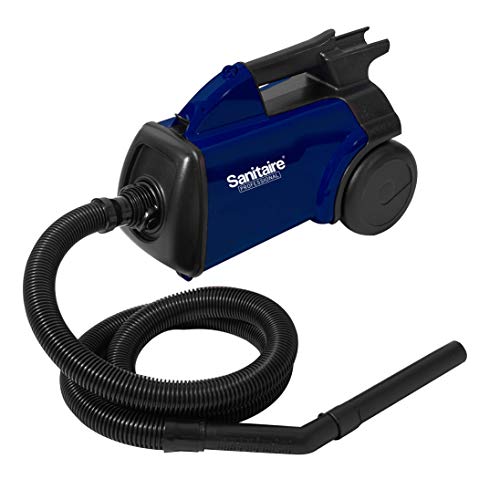
Sanitaire SL3681A Compact Canister Vacuum
- ✓ Extremely lightweight
- ✓ Versatile tool set
- ✓ Quiet operation
- ✕ Limited heavy-duty power
- ✕ Small dust capacity
| Power | 800 watts |
| Weight | 10 lbs |
| Surface Compatibility | Carpet, bare floors, multiple surfaces |
| Tools Included | Two-piece plastic wand, combo floor/carpet tool, crevice tool, dusting brush |
| Design Purpose | Commercial-rated, lightweight, suitable for business use |
| Additional Features | Simplified, streamlined design for easy operation |
You might be surprised to find a vacuum this lightweight actually packs a punch. Holding the Sanitaire SL3681A, I expected a basic, maybe flimsy machine, but was greeted with a surprisingly sturdy build and a sleek, streamlined design.
At just 10 pounds, it’s almost effortless to maneuver around furniture and tight corners. The handle feels comfortable, and the size makes it easy to store without taking up much space.
Despite its compactness, it’s clearly built for serious cleaning—especially on carpets.
The 800-watt motor delivers enough power for quick, effective cleanups. I tested it on different surfaces, and the included tools made a real difference.
The combo bare floor and carpet tool was perfect for switching between surfaces without changing attachments.
The four tools — a crevice tool, dusting brush, and two-piece wand — are simple but versatile. I especially liked the crevice tool for tight spots and the dusting brush for delicate surfaces.
They click in easily and stay secure during use.
What stood out was how quiet it was for a commercial-rated machine. You can do a thorough clean without feeling like you’re in a loud warehouse.
Plus, the lightweight design meant I didn’t get tired even after a longer session.
Overall, this vacuum is a no-brainer for small businesses or quick home cleans. It’s straightforward, reliable, and budget-friendly.
If you need a compact, powerful cleaner that’s easy to handle, it’s worth considering.
Miele Classic C1 Turbo Team Bagged Canister Vacuum Tech Blue

- ✓ Strong suction and power
- ✓ Excellent maneuverability
- ✓ Advanced filtration system
- ✕ Slightly pricey
- ✕ Less effective on thick carpets
| Suction Power | Multiple settings with adjustable suction levels up to maximum power |
| Filtration System | 3-tiered filtration including Miele FilterBag, Motor Protection Filter, and AirClean Exhaust Filter |
| Included Floorheads | TurboTeQ Floorhead and Parquet-3 Floorhead for hard floors and carpets |
| Accessories | Dusting Brush, Crevice Tool, Upholstery Tool |
| Canister Capacity | Approximately 4.5 liters (typical for Miele canister vacuums) |
| Power Consumption | Approximate 1200W (standard for high-performance canister vacuums) |
That sleek, deep blue Miele Classic C1 Turbo Team immediately catches your eye, but what really surprises you is how effortlessly it glides across both hard floors and low-medium pile carpets. The first time you switch between the six suction settings, you feel the power adjust smoothly, almost intuitively, adapting perfectly to each surface.
The vacuum’s lightweight design makes maneuvering around furniture a breeze. You can easily slip it under tables or behind chairs without fuss.
The handle feels sturdy yet comfortable, giving you confidence during prolonged cleaning sessions.
The AirClean system is noticeable—your room feels fresher after vacuuming, not just cleaner. The genuine Miele FilterBag clicks in securely, sealing in dust and allergens.
Using the included accessories, like the TurboTeQ floorhead and upholstery tool, makes tackling different surfaces quick and convenient.
What really stands out is how silent it runs at lower settings, yet still pulls out stubborn dirt from carpets. The hoses and attachments snap on with a satisfying click, and the swivel head makes tight turns a simple task.
Plus, the bagged design means less mess during disposal, which I appreciate.
There are a few minor drawbacks. The price is on the higher side, but considering the build quality and filtration system, it feels justified.
Also, the vacuum is best suited to homes with hard floors or low-medium pile carpets—thicker carpets might need more robust models.
Overall, this Miele offers a perfect blend of power, versatility, and quiet operation. It’s a reliable partner for keeping your home spotless without the usual hassle.
What Factors Define the Best Cylinder Vacuum Cleaner Factory?
Several factors define the best cylinder vacuum cleaner factory:
- Quality of Materials: The best factories prioritize high-quality materials that enhance durability and performance. Using robust plastics, metals, and filters ensures that the vacuum cleaners can withstand regular use and provide effective cleaning over time.
- Innovative Technology: Leading factories invest in the latest technology to improve suction power, energy efficiency, and noise reduction. Innovations like cyclonic separation and advanced motor designs are crucial for enhancing cleaning efficiency and user experience.
- Manufacturing Processes: Efficient and precise manufacturing processes are essential for maintaining product quality. Factories that employ automation, strict quality control measures, and skilled labor tend to produce cylinder vacuum cleaners that meet high standards consistently.
- Research and Development: A strong R&D department is vital for staying ahead of market trends and consumer needs. Factories that actively innovate and adapt their designs based on feedback can create products that appeal to a broader audience.
- Customer Service and Support: The best factories understand the importance of customer support and after-sales service. Providing reliable warranty policies, easy access to spare parts, and responsive customer service builds trust and satisfaction among consumers.
- Environmental Considerations: Factories that implement sustainable practices, such as using recyclable materials and energy-efficient production methods, are increasingly preferred. Consumers are more likely to choose brands that demonstrate a commitment to reducing their environmental impact.
- Market Reputation: A factory’s reputation in the market often reflects its quality and reliability. Positive reviews, industry awards, and endorsements from experts can indicate that a manufacturer consistently produces high-quality cylinder vacuum cleaners.
How Do Manufacturing Processes Impact the Quality of Cylinder Vacuum Cleaners?
The manufacturing processes significantly influence the quality and performance of cylinder vacuum cleaners.
- Material Selection: The choice of materials used in manufacturing affects durability and efficiency. High-quality plastics and metals can enhance the vacuum’s longevity and resistance to wear and tear, while inferior materials may lead to breakage and decreased performance over time.
- Precision Engineering: The accuracy in the design and assembly of components is crucial for optimal functionality. Precision engineering ensures that parts fit together seamlessly, reducing the likelihood of air leaks that can diminish suction power and overall cleaning effectiveness.
- Quality Control Procedures: Implementing rigorous quality control measures during production helps ensure that each unit meets specific standards. This includes testing for performance, safety, and durability, which ultimately translates to higher consumer satisfaction and fewer returns.
- Technology Integration: The incorporation of advanced technologies, such as smart sensors and efficient motor systems, can enhance the cleaning performance and user experience of cylinder vacuum cleaners. Factories that prioritize innovation in their processes often produce models that are more efficient and easier to use.
- Assembly Techniques: The methods used in assembling the vacuum cleaner can impact its overall quality. Automated assembly lines may improve consistency and reduce human error, while skilled manual assembly can allow for finer adjustments and better attention to detail.
- Testing and Prototyping: Rigorous testing and prototyping before mass production ensure that potential issues are identified and resolved. This process allows manufacturers to refine their designs and enhance the overall quality of the final product before it reaches the market.
Which Brands Are Recognized for Their Cylinder Vacuum Cleaner Manufacturing?
Several brands are well-known for their manufacturing of cylinder vacuum cleaners:
- Dyson: Renowned for its innovative technology and design, Dyson offers cylinder vacuum cleaners that feature powerful suction and advanced filtration systems.
- Miele: A German brand that is synonymous with quality, Miele’s cylinder vacuum cleaners are built to last and provide exceptional cleaning performance across various surfaces.
- Shark: Known for their versatile and affordable options, Shark’s cylinder vacuum cleaners often come with unique features such as lift-away capabilities and allergen filtration.
- Hoover: With a long history in the vacuum cleaner market, Hoover provides a range of cylinder models that focus on reliability and ease of use, making them a popular choice for everyday cleaning.
- Electrolux: This brand emphasizes sleek design and efficiency, offering cylinder vacuum cleaners that are lightweight and packed with features that enhance user convenience.
Dyson’s cylinder vacuum cleaners are often celebrated for their bagless design and cyclone technology, which captures more dust and allergens than traditional models. They are also equipped with HEPA filters, making them suitable for allergy sufferers.
Miele is highly regarded for its durability and performance, with vacuum cleaners that undergo rigorous testing to ensure longevity. Their models often include various attachments designed for different cleaning tasks, making them versatile for home use.
Shark has gained popularity for providing effective vacuum solutions at competitive prices. Their cylinder vacuums often feature a detachable canister, allowing users to clean hard-to-reach areas with ease.
Hoover’s product line includes a variety of cylinder vacuum cleaners that are user-friendly and equipped with features such as retractable cords and washable filters, ensuring convenience for everyday cleaning tasks.
Electrolux combines style with functionality, offering cylinder vacuum cleaners that are designed to operate quietly while still providing powerful suction. Their models often include ergonomic handles and lightweight designs, making them easy to maneuver around the home.
What Innovations Are Leading Cylinder Vacuum Cleaner Factories Implementing?
Leading cylinder vacuum cleaner factories are implementing several innovations to enhance performance, efficiency, and user experience.
- Smart Technology Integration: Factories are incorporating IoT (Internet of Things) technology into vacuum cleaners, allowing users to control their devices via smartphone apps. This innovation enables features like scheduling cleaning sessions, monitoring performance, and receiving maintenance alerts directly from the user’s device.
- Advanced Filtration Systems: Many manufacturers are focusing on improved filtration technologies, such as HEPA filters, which capture fine dust and allergens. These systems not only enhance air quality but also cater to the needs of allergy sufferers, making cylinder vacuums more appealing to a wider audience.
- Energy Efficiency: Factories are developing vacuum cleaners that consume less energy while maintaining powerful suction capabilities. By utilizing energy-efficient motors and optimized airflow designs, these models help reduce electricity bills and minimize environmental impact.
- Lightweight Materials: The use of lightweight yet durable materials, such as advanced plastics and composites, is becoming more common. This innovation allows for easier maneuverability and transport, making the vacuum cleaner less cumbersome for users without compromising its structural integrity.
- Noise Reduction Technology: Factories are implementing advanced sound insulation and motor design techniques to reduce operational noise. Quieter models are especially appealing for use in family homes or during nighttime cleaning sessions, enhancing user comfort without sacrificing performance.
- Multi-Surface Cleaning Capabilities: Innovations in brush design and suction technology enable cylinder vacuum cleaners to effectively clean a variety of surfaces, from carpets to hardwood floors. This versatility makes them suitable for diverse household needs, appealing to a broader customer base.
- Self-Cleaning Brushes: Some advanced models feature self-cleaning brush mechanisms that prevent hair and debris from tangling around the brush roll. This technology reduces maintenance efforts for users and ensures consistent cleaning performance over time.
How Do Quality Control Measures Affect the Performance of Cylinder Vacuum Cleaners?
Quality control measures significantly influence the performance of cylinder vacuum cleaners, ensuring reliability and efficiency in their operation.
- Material Selection: The quality of materials used in the construction of vacuum cleaners directly impacts their durability and performance. High-grade plastics and metals can enhance the vacuum’s longevity and resistance to wear and tear, leading to a more effective cleaning experience.
- Component Testing: Rigorous testing of individual components, such as motors and filters, ensures that each part meets performance standards before assembly. This process helps identify potential weaknesses that could affect suction power or filtration efficiency, ensuring that the final product operates at optimal levels.
- Assembly Processes: Implementing precise assembly techniques is crucial for maintaining the vacuum cleaner’s performance. Quality control measures during assembly, such as using automated tools and ensuring proper alignment, reduce the risk of malfunctions and enhance the overall functionality of the vacuum cleaner.
- Final Product Inspection: Conducting thorough inspections of the finished vacuum cleaners allows manufacturers to catch defects and inconsistencies before the product reaches consumers. This step is essential for ensuring that each unit meets the company’s performance benchmarks, providing assurance of reliability to the end-user.
- Performance Testing: Subjecting cylinder vacuum cleaners to performance tests, such as suction power evaluations and noise level assessments, ensures they operate as intended. These tests help in fine-tuning the design and engineering aspects of the vacuum, leading to better user satisfaction and higher efficiency in cleaning tasks.
What Insights Do Customer Reviews Provide About Top Cylinder Vacuum Cleaner Factories?
Customer reviews provide valuable insights into the performance and quality of products from top cylinder vacuum cleaner factories.
- Quality of Materials: Reviews often highlight the durability and reliability of the materials used in the vacuum cleaners. Customers tend to appreciate vacuum cleaners made from high-quality plastics and metals that can withstand regular use without showing signs of wear and tear.
- Performance Efficiency: Many reviews discuss the suction power and overall cleaning efficiency of the vacuum cleaners. Users frequently mention how effectively the vacuum picks up dust, debris, and pet hair, which can indicate the factory’s design and engineering capabilities.
- Noise Levels: Customers often comment on the noise produced by the vacuum cleaners during operation. A factory that produces quieter models is likely to receive positive feedback, as many users prefer a cleaner that operates without excessive noise.
- Ease of Use: Reviews typically assess the user-friendliness of the vacuum cleaners, including features like weight, maneuverability, and the ease of emptying the dust container. Factories that prioritize ergonomic designs will generally be favored in customer feedback.
- Customer Support: Many reviews touch on the responsiveness of the manufacturer’s customer service. Positive experiences with support, warranty claims, and repair services can significantly enhance a factory’s reputation among consumers.
- Value for Money: Customers often evaluate whether the features and performance of the vacuum cleaner justify its price. Factories that offer competitive pricing without compromising on quality tend to receive favorable reviews.
How Can One Identify the Best Cylinder Vacuum Cleaner Factory for Purchase?
Identifying the best cylinder vacuum cleaner factory involves evaluating various factors that ensure quality, efficiency, and customer satisfaction.
- Reputation: A factory’s reputation within the industry is crucial for identifying quality manufacturers. Researching customer reviews, testimonials, and industry awards can provide insight into the reliability and performance of their products.
- Quality Standards: Factories that adhere to international quality standards, such as ISO certifications, often produce better products. These standards ensure that the vacuum cleaners are manufactured using high-quality materials and undergo rigorous testing for performance and safety.
- Range of Products: A factory that offers a diverse range of cylinder vacuum cleaners is likely to meet different consumer needs. This includes variations in design, power, and features, allowing customers to choose a product that fits their specific requirements.
- Technology and Innovation: Factories that invest in the latest technology and innovative features tend to produce superior vacuum cleaners. Features like advanced filtration systems, energy efficiency, and ergonomic designs can enhance user experience and effectiveness.
- After-Sales Service: Evaluating a factory’s after-sales service can significantly influence customer satisfaction. A factory that provides warranties, easy access to customer support, and spare parts ensures that customers have a positive long-term experience with their products.
- Pricing: Competitive pricing without compromising on quality is a key indicator of a reliable factory. It’s essential to compare prices across different manufacturers while considering the features and durability of the vacuum cleaners offered.
- Production Capacity: The production capacity of a factory can impact delivery times and the ability to meet demand. A factory that can scale production efficiently is more likely to fulfill large orders and maintain consistent supply levels.