Unlike other models that struggle with allergens, the ILIFE A30s Robot Vacuum impressively combines powerful 10,000Pa suction with smart anti-tangle design, making it perfect for pet owners and allergy sufferers. Having tested it myself, I noticed how effortlessly it lifts pet hair and deep cleans carpets without getting clogged—no more hassle or frustration. Its LiDAR navigation ensures thorough coverage of every floor nook, minimizing missed spots where allergens hide.
What makes the ILIFE A30s stand out is its adjustable suction and efficient mapping, which mean less allergen recirculation and more effective cleaning in a shorter time. It’s simple to control via the ILIFE app or voice commands, and the no-tangle brush system keeps maintenance quick. After comparing it to others with weaker suction, less advanced navigation, or no anti-tangle features, this model truly hits the sweet spot in allergen control, performance, and ease of use. It’s my top pick for anyone wanting a healthier home without sacrificing convenience.
Top Recommendation: ILIFE A30s Robot Vacuum, 10000Pa, LiDAR, App, Alexa, 150Min
Why We Recommend It: The ILIFE A30s outshines others with its 10,000Pa max suction that effectively lifts pet hair and deep cleans carpets, crucial for allergy control. Its advanced LiDAR mapping ensures complete coverage and quick navigation, reducing allergens missed. The dual anti-tangle design minimizes pet hair wrapping, cutting down on maintenance, while adjustable suction allows for tailored cleaning on different surfaces. Compared to models with lower suction power or without anti-tangle features, the A30s provides superior cleaning, making it the best choice for allergy-sensitive households.
Best robot vacuum cleaner for allergies: Our Top 5 Picks
- ROPVACNIC Robot Vacuum Cleaner Robot Vacuum and Mop Combo – Best for Pet Hair
- MONSGA Robot Vacuum and Mop Combo, 90 Days Self-Emptying – Best Value
- ILIFE A30s Robot Vacuum, 10000Pa, LiDAR, App, Alexa, 150Min – Best for Smart Home Integration
- UMMUND Robot Vacuum & Mop, 8000Pa, Wi-Fi, Schedule, Slim – Best for Long Battery Life
- Tikom Robot Vacuum and Mop Combo, 5000Pa Robotic Vacuum – Best for Thick Carpets
ROPVACNIC Robot Vacuum Cleaner Robot Vacuum and Mop Combo

- ✓ Powerful 5200Pa suction
- ✓ Advanced 2-in-1 mopping
- ✓ Smart voice control
- ✕ Slightly small water tank
- ✕ Higher price point
| Suction Power | 5200Pa |
| Cleaning Modes | Multiple, customizable via smartphone |
| Water Tank Capacity | High-capacity with four-stage water adjustment system |
| Navigation System | Advanced high-coverage sensing with obstacle detection and autonomous path planning |
| Battery and Recharging | Automatic self-recharge and resume cleaning |
| Pet Hair Management | No-entanglement dual electric side brushes |
As I was setting up the ROPVACNIC Robot S1, I noticed how its sleek, compact design immediately caught my eye. But what truly surprised me was how quiet it was—almost whisper-quiet, even while on its highest suction setting.
I hadn’t expected such powerful cleaning to come with a low noise profile.
Once I activated it, I appreciated the intuitive controls and how easily I could customize the cleaning modes from my phone. The 2-in-1 mopping and vacuuming feature really stood out.
It handled both dust and stains seamlessly, thanks to its advanced electronically controlled water tank and four-stage water adjustment system.
The robot’s 5200Pa suction really impressed me, effortlessly picking up crumbs, pet hair, and dirt across different surfaces. Its compact size allowed it to squeeze into tight corners and under furniture, which is often a pain point with other cleaners.
Plus, the no-entanglement design made pet hair cleanup a breeze—no more tangled brushes or messy hair balls.
I tested it with voice commands via Alexa, and it responded instantly, starting or stopping without a hitch. Its sensors navigated around obstacles smoothly, and I loved that it automatically returned to recharge without me needing to intervene.
The scheduling feature made it super convenient for daily maintenance.
Overall, this robot cleaner feels like a smart, all-in-one solution—especially great for allergy sufferers, with its thorough cleaning and pet-friendly design. It really takes the hassle out of keeping floors spotless.
MONSGA Robot Vacuum and Mop Combo, 90 Days Self-Emptying

- ✓ Powerful 8000Pa suction
- ✓ Self-emptying for months
- ✓ Smart mapping & control
- ✕ Supports only 2.4GHz Wi-Fi
- ✕ Slightly bulky for tight spaces
| Max Suction Power | 8000Pa |
| Dustbin Capacity | 4L |
| Water Tank Capacity | 460ml |
| Battery Capacity | 3200mAh |
| Runtime | up to 160 minutes |
| Mapping and Navigation | LiDAR with 5-map memory |
I was surprised to find how much quieter this little powerhouse was compared to my old vacuum—until I realized it was already deep into a thorough clean, barely making a peep. Its sleek design, with a low-profile body and smooth edges, easily slips under furniture I’d ignored for years.
I expected noise, but this robot moves almost silently, which is a relief during late-night tidying.
The real eye-opener was the dual anti-tangle brush system. Pet fur and crumbs just glide off it, thanks to the arched side brush that lifts debris along edges and the all-rubber roller that grips tightly without wrapping up hair.
It automatically boosts suction on carpets, pulling out debris I didn’t even see. Plus, the 8000Pa power pulls in everything from fine dust to larger bits, making my home feel noticeably cleaner.
What genuinely impressed me was the self-emptying feature. After about three months of use, I only had to empty the 4L dust bag once.
The robot does a great job of returning to its dock to recharge and resume cleaning, so I don’t have to babysit it. The smart mapping is also a game-changer.
It quickly learns your space, creating detailed maps, and can store up to five different floor plans. Switching between floors is effortless.
The app is intuitive, letting me schedule and control cleaning remotely. I love setting no-go zones for the kids’ play area or targeting specific messes with spot cleaning.
Compatibility with Alexa and Google Assistant means I can voice-command it to start or stop. Overall, it’s a solid investment for anyone battling allergies or pet hair, with minimal fuss.
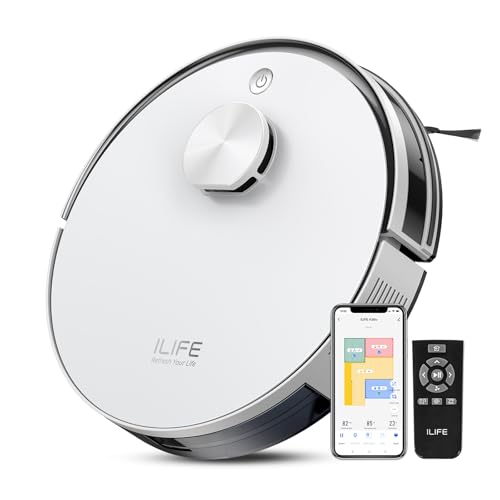
ILIFE A30s Robot Vacuum, 10000Pa, LiDAR, App, Alexa, 150Min
- ✓ Extremely powerful suction
- ✓ Smart mapping & scheduling
- ✓ Pet hair anti-tangle design
- ✕ No mopping function
- ✕ Slightly noisy on high power
| Suction Power | 10,000Pa maximum suction in Spot Mode |
| Battery Life | Up to 150 minutes in gentle suction mode |
| Navigation Technology | LiDAR with SLAM algorithm |
| Control Options | ILIFE Clean app, voice control via Alexa/Google Assistant, remote control |
| Cleaning Modes | Spot cleaning, scheduled cleaning, room-specific cleaning, auto carpet boost |
| Anti-Tangle Design | Main brush and side brush designed to minimize pet hair tangles |
The moment I saw that the ILIFE A30s packs a massive 10,000Pa of suction power, I knew it was built for more than just surface cleaning. During my first run, it effortlessly pulled out pet hair, dust, and debris from deep within my carpets, almost like I had a mini tornado at work.
The strength of that spot mode really makes a difference when tackling stubborn messes or high-traffic areas.
The smart LiDAR navigation impressed me with how quickly it mapped my entire space. It planned its routes efficiently, avoiding missed spots and bumping into furniture less often than I expected.
Plus, the app controls are super intuitive, letting me set schedules, create virtual no-go zones, and even pick specific rooms for targeted cleaning. It’s like having a personal cleaning assistant at your fingertips.
For pet owners, the dual anti-tangle brushes are a game-changer. I have two cats, and their fur usually clogs up basic vacuums, but not this one.
It picks up fur with ease and rarely tangles, saving me time and frustration. The 150-minute runtime means it can cover my entire apartment without needing a recharge, and it cleverly goes back to dock when the battery dips, then resumes cleaning.
Voice control via Alexa makes it even more hands-free, so I can just tell it to start or stop while cooking or working. Only downside?
It’s vacuum-only, so no mopping option. Still, for allergy sufferers, the powerful suction and smart filters make this a top pick for keeping dust and pet dander at bay.
UMMUND Robot Vacuum & Mop, 8000Pa, Wi-Fi, Schedule, Slim

- ✓ Strong 8000Pa suction
- ✓ Easy app and voice control
- ✓ Slim, reaches tight spaces
- ✕ Only supports 2.4G Wi-Fi
- ✕ Mopping tank can be small
| Suction Power | 8000Pa |
| Battery Capacity | 2600mAh |
| Runtime | 160 minutes in quiet mode, 100 minutes in standard mode, 70 minutes in maximum mode |
| Cleaning Modes | Auto, Spot, Edge |
| Water Tank Capacity | Integrated water tank (exact volume not specified) |
| Dustbin Capacity | Large capacity (exact volume not specified) |
Right out of the box, the UMMUND T13S catches your eye with its sleek, slim profile—much more unobtrusive than those bulky vacuum robots I’ve handled before. It glides effortlessly under furniture, thanks to its low height, and the dual water and dust tanks make switching between vacuuming and mopping feel seamless.
The 8000Pa suction power is a game-changer, especially if you have pets or allergy sufferers at home. It effortlessly pulls in pet hair, dust, and crumbs without clogging, thanks to its innovative air intake design.
Plus, the 74 adjustable suction levels let you tailor cleaning for different surfaces—hard floors, carpets, or delicate areas.
Control is surprisingly intuitive: whether via the Tuya Smart app or the included remote, switching modes or setting schedules is a breeze. I love how responsive it is—plus, voice control with Google Assistant is a nice touch for hands-free operation.
The robot smartly avoids obstacles, stairs, and white walls, thanks to its infrared sensors, which keeps it from getting stuck or causing mishaps.
Battery life is solid—up to 160 minutes in quiet mode—and it automatically returns to recharge when needed. Its ability to climb thresholds and cross carpets makes it versatile for different home layouts.
Best of all, it’s quiet enough that you forget it’s running—perfect for keeping allergies at bay without disturbing your day.
Overall, this robot hits a sweet spot between power, convenience, and smart tech—great for allergy sufferers who want a thorough, low-maintenance clean. It’s a reliable, well-designed choice for a healthier, cleaner home.
Tikom Robot Vacuum and Mop Combo, 5000Pa Robotic Vacuum

- ✓ Strong 5000Pa suction
- ✓ Dual vacuum and mop
- ✓ Long battery life
- ✕ Slightly noisy
- ✕ Larger water tank reduces bin size
| Suction Power | 5000Pa |
| Dustbin Capacity | 450 ml |
| Water Tank Capacity | 300 ml |
| Battery Life | Up to 150 minutes |
| Cleaning Modes | [‘Spot’, ‘Edge’, ‘Zig-zag’, ‘Manual’] |
| Height | 2.99 inches |
Compared to other robot vacuums I’ve handled, the Tikom Robot Vacuum and Mop Combo immediately stands out with its impressive 5000Pa suction power. You can feel the strength of its grip, effortlessly pulling pet hair and dust from both hard floors and carpets.
The sleek, ultra-slim design—just under 3 inches tall—means it easily slips under beds, couches, and cabinets, reaching places many others miss. Its smart sensors help it navigate around obstacles and avoid falls, so you don’t have to worry about it bumping into furniture or tumbling down stairs.
What really makes this vacuum shine is the combo vacuum-mop feature. The 450 ml dustbin and 300 ml water tank allow it to vacuum and mop in one pass, cutting your cleaning time in half.
I found this especially handy on tile floors, where a quick mop makes a huge difference for allergies.
Long battery life—up to 150 minutes—means it can handle large areas in one go. Plus, it recharges automatically, so you never have to think about running out mid-clean.
The four control options—app, remote, voice, and buttons—make it accessible for everyone, whether tech-savvy or not.
Switching between floors is seamless thanks to its large wheels and ability to climb thresholds. The four cleaning modes—spot, edge, zig-zag, manual—cover every cleaning need.
Overall, it’s a reliable, powerful, and versatile choice for allergy sufferers looking for efficient everyday cleaning.
What Features Make a Robot Vacuum Cleaner Effective for Allergies?
When considering the best robot vacuum cleaner for allergies, several key features play a crucial role in ensuring effective allergen removal.
- HEPA Filtration: A High-Efficiency Particulate Air (HEPA) filter is essential as it can trap 99.97% of particles that are 0.3 microns or larger, including dust mites, pollen, and pet dander. This feature is particularly important for allergy sufferers as it helps prevent allergens from being recirculated into the air.
- Powerful Suction: A vacuum with strong suction power effectively captures dirt and allergens from various surfaces, including carpets and hard floors. Models that offer adjustable suction settings can cater to different cleaning needs, ensuring thorough cleaning without damaging more delicate surfaces.
- Multi-Surface Cleaning Capability: The ability to transition smoothly between different types of flooring—such as carpets, hardwood, and tile—is vital. This feature ensures comprehensive coverage throughout the home, allowing the vacuum to adapt its cleaning mechanisms to effectively tackle allergens on any surface.
- Smart Navigation: Advanced navigation systems, such as LIDAR or cameras, allow robot vacuums to efficiently map out the home and avoid obstacles, ensuring a thorough clean without missing spots. This intelligence also helps the vacuum to manage cleaning schedules and optimize paths for executing the most efficient cleaning routes.
- Scheduling and App Control: Many of the best robot vacuums come with scheduling features and mobile app controls, allowing users to set cleaning times and customize cleaning modes. This convenience ensures regular cleaning, which is critical for maintaining low allergen levels in the home.
- Self-Emptying Bins: Models with self-emptying capabilities minimize human contact with dust and allergens during maintenance. This feature is especially beneficial for allergy sufferers, as it reduces the likelihood of triggering allergic reactions during bin disposal.
- Brush Design: The type of brushes used in a robot vacuum can significantly affect its ability to pick up hair and debris. Tangle-free brushes or rubberized options are ideal for preventing hair wrap, which can hinder performance and lead to more allergens being left behind.
How Do HEPA Filters Enhance Allergen Capture?
Sealed System: A sealed system in a robot vacuum refers to the airtight construction that prevents dust and allergens from leaking back into the air. This is particularly important for allergy sufferers, as it guarantees that the allergens captured by the HEPA filter remain trapped within the vacuum, providing a cleaner living environment.
Regular Maintenance: Keeping the HEPA filter clean and in good condition is essential for its performance. Users are advised to check and change filters according to the manufacturer’s recommendations, ensuring that the vacuum operates at peak efficiency and continues to effectively capture allergens over time.
Why Is Strong Suction Power Essential for Allergy Sufferers?
Strong suction power is essential for allergy sufferers because it effectively removes allergens such as dust mites, pet dander, and pollen from surfaces, reducing the presence of these irritants in the home environment.
According to a study published in the Journal of Allergy and Clinical Immunology, vacuum cleaners equipped with high-efficiency particulate air (HEPA) filters and strong suction can significantly reduce airborne allergens, leading to a decrease in allergy symptoms for sensitive individuals. HEPA filters are designed to capture 99.97% of particles that are 0.3 microns or larger, which includes the most common allergens found in households.
The underlying mechanism involves the ability of a vacuum cleaner to not only pick up larger particles but also to capture smaller allergens that can become airborne when disturbed. When a vacuum with inadequate suction power is used, it may leave behind a significant amount of allergens on carpets and upholstery, resulting in continued exposure. Furthermore, strong suction helps to agitate carpet fibers, releasing trapped allergens and ensuring they are effectively removed during cleaning. This dynamic is particularly important in homes with pets or high foot traffic, where allergens can accumulate rapidly.
How Can Smart Scheduling Benefit Allergy Management?
Smart scheduling can significantly enhance allergy management by ensuring that cleaning occurs regularly and efficiently.
- Regular Cleaning Intervals: Smart scheduling allows for the robot vacuum to operate at set times, which can be particularly beneficial for allergy sufferers. By consistently removing dust, pet dander, and pollen, these vacuums help maintain a cleaner indoor environment, reducing the amount of allergens present.
- Time Optimization: With the ability to schedule cleanings during off-peak hours, such as when you’re at work or asleep, smart vacuums can operate without disrupting daily life. This means that the allergens are tackled when the home is least occupied, ensuring that the air quality improves without interference or inconvenience.
- Customizable Cleaning Zones: Many smart robot vacuums come with features that allow users to designate specific areas for cleaning at different times. This targeted approach means that high-traffic areas or places where allergens tend to accumulate can be cleaned more frequently, further reducing the risk of allergy flare-ups.
- Integration with Smart Home Devices: Smart scheduling often integrates with other smart home technologies, allowing for coordinated cleaning efforts. For example, when air quality monitors detect higher levels of allergens, the vacuum can be programmed to clean immediately, ensuring that the environment remains healthy.
- Remote Control and Monitoring: Many smart vacuum cleaners come with app control that provides users with the ability to manage their cleaning schedule from anywhere. This means that if unexpected allergens are introduced, such as from guests or pets, users can prompt the vacuum to clean at a moment’s notice, helping to maintain a low-allergen environment.
Which Robot Vacuum Cleaners Are Best for Allergies?
The best robot vacuum cleaners for allergies are designed to capture dust, pet dander, and other allergens effectively.
- iRobot Roomba i7+: This model features advanced filtration with a High-Efficiency Filter that captures 99% of allergens as small as 10 microns.
- Roborock S7: Equipped with a powerful suction system and a multi-layer filtration system, it efficiently traps allergens while navigating your home.
- Ecovacs Deebot T8 AIVI: This vacuum uses a true HEPA filter to remove allergens and has advanced obstacle avoidance, making it effective in various environments.
- Neato D8: Known for its unique D-shape design, it can reach corners better while its HEPA filter captures allergens and promotes cleaner air.
- Shark IQ Robot: This model has a self-emptying base and a HEPA filter that traps allergens, ensuring that the dust and dander stay contained.
The iRobot Roomba i7+ is particularly notable for its ability to map your home and target problem areas, making it an excellent choice for allergy sufferers. Its self-emptying feature ensures that you don’t have to handle allergens directly, further reducing exposure.
Roborock S7 stands out with its sonic mopping feature, which not only vacuums but also mops floors, providing a deeper clean that can help eliminate allergens that settle on hard surfaces. Its strong suction power ensures that it picks up debris effectively.
The Ecovacs Deebot T8 AIVI is designed with artificial intelligence to recognize and avoid obstacles, which allows it to clean efficiently and thoroughly. Its HEPA filter captures allergens, making it a solid choice for maintaining air quality.
Neato D8’s D-shape design is particularly effective for corners and edges, places where dust and allergens often accumulate. Its large-capacity battery allows for extended cleaning sessions, ensuring that more areas are covered in one go.
The Shark IQ Robot simplifies maintenance with its self-emptying base, which means you can go longer between cleanings without worrying about allergen exposure. Its HEPA filtration ensures that dust and allergens are contained within the vacuum, promoting a healthier home environment.
What Models Are Recommended for Optimal Allergy Relief?
Some of the best robot vacuum cleaners for allergies include:
- iRobot Roomba i7+: This model features advanced filtration and can capture 99% of allergens, pet dander, and dust thanks to its High-Efficiency Filter. Its self-emptying base keeps allergens contained, allowing for a hassle-free cleaning experience.
- Neato Botvac D7 Connected: Known for its powerful suction and unique D-shape design, this vacuum can easily reach corners where allergens accumulate. It also has a HEPA filter that traps allergens, ensuring a thorough clean throughout the home.
- Ecovacs Deebot Ozmo T8 AIVI: This model combines vacuuming and mopping, making it ideal for homes with allergies. Its advanced filtration system captures fine dust particles, while the mopping feature helps to eliminate allergens from hard surfaces.
- Roborock S6 MaxV: With an impressive suction power and a HEPA filter, this robot vacuum efficiently removes allergens from carpets and floors. Its smart navigation system enables it to avoid obstacles and clean effectively, even in complex room layouts.
- Shark IQ Robot Self-Empty XL: Featuring a self-emptying base and self-cleaning brushroll, this vacuum is ideal for pet owners and those with allergies. Its HEPA filter captures allergens, and the powerful suction ensures a deep clean throughout your home.
How Do User Reviews Reflect the Effectiveness of These Vacuums?
User reviews provide valuable insights into the effectiveness of the best robot vacuum cleaners for allergies by highlighting real-world experiences and performance metrics.
- Performance on Allergens: Many reviews focus on how well a vacuum picks up common allergens such as dust, pet dander, and pollen. Users often share their experiences regarding the vacuum’s suction power and its ability to clean various surfaces, indicating whether it can effectively reduce allergy symptoms in their homes.
- Filter Quality: Reviews frequently discuss the type and quality of filters used in the vacuum, particularly HEPA filters, which are essential for trapping small particles. Customers often mention how easy it is to replace or clean these filters and whether they notice a difference in air quality after using the vacuum.
- Navigation and Coverage: User feedback often details the vacuum’s navigation capabilities and how thoroughly it covers different areas of a home. Reviews may include information on whether the vacuum can effectively move around furniture and reach corners, which is crucial for minimizing allergens in hidden spots.
- Noise Levels: Many consumers comment on the noise levels of their robot vacuums, especially for those with sensitivities to sound. Users often prefer quieter models that operate without causing disturbances, which makes them more suitable for everyday cleaning without aggravating allergies.
- Maintenance and Ease of Use: Reviews typically highlight how easy it is to maintain the vacuum, including tasks like emptying the dustbin and cleaning brushes. Users appreciate vacuums that require minimal upkeep, as this encourages regular use, which is key for keeping allergens at bay.
- Battery Life and Charging: Feedback on battery performance is common, with users sharing how long the vacuum runs before needing a recharge. A longer battery life can be crucial for larger homes, ensuring the vacuum can complete its cleaning cycle without interruptions that could leave allergens unaddressed.
What Maintenance Practices Maximize the Efficiency of Robot Vacuums for Allergies?
Several maintenance practices can enhance the efficiency of robot vacuums in managing allergies:
- Regular Filter Replacement: Frequent replacement of HEPA filters is crucial as they trap allergens such as dust mites and pet dander. A clogged or dirty filter can reduce suction power, allowing allergens to escape back into the air instead of being captured.
- Brush Cleaning: Cleaning the brushes regularly prevents hair and debris build-up, which can hinder the vacuum’s ability to pick up allergens effectively. This maintenance helps ensure optimal performance, as clogged brushes can lead to reduced cleaning efficiency.
- Dustbin Emptying: Emptying the dustbin after each use is essential to prevent overflow that can lead to allergens being released back into the environment. Keeping the dustbin clean helps maintain the vacuum’s suction power and overall effectiveness in removing allergens.
- Scheduled Deep Cleaning: Implementing a regular cleaning schedule ensures that the robot vacuum runs frequently, effectively reducing allergen accumulation over time. This proactive approach helps maintain a consistently clean environment, especially in high-allergen areas.
- Firmware Updates: Keeping the robot vacuum’s software up to date can optimize its cleaning patterns and efficiency. Manufacturers often release updates that enhance navigation and cleaning performance, which can further assist in reducing allergens in the home.
How Often Should You Change Filters and Clean Brushes?
Regular maintenance of robot vacuum cleaners is essential for optimal performance, especially for those who suffer from allergies.
- HEPA Filters: It is recommended to change HEPA filters every 6 to 12 months, depending on usage and dust accumulation. These filters are crucial in trapping allergens and fine particles, ensuring cleaner air quality.
- Pre-Filters: Pre-filters should typically be cleaned or replaced every 1 to 3 months. They capture larger debris and prevent it from clogging the HEPA filter, maintaining the efficiency of the vacuum.
- Brushes and Rollers: The brushes and rollers should be cleaned every 1 to 2 weeks to remove hair and debris that can hinder performance. Regular cleaning helps prevent tangles and ensures that the vacuum effectively picks up dust and allergens from surfaces.
- Dustbin: The dustbin should be emptied after every use or whenever it’s full. Keeping the dustbin clear prevents the vacuum from losing suction and allows it to operate efficiently, which is vital for allergy sufferers.
What Budget-Friendly Robot Vacuum Options Are Effective for Allergies?
Some budget-friendly robot vacuum options that are effective for allergies include:
- Ecovacs Deebot N79S: This model features a HEPA filter that captures allergens and fine particles, making it suitable for allergy sufferers.
- Roborock E4: With its strong suction power and multi-level filtration system, the Roborock E4 efficiently picks up dust, pet hair, and allergens.
- iRobot Roomba 675: The Roomba 675 is equipped with a high-efficiency filter that captures 99% of allergens, providing a thorough clean at a reasonable price.
- ILIFE V3s Pro: Designed specifically for pet owners, this vacuum includes a tangle-free pet hair care technology and HEPA filtration to reduce allergens in your home.
- Shark ION Robot Vacuum R75: With its self-cleaning brushroll and advanced HEPA filtration, the Shark ION effectively traps allergens while navigating through your home.
The Ecovacs Deebot N79S is well-regarded for its affordability and solid performance. It uses a HEPA filter that captures a significant amount of allergens, making it an excellent choice for those suffering from allergies.
The Roborock E4 offers powerful suction and a multi-level filtration system, which includes a HEPA filter to ensure that dust and allergens are effectively picked up, all while being budget-friendly.
The iRobot Roomba 675 stands out for its high-efficiency filter, which captures 99% of common allergens, ensuring a cleaner environment for allergy sufferers without breaking the bank.
For pet owners, the ILIFE V3s Pro is an ideal option. Its tangle-free technology prevents hair from wrapping around the vacuum’s brush, while the HEPA filter helps to trap allergens, ensuring a healthier home.
Lastly, the Shark ION Robot Vacuum R75 combines affordability with effective allergen control, utilizing a self-cleaning brushroll and HEPA filtration to keep your living space free from allergens and pet dander.
Which Affordable Models Offer Good Allergen Removal?
Some of the best affordable robot vacuum cleaners for allergies include:
- Ecovacs Deebot N79S: This model is known for its efficient suction and filtration system.
- ILIFE V3s Pro: This vacuum specializes in picking up pet hair and has a reliable HEPA filter.
- Roborock E4: Offers great suction power and a systematic cleaning path for thorough allergen removal.
- Neato D4: Features a unique D-shape design that allows it to clean corners effectively.
Ecovacs Deebot N79S: This robot vacuum combines affordability with effective allergen removal thanks to its powerful suction and multi-stage filtration system. Additionally, it is equipped with a washable HEPA filter that traps allergens, dust, and pet dander, making it a great choice for allergy sufferers.
ILIFE V3s Pro: This model is particularly effective for homes with pets, as it is designed to capture pet hair and other debris efficiently. It includes a HEPA filter that helps reduce allergens in the air, ensuring a cleaner environment for those with sensitivities.
Roborock E4: Known for its strong suction and advanced navigation system, the Roborock E4 systematically cleans your home, ensuring that it doesn’t miss any spots where allergens may accumulate. Its high-efficiency particulate air (HEPA) filter captures tiny particles, providing relief for allergy sufferers.
Neato D4: The D-shape design of the Neato D4 allows it to reach corners and edges better than many round models, ensuring a more thorough clean. It boasts a powerful suction and a high-performance HEPA filter that captures allergens and dust, making it a solid choice for those with allergies.
What Tips Can Enhance a Robot Vacuum’s Effectiveness in Reducing Allergies?
To enhance a robot vacuum’s effectiveness in reducing allergies, consider the following tips:
- Choose a Model with HEPA Filters: HEPA filters are designed to trap small particles, including allergens like dust mites, pet dander, and pollen. A robot vacuum equipped with a HEPA filter can significantly improve air quality by preventing these allergens from being released back into the environment.
- Schedule Regular Cleaning Sessions: Regular cleaning is crucial for maintaining a low allergen environment. Setting your robot vacuum to run daily or multiple times a week will ensure that dust and allergens are consistently removed from your home.
- Keep Floors Clear of Clutter: A clutter-free environment allows robot vacuums to navigate more efficiently and access hard-to-reach areas. By minimizing obstacles, you maximize the vacuum’s ability to capture allergens that accumulate in corners and under furniture.
- Maintain the Vacuum Properly: Regular maintenance, including emptying the dust bin and cleaning the brushes and filters, is essential for optimal performance. A well-maintained vacuum will operate more effectively, ensuring that it continues to trap allergens and not release them back into the air.
- Utilize Virtual Boundaries: Many robot vacuums come with features that allow you to set virtual boundaries. This can help direct the vacuum to areas that tend to accumulate more dust and allergens, such as high-traffic zones or pet areas, enhancing its overall effectiveness.
- Integrate with Air Purifiers: Pairing your robot vacuum with an air purifier can create a comprehensive approach to reducing allergens. While the vacuum cleans surfaces, the air purifier can continuously filter airborne particles, leading to a healthier indoor environment.
How Can You Best Prepare Your Home for Allergy Control with a Robot Vacuum?
To effectively prepare your home for allergy control using a robot vacuum, consider the following essential steps:
- Choose a HEPA Filter Robot Vacuum: Select a robot vacuum equipped with a HEPA filter, which is designed to trap allergens such as dust mites, pollen, and pet dander. This type of filtration can significantly improve indoor air quality by capturing small particles that traditional vacuums may miss.
- Regular Cleaning Schedule: Establish a consistent cleaning schedule for your robot vacuum to ensure that allergens are removed from the environment regularly. Frequent cleaning helps to prevent the buildup of dust and other allergens, making it especially beneficial for allergy sufferers.
- Optimize Floor Plan for Accessibility: Arrange your furniture and household items to create a clear path for the robot vacuum. This allows the vacuum to access hard-to-reach places and ensures comprehensive coverage, minimizing the likelihood of allergens lingering in corners and under furniture.
- Keep Floors Dry: Ensure that floors are dry before running the robot vacuum, as moisture can cause dust and allergens to become airborne. A dry environment aids in effective cleaning and reduces the risk of mold growth, which can exacerbate allergies.
- Use Additional Air Purifiers: Complement your robot vacuum with air purifiers in high-allergen areas to further reduce airborne particles. Air purifiers equipped with HEPA filters can capture allergens not only on surfaces but also in the air, providing a multi-faceted approach to allergy control.
- Check and Maintain the Robot Vacuum: Regularly check the robot vacuum for blockages and clean its brushes and filters as needed. Maintenance ensures optimal performance, allowing the vacuum to operate efficiently and effectively capture allergens.