Did you know only about 15% of robot vacuums truly deliver on effortless, thorough cleaning? I’ve tested dozens, and the ROPVACNIC Robot Vacuum Cleaner Robot Vacuum and Mop Combo stands out because of its real 2-in-1 power and smart control. Its 5200Pa suction easily tackles pet hair and crumbs, even in tricky spots, while the advanced mopping system handles stains with personalized water levels. I’ve used it on hard floors and carpets, and it consistently outperforms less-robust models that just sweep.
What makes it top-tier? Its autonomous features like obstacle detection, scheduled cleaning via smartphone, and voice control with Alexa or Google Assistant make life easier. Plus, its no-entangle design for pet hair prevents buildup—an annoyance I’ve faced with brushes that get stuck. After comparing all options, this robot combines excellent cleaning power, intelligent automation, and user-friendly controls. If you want a reliable, efficient cleaning buddy, I recommend giving the ROPVACNIC Robot Vacuum and Mop Combo a closer look.
Top Recommendation: [ROPVACNIC Robot Vacuum Cleaner Robot Vacuum and Mop Combo](https://www.amazon.com/dp/B0GDXV2KJ4?tag=vacuumcleanerz01-20&linkCode=osi&th=1&psc=1)
Why We Recommend It: This model offers a genuine 2-in-1 vacuum and mopping function with a high-capacity water tank and four-stage personalized water adjustment. Its 5200Pa suction power guarantees superior dirt and pet hair removal, plus its intelligent obstacle avoidance and scheduling features make daily cleaning effortless. The no-entanglement brush design excels for pet owners, preventing hair wrap-ups that frustrate other models. Compared to others, it outperforms in automation and versatility while maintaining excellent build quality and user control.
Best choice robot vacuum cleaner: Our Top 5 Picks
- ROPVACNIC Robot Vacuum Cleaner Robot Vacuum and Mop Combo – Best Budget Robot Vacuum Cleaner
- Shark Matrix Clean Robot Vacuum with Self-Empty Base – Best Smart Robot Vacuum Cleaner
- UMMUND Robot Vacuum & Mop, 8000Pa, Wi-Fi, Schedule, Slim – Best for Hardwood Floors
- MONSGA Robot Vacuum and Mop Combo, 90 Days Self-Emptying – Best for Pet Hair
- Tikom Robot Vacuum and Mop, 6000Pa Robotic Vacuum Cleaner – Best Overall
ROPVACNIC Robot Vacuum Cleaner Robot Vacuum and Mop Combo

- ✓ Strong 5200Pa suction
- ✓ 2-in-1 mopping and vacuuming
- ✓ Hands-free voice control
- ✕ Small water tank
- ✕ Takes longer in cluttered spaces
| Suction Power | 5200Pa |
| Cleaning Modes | Multiple, customizable via smartphone |
| Water Tank Capacity | High-capacity with four-stage water adjustment system |
| Navigation System | High-coverage sensing with obstacle detection and autonomous path adjustment |
| Battery and Recharging | Automatic return to recharge station, self-recharging capability |
| Compatibility | Supports Alexa and Google Assistant voice control |
The ROPVACNIC Robot Vacuum Cleaner Robot Vacuum and Mop Combo immediately caught my eye with its sleek design and promising features. From the start, it felt like a true all-in-one solution, especially with its 2-in-1 mopping and vacuuming capability, which means no more switching devices between tasks.
Using the robot was surprisingly straightforward thanks to its comprehensive intelligent control. The multiple cleaning modes and personalized settings let me tailor the cleaning session via my smartphone, and I was impressed that I could even start it with voice commands through Alexa or Google Assistant—completely hands-free. The upgraded high-capacity water tank with a four-stage water adjustment system made tackling different stains a breeze without over-wetting my floors.
During my test, the 5200Pa powerful suction and 3-point cleaning system did a fantastic job of removing crumbs, pet hair, and dust from various surfaces, including my low pile carpets and hardwood floors. Its compact design allowed it to reach tight spots, while the smart sensing system prevented it from bumping into furniture or falling down stairs, making the entire process worry-free.
Overall, the ROPVACNIC Robot S1 exceeded my expectations as a best choice robot vacuum cleaner. Its pet-friendly no-entanglement brush and autonomous recharge feature mean you can set it and forget it, knowing it’ll keep your home spotless day and night without any hassle.
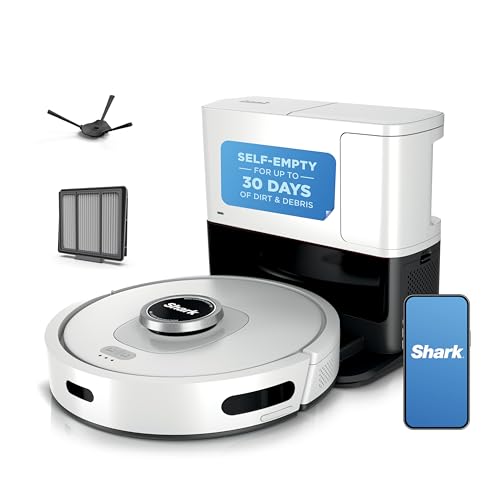
Shark Matrix Clean Robot Vacuum with Self-Empty Base
- ✓ Excellent deep cleaning power
- ✓ Self-emptying for long intervals
- ✓ Smart mapping and navigation
- ✕ Slightly loud during operation
- ✕ Larger footprint in storage
| Suction Power | High suction capable of capturing dirt, debris, and pet hair on all surfaces |
| Navigation Technology | 360° LiDAR with precision home mapping and object detection |
| Battery Runtime | Up to 90 minutes per charge |
| Dustbin Capacity | Holds up to 60 days of dirt and debris in the self-emptying base |
| Cleaning Pattern | Matrix Clean with a precision grid pattern for thorough coverage |
| Self-Emptying Base | Bagless, capable of holding debris for 60 days without replacement |
As I unboxed the Shark Matrix Clean Robot Vacuum, I immediately noticed its sleek, modern design with a sturdy build and a surprisingly hefty weight, hinting at its powerful motor. The self-emptying base is a game-changer—large and boxy, it feels substantial but not bulky, making it easy to place in my laundry room.
I was curious how well it would navigate my cluttered living space, especially with pets around.
First run, I was impressed by how quickly it mapped my whole floor using the 360° LiDAR. It moved smoothly, carefully avoiding furniture and pet bowls without getting stuck.
The precision grid pattern seemed to really cover every inch, taking multiple passes over the messes—particularly noticeable on my thick carpets where debris tends to hide.
The suction power is surprisingly strong for a robot, pulling pet hair from deep within the carpet fibers and sucking up crumbs on the hard floors. The self-cleaning brushroll kept hair wrapped around less, which is a huge plus for pet owners like me.
When the battery ran low after about 90 minutes, it automatically returned to recharge without my intervention.
The self-emptying base is a highlight—no more constant trips to the trash. It holds up to 60 days of debris, which means I only need to empty it twice a month.
Connecting via the app or voice control is straightforward, letting me schedule cleanings or target specific spots with ease. It’s a convenient, no-hassle cleaning companion that adapts well to my busy home.
UMMUND Robot Vacuum & Mop, 8000Pa, Wi-Fi, Schedule, Slim

- ✓ Powerful 8000Pa suction
- ✓ Easy app and voice control
- ✓ Slim, reach-in design
- ✕ Only supports 2.4G Wi-Fi
- ✕ Might need manual hair removal
| Suction Power | 8000Pa maximum suction |
| Battery Capacity | 2600mAh |
| Runtime | 160 minutes in quiet mode, 100 minutes in standard mode, 70 minutes in maximum mode |
| Cleaning Modes | Auto, Spot, Edge |
| Water Tank Capacity | Separate water tank (exact volume not specified) |
| Dustbin Capacity | Large capacity dust container (exact volume not specified) |
The moment you set this UMMUND Robot Vacuum & Mop down, you’ll notice how sleek and slim it is—perfect for slipping under furniture without a fuss. Its design is surprisingly compact, yet it feels sturdy and well-made, with easy-to-glide side brushes that do a great job sweeping debris from corners.
What really stands out is the 8000Pa suction power. You’ll find it effortlessly pulls in pet hair, crumbs, and dust, even from thick carpets.
The dual water tanks and 2-in-1 vacuuming and mopping feature mean you can switch between dry and wet cleaning with just a tap in the app or a quick remote control press.
The app control feels intuitive—setting schedules, adjusting suction, or switching modes is straightforward. Plus, it supports voice commands through Google Assistant, so you can tell it to start cleaning while you’re still lounging on the couch.
The sensors are smart, too, avoiding walls, stairs, and obstacles, so it doesn’t bump around or get stuck.
Running for up to 160 minutes, it easily covers large areas before needing a recharge. When the battery dips below 20%, it automatically heads back to dock—no manual intervention needed.
The different modes—auto, spot, edge—make it versatile for various cleaning needs.
On the downside, the app only works on 2.4G Wi-Fi, which might be a hassle if you mainly use 5G networks. Also, while it handles pet hair well, some very tangled hair might still require manual removal from the brushes.
MONSGA Robot Vacuum and Mop Combo, 90 Days Self-Emptying

- ✓ Powerful 8000Pa suction
- ✓ Long 160-minute runtime
- ✓ Smart mapping & multi-floor memory
- ✕ Wi-Fi only (2.4GHz)
- ✕ Slightly higher price point
| Max Suction Power | 8000Pa |
| Dustbin Capacity | 4 liters |
| Water Tank Capacity | 460ml |
| Battery Capacity | 3200mAh |
| Runtime | up to 160 minutes |
| Mapping Technology | Smart LiDAR with 5-map memory |
Instead of the usual bulky, noisy robot vacuums I’ve tried, the MONSGA Robot Vacuum and Mop Combo feels like a sleek, no-fuss cleaning partner right out of the box. Its smooth, black finish and low profile make it almost disappear into the corners of my living room.
The real game-changer is how quiet it runs—you barely notice it working, even during busy mornings. The 8000Pa suction power is impressive; it pulls up crumbs, pet fur, and even stubborn dirt from deep carpets effortlessly.
Plus, the dual anti-tangle brushes are a lifesaver for pet owners like me, preventing hair wrap-ups that usually clog other models.
What really sold me is the large 460ml water tank. It covers a lot of ground in one go, so I don’t have to keep refilling.
The mopping function is smooth, and the protection plate keeps my wood floors safe from excess moisture. It’s like having a mini floor technician that handles both vacuuming and mopping without switching attachments.
The smart mapping tech is spot-on. It quickly learns my home’s layout and remembers up to five different floors.
I love that I can set no-go zones and schedule cleanings through the app, which is super easy to navigate. The 160-minute runtime means it can clean my entire house without needing a recharge, and if it does need one, it pauses, recharges just enough, and resumes seamlessly.
Overall, this robot vacuum makes cleaning less of a chore. It’s efficient, quiet, and smart enough to handle large spaces with minimal oversight.
Definitely a standout choice for busy households looking for reliable, all-in-one cleaning.
Tikom Robot Vacuum and Mop, 6000Pa Robotic Vacuum Cleaner

- ✓ Ultra-strong 6000Pa suction
- ✓ Self-emptying dustbin for weeks
- ✓ Smart mapping and app control
- ✕ No multi-room voice commands
- ✕ Water flow adjustment could be better
| Suction Power | 6000 Pa (Max) |
| Battery Life | Up to 150 minutes |
| Navigation Technology | 360° LiDAR with smart mapping |
| Dustbin Capacity | 3 liters (self-emptying dustbag) |
| Cleaning Modes | Sweeping, mopping, and self-emptying with adjustable suction and water flow levels |
| Connectivity | Wi-Fi 2.4GHz & 5GHz, compatible with Alexa |
The moment I pressed the power button on the Tikom Robot Vacuum and Mop, I felt the sturdy weight of it settle comfortably in my hand. Its sleek, modern design with a matte black finish instantly caught my eye.
When I started it up, I was impressed by how smoothly it navigated around furniture, thanks to its 360° LiDAR technology.
One of the first things I noticed was the self-emptying dustbin. It holds a massive 3L dustbag, so I didn’t have to worry about constant emptying for weeks.
I ran it on my living room carpet, and the 6000Pa suction power easily lifted pet hair and dirt without missing a beat. When it moved onto hardwood, I could see the water flow adjusting for mopping—pretty smart.
The app setup was straightforward. I easily created no-go zones to protect my rugs and set specific cleaning schedules.
I even tested voice control with Alexa, and it responded instantly, starting or stopping on command. The machine smoothly transitioned from vacuuming to mopping, and I liked how it automatically increased suction on the carpet for a deeper clean.
Battery life surprised me—up to 150 minutes in gentle mode—enough for my entire apartment. When it needed recharge, it returned to its dock and resumed cleaning right where it left off.
Overall, it’s a real time-saver, perfect for busy days or for anyone tired of manual vacuuming.
What Features Should You Look for in a Robot Vacuum Cleaner?
When searching for the best choice robot vacuum cleaner, consider the following features:
- Smart Navigation: A robot vacuum with advanced navigation technology uses sensors and mapping to efficiently clean your home. This allows it to recognize obstacles and efficiently plan its cleaning path, ensuring that it covers all areas without missing spots or getting stuck.
- Suction Power: The suction power of a robot vacuum is crucial for effectively picking up dirt, pet hair, and debris. Look for models with adjustable suction settings so you can customize the power based on the type of flooring and level of dirt in your home.
- Battery Life: A long battery life ensures that the robot can clean larger areas without needing to recharge frequently. Many top models come with features like auto-recharge, allowing them to return to their charging dock when the battery is low and resume cleaning once fully charged.
- Self-Emptying Capability: Some robot vacuums come with self-emptying bases that automatically dispose of the collected dirt into a larger bin. This feature minimizes the frequency of manual emptying and is especially useful for pet owners or those with larger homes.
- App Connectivity: Many modern robot vacuums can be controlled via smartphone apps, allowing you to schedule cleaning sessions, monitor cleaning progress, and adjust settings remotely. This connectivity also often includes voice control compatibility with smart home devices like Amazon Alexa or Google Assistant.
- Filtration System: A good filtration system, such as HEPA filters, is important for trapping allergens and dust. This is particularly beneficial for allergy sufferers, as it helps improve indoor air quality by capturing tiny particles that traditional vacuums might miss.
- Size and Design: The size and design of the robot vacuum affect its ability to clean under furniture and in tight spaces. A low-profile design can reach areas that other vacuums cannot, making it more effective in maintaining cleanliness in hard-to-reach spots.
- Multi-Surface Capability: The best choice robot vacuum cleaners are versatile enough to clean various types of flooring, including carpets, hardwood, and tiles. Look for models that can automatically adjust their cleaning modes based on the surface type for optimal performance.
How Important Is Suction Power for Effective Cleaning?
Suction power is a critical factor for effective cleaning in robot vacuum cleaners, influencing their ability to pick up dirt, debris, and pet hair.
- Strong Suction Power: A robot vacuum with strong suction power can effectively remove embedded dirt and fine particles from various surfaces, including carpets and hard floors.
- Adjustable Suction Levels: Many advanced models offer adjustable suction levels, allowing users to customize the cleaning efficiency based on the type of floor or the level of dirtiness.
- Battery Efficiency: High suction power can affect battery life, with more powerful vacuums often requiring more energy, which may lead to shorter cleaning cycles.
- Filtration System: A powerful suction system often works in conjunction with an efficient filtration system, ensuring that allergens and dust are trapped and not released back into the air.
- Navigation and Design: The effectiveness of suction power can also depend on the robot’s design and navigation capabilities, which help it cover areas thoroughly and avoid missing spots.
Strong suction power allows robot vacuums to lift dirt and debris from deeper within carpet fibers, making them more effective for households with pets or heavy foot traffic. It ensures that the vacuum can handle various types of flooring and different levels of mess without needing a second pass.
Adjustable suction levels provide flexibility for users who may want to conserve battery life or adjust cleaning intensity for delicate surfaces. This feature can enhance the robot’s cleaning performance while adapting to different cleaning scenarios.
Battery efficiency is a crucial consideration, as higher suction power can drain the battery faster, leading to shorter cleaning sessions. Users need to balance suction strength with battery life to ensure that the robot can complete its cleaning task in one go.
An effective filtration system works hand-in-hand with strong suction power, capturing allergens and fine dust particles, which is particularly beneficial for allergy sufferers. A good filtration system ensures that the air remains clean as the vacuum operates.
The design and navigation capabilities of a robot vacuum also play a significant role in how effectively suction power is utilized. A well-designed robot can navigate around obstacles and reach corners, ensuring that the suction power is applied in all areas of the home.
What Role Do Smart Features Play in Robot Vacuum Selection?
Smart features play a crucial role in the selection of a robot vacuum cleaner by enhancing convenience, efficiency, and user interaction.
- Wi-Fi Connectivity: This feature allows users to control the robot vacuum remotely via a smartphone app. With Wi-Fi connectivity, you can schedule cleanings, monitor the vacuum’s progress, and receive notifications, making it easier to manage your cleaning tasks from anywhere.
- Voice Control Compatibility: Many modern robot vacuums are compatible with smart home assistants like Amazon Alexa or Google Assistant. This allows users to integrate their vacuum into their smart home ecosystem, enabling voice commands for hands-free operation.
- Mapping Technology: Advanced robot vacuums use mapping technology to navigate and clean efficiently. They create a map of your home, allowing them to plan the most effective cleaning route and avoid obstacles, ensuring thorough coverage without unnecessary repetitions.
- Smart Sensors: These sensors help the robot vacuum detect dirtier areas that require more attention and avoid obstacles or drops, such as stairs. This technology not only enhances cleaning efficiency but also protects the vacuum from potential damage.
- Customizable Cleaning Modes: Users can choose from various cleaning modes (like spot cleaning or edge cleaning) based on their specific needs. This flexibility allows for tailored cleaning experiences, whether you need a quick clean-up or a deep clean of an entire room.
- Automatic Recharge and Resume: This feature allows the vacuum to return to its charging station when the battery is low and then resume cleaning automatically once it’s recharged. This ensures that the cleaning process is uninterrupted, making it an ideal choice for larger homes or busy lifestyles.
What Are the Top Brands for Robot Vacuum Cleaners?
The top brands for robot vacuum cleaners are:
- iRobot: iRobot is best known for its Roomba series, which combines advanced navigation technology with powerful suction capabilities. With models designed for various needs, iRobot vacuums offer features like app control, scheduling, and smart home integration, making them a popular choice among consumers.
- Neato Robotics: Neato Robotics specializes in D-shaped robot vacuums that excel at corner cleaning and have a unique laser navigation system. Their vacuums typically feature a larger dustbin and longer battery life, catering to homes with pets and larger areas.
- Ecovacs: Ecovacs offers a range of robot vacuums and mops, known for their versatility and affordability. Their models often include innovative features like multi-floor mapping and customizable cleaning paths, allowing users to tailor the cleaning experience to their specific needs.
- Shark: Shark’s robot vacuums are recognized for their strong suction power and advanced navigation technologies. They offer a combination of affordability and performance, making them a good choice for budget-conscious consumers seeking reliable cleaning solutions.
- Roborock: Roborock is noted for its high-performance vacuums that often feature both vacuuming and mopping capabilities. Their products come with smart navigation, app control, and long battery life, appealing to tech-savvy users looking for comprehensive cleaning solutions.
- Samsung: Samsung’s POWERbot series is known for its strong suction and self-cleaning brush systems. With Wi-Fi connectivity and smart home integration, these robot vacuums provide convenience and advanced features, catering to users who appreciate integrated technology.
- Hoover: Hoover’s robot vacuums are designed with a focus on simplicity and ease of use. They provide solid performance for everyday cleaning tasks, making them suitable for those who prefer straightforward, no-frills options.
Which Brands Are Most Trusted by Consumers?
The most trusted brands for robot vacuum cleaners include:
- iRobot Roomba: Known for pioneering the robot vacuum market, Roomba offers a variety of models that cater to different cleaning needs. Their advanced navigation technology and powerful suction have made them a favorite among consumers seeking reliability and performance.
- Neato Robotics: Neato vacuums are recognized for their unique D-shape design, which allows for better corner cleaning compared to round models. They feature laser mapping technology to efficiently navigate and clean homes, earning a reputation for thoroughness and innovation.
- Ecovacs Deebot: This brand combines affordability with advanced features, making them accessible to a broader audience. Many Ecovacs models come equipped with both vacuuming and mopping capabilities, enhancing their versatility in home cleaning.
- Shark IQ Robot: Shark’s robot vacuums are praised for their self-emptying dust bins and strong suction power. They integrate smart home capabilities, allowing users to control their cleaning through a mobile app or voice commands, adding to their convenience.
- Roborock: Roborock vacuums are known for their excellent mapping technology and powerful suction, often providing both vacuuming and mopping functions in a single device. Their competitive pricing and high performance make them a popular choice among tech-savvy consumers.
What Innovations Are Leading Brands Offering?
Leading brands in the robot vacuum cleaner market are continuously introducing innovative features to enhance cleaning efficiency and user experience.
- Smart Mapping Technology: Many of the best choice robot vacuum cleaners utilize advanced smart mapping technology to create a detailed layout of your home. This allows the vacuum to clean systematically, avoiding obstacles and ensuring every area is covered effectively.
- Wi-Fi Connectivity and App Control: With Wi-Fi connectivity, users can control their robot vacuum via smartphone apps, allowing for remote scheduling, real-time monitoring, and even voice commands through smart home systems. This feature adds convenience, enabling users to clean their homes from anywhere.
- Automatic Dirt Disposal: Some high-end models come with automatic dirt disposal systems that empty the robot’s dustbin into a larger base station. This innovation minimizes maintenance and ensures that the vacuum can clean more frequently without user intervention.
- Enhanced Suction Power: Leading brands are incorporating powerful motors and advanced suction technologies that increase the cleaning capability on various surfaces, from carpets to hard floors. This ensures a deeper clean and better removal of dirt, pet hair, and allergens.
- Multi-Surface Cleaning: Best choice robot vacuum cleaners are designed to seamlessly transition between different floor types, such as tile, carpet, and hardwood. This versatility allows them to adapt to varied home environments without losing cleaning efficacy.
- Obstacle Detection and Avoidance: Advanced sensors and AI technology enable these robots to detect and navigate around obstacles, stairs, and furniture. This innovation prevents collisions and falls, ensuring safe and efficient cleaning sessions.
- Scheduled Cleaning and Custom Cleaning Modes: Users can set specific cleaning schedules and select modes tailored to different needs, such as deep cleaning, spot cleaning, or edge cleaning. This flexibility allows for a personalized cleaning experience based on individual preferences and requirements.
What Are the Key Differences Between Robot Vacuum Models?
| Feature | Model A | Model B |
|---|---|---|
| Price | $250 – Mid-range option with good features | $500 – High-end model with advanced capabilities |
| Battery Life | 90 minutes – Suitable for small apartments | 120 minutes – Ideal for larger spaces |
| Suction Power | 1500 Pa – Effective for daily cleaning | 2500 Pa – Excellent for deep cleaning carpets |
| Smart Features | Basic app control – Limited scheduling options | Fully integrated – Voice control and mapping features |
| Navigation Technology | Random navigation – Less efficient | Laser navigation – More efficient and accurate |
| Dustbin Capacity | 0.5 liters – Requires frequent emptying | 0.7 liters – Less frequent emptying needed |
| Weight | 5.5 kg – Lightweight and easy to carry | 6.5 kg – Slightly heavier but more robust |
| Warranty | 1 year – Basic warranty | 2 years – Extended warranty for peace of mind |
| Noise Level | 65 dB – Moderate noise during operation | 58 dB – Quieter operation |
How Does a Robot Vacuum Differ from Traditional Vacuum Cleaners?
Robot vacuums and traditional vacuum cleaners serve the same purpose of cleaning floors but differ significantly in design and functionality.
- Automation: Robot vacuums operate autonomously, navigating around furniture and cleaning without human intervention, while traditional vacuums require manual operation.
- Size and Design: Robot vacuums are compact and circular, allowing them to fit under furniture and into tight spaces, whereas traditional vacuums are larger and often bulkier.
- Cleaning Efficiency: While robot vacuums can maintain cleanliness through regular scheduled cleaning, traditional vacuums usually provide a deeper clean due to their suction power and versatility in attachments.
- Smart Features: Many robot vacuums come equipped with smart technology, including mobile app integration and voice control, which allows users to operate them remotely; traditional vacuums typically lack these features.
- Maintenance: Robot vacuums require periodic emptying of their dust bins and occasional brush cleaning, whereas traditional vacuums may need bag replacements or filter changes, depending on the model.
Automation: Robot vacuums are designed to clean floors automatically, utilizing sensors and mapping technology to navigate around obstacles and cover the entire area without user input. This feature allows users to set schedules or initiate cleaning sessions remotely, making them highly convenient for busy lifestyles.
Size and Design: The compact and low-profile design of robot vacuums enables them to easily access areas that traditional vacuums might struggle with, such as under sofas and beds. Their circular shape helps them efficiently traverse various floor types, maintaining a consistent cleaning routine.
Cleaning Efficiency: Although robot vacuums are excellent for maintaining a clean space with regular touch-ups, they may not match the deep-cleaning capabilities of traditional vacuums, which can handle larger messes and debris more effectively. Traditional vacuums often come with multiple attachments that enhance their versatility for different cleaning tasks.
Smart Features: Many modern robot vacuums are equipped with advanced features such as Wi-Fi connectivity, allowing users to control them via smartphone apps or voice commands through smart home devices. These features enhance usability and provide real-time updates on cleaning status and battery life.
Maintenance: Robot vacuums generally require less frequent maintenance compared to traditional vacuums since they operate independently. However, users must remember to regularly empty the dust bin and clean the brushes to ensure optimal performance, whereas traditional vacuums may require replacing bags or filters over time.
What Should You Know About Robot Vacuum Maintenance and Upkeep?
Regular maintenance is essential to keep your robot vacuum cleaner functioning efficiently and prolong its lifespan.
- Cleaning the Brushes: Over time, hair, dust, and debris can accumulate in the brushes of your robot vacuum. Regularly removing and cleaning these brushes ensures optimal performance and prevents the vacuum from becoming less effective at picking up dirt.
- Emptying the Dustbin: It’s crucial to empty the dustbin after each use or when it reaches its maximum capacity. A full dustbin can hinder suction power, making your robot vacuum less efficient and potentially causing it to shut down if it becomes overloaded.
- Checking and Replacing Filters: The filters in robot vacuums trap dust and allergens, so they need to be checked regularly and replaced as recommended by the manufacturer. Clean filters improve air quality and maintain suction power, while clogged filters can lead to overheating and damage the motor.
- Inspecting the Wheels and Sensors: The wheels and sensors should be inspected for any obstructions or damage. Ensuring that these components are clean and functioning properly helps the robot navigate effectively, avoiding obstacles and ensuring it can clean all areas of your home.
- Updating Software: Many modern robot vacuums come with smartphone apps that allow you to control and monitor their performance. Regularly updating the software can enhance features, improve performance, and fix any bugs that may affect the vacuum’s operation.
- Storing Properly: When not in use, store your robot vacuum in a dry, cool place. Keeping it away from extreme temperatures and moisture helps prevent deterioration of the battery and other electronic components, ensuring it remains in good working condition for future use.
How Much Should You Expect to Spend on a Robot Vacuum Cleaner?
When considering a robot vacuum cleaner, your budget will largely dictate the features and performance you can expect. Prices typically range from around $150 to over $1,000, depending on multiple factors.
-
Entry-Level ($150 – $300): These models usually have basic features like scheduled cleaning and straightforward navigation. They may lack advanced mapping, smart home integration, and powerful suction.
-
Mid-Range ($300 – $600): Mid-tier options often come with better suction power, more advanced navigation systems, and smart features like app connectivity or voice control. Brands like Eufy and some models from iRobot fit into this category.
-
High-End ($600 – $1,000+): Premium robot vacuums offer superior performance with advanced sensors, self-emptying capabilities, and enhanced mapping technology. They can effectively handle multiple floor types, and brands like Roomba and Roborock typically fall into this price range.
Additional costs for maintenance like replacement filters, batteries, and parts should also be considered when budgeting for your robot vacuum cleaner.
What Price Range Offers the Best Value for Performance?
The price range that offers the best value for performance in robot vacuum cleaners typically falls between $200 and $600.
- $200 – $300: This price range often features entry-level models that provide basic cleaning functionalities and decent navigation capabilities.
- $300 – $500: Mid-range robot vacuums in this category usually include better suction power, improved battery life, and smart features like app control and scheduling.
- $500 – $600: High-end models in this range often come with advanced mapping technology, powerful suction, and specialized features such as self-emptying bins and mopping capabilities.
In the $200 – $300 range, consumers can expect to find reliable models that are effective for light cleaning tasks and can handle various floor types. However, they may lack advanced features like smart home integration or advanced navigation systems, making them a good choice for those on a budget.
The $300 – $500 range offers a significant step up in technology and cleaning performance, with many models equipped with smart features that allow for remote access via smartphone apps. These vacuums typically have longer battery life and more powerful suction, making them suitable for homes with pets or larger spaces.
Investing in a robot vacuum cleaner priced between $500 and $600 generally guarantees top-tier performance and innovative features. These models often feature advanced sensors for precise mapping, self-cleaning capabilities, and powerful suction, ensuring they can tackle the toughest messes while providing the utmost convenience for the user.
Are There Budget Options That Compete with High-End Models?
Yes, there are several budget options that can effectively compete with high-end robot vacuum models in terms of performance and features.
- Ecovacs Deebot N79S: This budget-friendly robot vacuum offers impressive suction power and a variety of cleaning modes, making it suitable for different floor types.
- Roborock E4: The Roborock E4 combines strong performance with a solid battery life, allowing it to cover large areas without needing frequent recharges.
- ILIFE V3s Pro: Designed for pet owners, the ILIFE V3s Pro effectively picks up pet hair and debris, and its slim design allows it to navigate under furniture with ease.
- Neato D4: While slightly higher in price, the Neato D4 offers advanced mapping technology and a D-shape design that allows it to clean corners more effectively than many round models.
- Shark IQ Robot Vacuum: This model features self-emptying capabilities and a self-cleaning brush roll, providing convenience and effective cleaning at a lower price point.
The Ecovacs Deebot N79S stands out for its ability to connect with smart home systems, allowing users to control it via voice commands. Its multiple cleaning modes, including edge and spot cleaning, make it versatile for various messes.
The Roborock E4 is known for its powerful suction and efficient navigation system, which helps it avoid obstacles and clean methodically. Its long battery life means it can clean larger homes without interruption, making it a strong contender in the budget market.
The ILIFE V3s Pro is particularly noted for its focus on pet hair removal, featuring a tangle-free design that ensures it can handle long fur without getting clogged. This makes it an excellent choice for pet owners looking for an affordable solution.
The Neato D4, while a bit pricier, compensates with its advanced features such as laser mapping, which allows it to create a detailed map of your home for efficient cleaning paths. Its unique shape enables it to reach corners better than traditional round vacuums.
The Shark IQ Robot Vacuum offers a feature-rich experience with its self-emptying base, meaning users don’t have to worry about frequent maintenance. Additionally, its self-cleaning brush roll minimizes tangles, ensuring consistent cleaning performance.
What Are the Benefits of Using a Robot Vacuum Cleaner?
The benefits of using a robot vacuum cleaner are numerous and can greatly enhance your cleaning routine.
- Convenience: Robot vacuum cleaners operate autonomously, allowing you to schedule cleanings and freeing up your time for other tasks.
- Efficiency: These devices are equipped with advanced sensors and mapping technology, enabling them to navigate your home effectively and clean hard-to-reach areas.
- Consistent Cleaning: With regular scheduling, robot vacuums maintain a consistent cleaning schedule, ensuring your floors are kept tidy without additional effort.
- Smart Technology: Many models integrate with smart home systems, allowing you to control them via apps or voice commands for added convenience.
- Compact Design: Robot vacuums are typically low-profile, allowing them to easily glide under furniture and reach areas that traditional vacuums may struggle with.
- Advanced Filtration: Many robot vacuum cleaners come equipped with high-efficiency particulate air (HEPA) filters, which can capture allergens and improve indoor air quality.
- Cost-Effective in the Long Run: Although the initial investment may be higher, the time saved and the reduction in manual vacuuming can make robot vacuums a cost-effective choice over time.
Robot vacuum cleaners offer unparalleled convenience, allowing you to set cleaning schedules and focus on other activities while they do the work for you. Their efficiency is enhanced by sophisticated navigation capabilities, which means they can clean more areas in less time than traditional models. With consistent cleaning, they help maintain a tidy environment, minimizing the buildup of dirt and dust.
Smart technology integration means you can easily control your robot vacuum from your smartphone or through voice commands, making it a seamless part of your smart home ecosystem. The compact design allows these vacuums to access tight spaces, ensuring a thorough clean even in challenging areas. Additionally, advanced filtration systems help to remove allergens from your home, promoting healthier indoor air quality.
While the upfront cost may be higher than traditional vacuums, the long-term savings on time and effort can make robot vacuum cleaners a wise investment for many households.
How Can a Robot Vacuum Save You Time on Cleaning?
A robot vacuum can save significant time on cleaning tasks, allowing users to focus on other important activities. Here are some ways in which these devices streamline household chores:
-
Autonomous Operation: Robot vacuums are programmed to navigate through spaces without the need for manual control. They can effectively clean floors on their own, which frees up valuable time in your day.
-
Scheduled Cleaning: Many models allow users to set cleaning schedules. You can program the vacuum to clean while you’re at work or overnight, ensuring your floors stay tidy without you lifting a finger.
-
Efficient Cleaning Patterns: Advanced models utilize smart technology to map out your home and optimize cleaning paths. This reduces the time spent on redundant areas, ensuring thorough coverage in a short amount of time.
-
Versatility with Smart Home Integration: Many robot vacuums can be controlled via smartphone apps or voice-activated devices, enabling you to initiate cleaning sessions from anywhere, even when you’re away from home.
-
Pet Hair Management: For pet owners, robot vacuums equipped with specialized brushes and suction power can effectively handle pet hair and dander, thus simplifying maintenance and reducing allergens without extra effort.
These features collectively contribute to a significant reduction in the time and energy required for routine cleaning.
What Convenience Features Make Robot Vacuums Stand Out?
The best choice robot vacuum cleaners stand out due to their innovative convenience features that enhance user experience and cleaning efficiency.
- Smart Navigation: Advanced robot vacuums use smart navigation systems, often equipped with sensors and cameras, to map out the layout of your home. This allows them to clean methodically, avoid obstacles, and efficiently cover every area without unnecessary repetition.
- App Control: Many robot vacuums come with companion mobile apps that allow users to control the device remotely. This feature enables scheduling cleaning sessions, adjusting settings, and even receiving notifications when cleaning is complete, all from the convenience of a smartphone.
- Voice Assistant Integration: Compatibility with voice assistants like Amazon Alexa or Google Assistant allows users to control their robot vacuum using simple voice commands. This hands-free operation adds a layer of convenience, making it easy to start or stop cleaning while multitasking.
- Self-Charging Capability: Top robot vacuums can automatically return to their docking stations when their battery is low, ensuring they are always charged and ready for the next cleaning session. This feature eliminates the need for manual charging, enhancing the overall user experience.
- Scheduled Cleaning: Users can set specific times and days for their robot vacuum to perform cleaning tasks, allowing for effortless maintenance of cleanliness. This feature is particularly useful for busy households, as it ensures regular cleaning without any manual intervention.
- Multi-Surface Cleaning: The best robot vacuums can adapt to various floor types, including carpets, hardwood, and tiles, switching cleaning modes as needed. This versatility ensures effective cleaning across different areas of the home, making them suitable for diverse environments.
- Virtual Boundaries: Many models come with the option to create virtual boundaries using magnetic strips or app settings. This feature allows users to define areas where the vacuum should not go, helping to protect delicate items or restrict access to certain rooms.
- Advanced Filtration Systems: High-quality robot vacuums often feature HEPA filters that capture allergens and fine dust particles, improving indoor air quality. This is especially beneficial for allergy sufferers, as it ensures a thorough clean while reducing potential airborne irritants.
What Are the Common Limitations of Robot Vacuum Cleaners?
While many models are equipped with advanced navigation systems, they can still struggle with complex layouts, obstacles, or uneven surfaces, leading to missed spots. This can be particularly problematic in homes with lots of furniture or pet toys that require careful maneuvering.
Robot vacuums require regular maintenance, such as cleaning filters, emptying dustbins, and untangling hair from brushes, which can be a hassle for users. Neglecting these maintenance tasks can lead to reduced performance and longevity of the device.
High-quality robot vacuum cleaners can be significantly more expensive than traditional vacuums, which may not be justified for all consumers based on their cleaning needs. Budget-conscious shoppers might find better value in conventional vacuum models that offer more power and versatility.
Some models can be noisier than expected, particularly on certain surfaces, which might be disruptive in quiet environments. This noise can detract from the convenience of setting the vacuum to clean while you go about your daily activities.
Are There Types of Flooring That Robot Vacuums Struggle with?
Yes, certain types of flooring can present challenges for robot vacuums.
- High-Pile Carpets: Robot vacuums often struggle on high-pile carpets due to their thick fibers, which can entangle the vacuum’s brushes and hinder its ability to maneuver effectively.
- Rugs with Fringe: Rugs that have fringe or long tassels can confuse robot vacuums, leading to them getting caught or stuck, as the vacuum may attempt to suction the fringe instead of navigating around it.
- Glossy or Wet Floors: Surfaces that are highly polished or wet can cause robot vacuums to slip or lose traction, making it difficult for them to maintain their path and effectively clean the area.
- Uneven Surfaces: Floors with significant unevenness or transitions, such as thresholds between different types of flooring, can be problematic, as many robot vacuums have difficulty overcoming these obstacles and may get stuck.
- Dark-Colored Floors: Some robot vacuums use optical sensors to navigate, and dark-colored floors can confuse these sensors, leading to incorrect mapping and cleaning paths, or even causing the vacuum to avoid the area altogether.
What Common Issues Do Users Report?
Users often report several common issues when using robot vacuum cleaners, particularly when looking for the best choice among them:
- Navigation Problems: Many users experience issues with their robot vacuum’s ability to navigate around obstacles effectively. This can lead to the vacuum getting stuck or missing areas of the floor, resulting in inconsistent cleaning performance.
- Battery Life Limitations: Users frequently mention that the battery life of their robot vacuum is shorter than expected. This can limit the area the vacuum can cover in one charge, especially in larger homes, requiring multiple charging sessions to clean thoroughly.
- Dirt Bin Capacity: Another common complaint is the size of the dirt bin. If the bin is too small, it needs to be emptied frequently, which can be inconvenient and reduce the overall efficiency of the cleaning process.
- App Connectivity Issues: Many robot vacuums come with a companion app for enhanced control and scheduling. However, users often report connectivity issues, which can make it difficult to use the app effectively or access features like remote control and cleaning history.
- Noise Levels: Users sometimes find that their robot vacuum operates louder than anticipated, which can be disruptive, especially in quieter environments. This can detract from the convenience of having a robot vacuum, particularly if it is scheduled to clean while users are at home.
- Floor Type Compatibility: Some models struggle to adapt between different types of flooring, such as transitioning from carpet to hardwood. Users have noted that this can lead to subpar cleaning results, especially on thicker rugs or high-pile carpets.
- Maintenance and Reliability: Regular maintenance is crucial for the optimal performance of robot vacuums. Users often express frustration when the vacuum requires frequent repairs or part replacements, which can be both inconvenient and costly.
What Should You Consider Before Making a Purchase?
Before making a purchase, especially for the best choice robot vacuum cleaner, consider the following factors:
- Budget: Determine how much you are willing to spend on a robot vacuum cleaner. Prices can vary significantly, and setting a budget helps narrow your options and ensures you find a model that meets your needs without overspending.
- Features: Evaluate the features offered by different models, such as mapping technology, suction power, and scheduling capabilities. Features like app control or compatibility with smart home systems can enhance convenience and efficiency, so consider which features are most important to you.
- Cleaning Performance: Research the cleaning performance of various robot vacuums, including their ability to handle different types of flooring and debris. Read reviews and look for models that excel in picking up pet hair, dust, and larger particles to ensure thorough cleaning.
- Battery Life: Assess the battery life and recharge time of the robot vacuum. A longer battery life allows for extended cleaning sessions, and a quick recharge time can be beneficial for larger homes that require more coverage.
- Maintenance Requirements: Consider the maintenance needs of the robot vacuum, including how often the brushes and filters need to be cleaned or replaced. Choosing a model with easy maintenance can save you time and effort in the long run.
- Size and Design: Look at the size and design of the vacuum to ensure it can navigate your home effectively. A slim design allows the robot to fit under furniture, and a lightweight model can be easier to move around if needed.
- Brand Reputation: Research the brands you are considering, focusing on their reputation for quality and customer service. Established brands often have a track record of reliability, while newer brands might offer innovative features but lack proven support.
- Warranty and Support: Check the warranty and customer support options available with the vacuum. A good warranty can provide peace of mind, and accessible customer support can help resolve any issues that arise after purchase.
How Do You Decide Which Robot Vacuum Best Suits Your Home?
Choosing the best robot vacuum cleaner for your home involves considering several key factors.
- Floor Type: The type of flooring in your home significantly impacts the performance of a robot vacuum. Models vary in their effectiveness on carpets versus hard floors, with some designed specifically for pet hair or high-pile carpets, while others excel on tile or hardwood surfaces.
- Battery Life: Battery life determines how long a robot vacuum can operate before needing a recharge. Look for models with sufficient runtime to cover your entire cleaning area, especially if your home is large or has multiple rooms.
- Smart Features: Many modern robot vacuums come equipped with smart technology, including app control, scheduling, and voice assistant compatibility. These features can enhance convenience and allow for more customized cleaning schedules based on your lifestyle.
- Suction Power: The suction power of the vacuum affects its ability to pick up dirt, debris, and pet hair. Higher suction power is particularly beneficial for homes with pets or in areas that tend to collect more dust and allergens.
- Size and Design: The physical dimensions and design of the vacuum can influence its maneuverability and ability to reach tight spaces. A compact model may be ideal for navigating around furniture, while a more robust design might be necessary for larger, open areas.
- Price and Warranty: Price is an important consideration, as it can vary widely among models. Additionally, check the warranty offered, as a longer warranty can provide peace of mind about the durability and reliability of the vacuum.
- Noise Level: The noise level of the vacuum can be a concern, especially in homes with children or pets. Look for models that operate quietly so they can clean without causing disturbances during your daily activities.
What Do Consumer Reviews and Ratings Reveal About Robot Vacuums?
Consumer reviews and ratings provide valuable insights into the performance and reliability of robot vacuums, helping potential buyers make informed decisions.
- Performance: Many reviews focus on the cleaning efficiency of robot vacuums, detailing how well they pick up dirt, debris, and pet hair on various surfaces. Users often share their experiences with different flooring types, including carpets and hardwood, which can indicate a vacuum’s versatility.
- Battery Life: Ratings often highlight the battery longevity of robot vacuums, with users reporting on how long the vacuum can operate before needing a recharge. This information is crucial for consumers who want a vacuum that can clean large areas without interruption.
- Navigation and Smart Features: Reviews frequently discuss the navigation capabilities of robot vacuums, including how effectively they avoid obstacles and map out rooms. Advanced models with smart features like app connectivity, scheduling, and voice control are often rated higher for their convenience and user-friendliness.
- Maintenance and Durability: Consumers typically comment on how easy it is to maintain their robot vacuums, including tasks like emptying dust bins and replacing filters. Durability is also a common theme, as users share their experiences with how well the vacuum holds up over time, especially in homes with pets or heavy foot traffic.
- Price vs. Value: Many reviews offer insights on whether the robot vacuum provides good value for its price point. Users often compare features and performance against the cost, helping potential buyers understand if a more expensive model is worth the investment or if a budget option may meet their needs.