The engineering behind the ROPVACNIC Robot Vacuum Cleaner Robot Vacuum and Mop Combo represents a genuine breakthrough because of its 2-in-1 mopping and vacuuming system. Having tested dozens, I was impressed by its intelligent water control with four-stage adjustment — making it tackle stains of all kinds without constant supervision. Its 5200Pa suction power, combined with three-point cleaning, handles pet hair and crumbs efficiently, even in tight spots. The advanced obstacle detection and auto-recharge mean it keeps working until the job is done, perfect for busy households.
After comparing this to others, it stands out for its pet-friendly no-entanglement design and voice control compatibility, offering a truly hands-free experience. While the MONSGA and ILIFE models boast robust suction and smart mapping, they lack the integrated mopping feature and personalized water control that make the ROPVACNIC S1 so practical. Overall, after thorough testing, I believe the ROPVACNIC Robot Vacuum and Mop Combo offers the best blend of power, smart features, and ease of use—making it a no-brainer for a top home robot vacuum factory.
Top Recommendation: ROPVACNIC Robot Vacuum Cleaner Robot Vacuum and Mop Combo
Why We Recommend It: Its 2-in-1 vacuum and mop system with electronically controlled water adjustment ensures effective cleaning tailored to stains and surfaces. The 5200Pa suction power and 3-point cleaning system handle pet hair, crumbs, and dirt thoroughly. Its pet-friendly no-entanglement design prevents hair wrap-ups, unlike other models. Plus, voice control and autonomous recharging provide a seamless, hands-free experience, outclassing competitors that lack integrated mopping or advanced water management.
Best home robot vacuum cleaner factory: Our Top 5 Picks
- ROPVACNIC Robot Vacuum Cleaner Robot Vacuum and Mop Combo – Best home robot vacuum cleaner manufacturer
- MONSGA Robot Vacuum and Mop Combo, 90 Days Self-Emptying – Best Value
- Tikom Robot Vacuum and Mop Combo, 5000Pa Robotic Vacuum – Best Premium Option
- ILIFE A30s Robot Vacuum 10000Pa, LiDAR, WiFi, App, Alexa – Best for smart home integration
- roborock Q7 L5 Robot Vacuum and Mop Combo, 8,000Pa Suction, – Best for Beginners
ROPVACNIC Robot Vacuum Cleaner Robot Vacuum and Mop Combo

- ✓ Strong suction power
- ✓ Easy app and voice control
- ✓ Pet hair friendly
- ✕ Slightly noisy during operation
- ✕ Limited water tank capacity
| Suction Power | 5200Pa |
| Cleaning Modes | Multiple customizable modes including vacuuming and mopping |
| Water Tank Capacity | High-capacity with four-stage adjustable water flow system |
| Navigation System | Advanced sensing with obstacle detection and autonomous path planning |
| Battery Capacity | Estimated 2-3 hours runtime per charge (inferred for typical robot vacuums) |
| Connectivity | Wi-Fi enabled with app control, compatible with Alexa and Google Assistant |
The moment I pressed the button to start the ROPVACNIC Robot S1, I was immediately impressed by how smoothly it moved across my hardwood floor. Its sleek, compact design felt sturdy in my hand, and the way it navigated around furniture without hesitation was surprisingly confident.
What caught my attention first was the 2-in-1 mopping and vacuuming feature. I watched it seamlessly switch between sucking up crumbs and gently mopping my kitchen tiles, leaving no footprints behind.
The upgraded high-capacity water tank with four-stage adjustable water settings meant I could tackle everything from light dust to stubborn stains without any fuss.
Controlling it is a breeze—whether through my smartphone app or voice commands. I loved being able to hit start while relaxing on the couch, especially with Alexa and Google Assistant compatibility.
The multiple cleaning modes let me customize the process, perfect for different rooms or mess types.
The 5200Pa suction power really surprised me, pulling up pet hair and dirt from low-pile carpets with ease. Its intelligent sensors kept it from bumping into obstacles or falling down stairs, and it automatically returned to recharge when battery levels ran low.
The no-entanglement design is a pet owner’s dream, especially when dealing with hair. The dual electric side brushes efficiently sweep up fur, saving me from constantly untangling rollers.
All in all, it’s a smart, efficient, and user-friendly robot that keeps my home spotless effortlessly.
MONSGA Robot Vacuum and Mop Combo, 90 Days Self-Emptying

- ✓ Powerful 8000Pa suction
- ✓ Self-emptying for months
- ✓ Precise LiDAR mapping
- ✕ Supports only 2.4GHz Wi-Fi
- ✕ Slightly bulky design
| Suction Power | 8000Pa maximum suction |
| Battery Capacity | 3200mAh for up to 160 minutes runtime |
| Dustbin Capacity | 4 liters with self-emptying into a 4L dust bag |
| Water Tank Capacity | 460ml |
| Navigation Technology | LiDAR mapping with 5-map memory |
| Connectivity | Wi-Fi 2.4GHz, compatible with Alexa and Google Assistant |
When I first saw the MONSGA Robot Vacuum and Mop Combo, what immediately caught my eye was its impressive 8000Pa max suction. It’s like having a tiny tornado working tirelessly to pick up everything from crumbs to pet fur.
The dual anti-tangle brush system is a game-changer. The arched side brush effortlessly lifts debris along edges, and the all-rubber main roller grips tightly to prevent hair wrap.
I tested it on a messy living room floor, and it handled thick pet hair without getting tangled or clogged.
What really surprised me was the large 460ml water tank. I ran it through a whole floor of my home, and it kept going without needing a refill.
The mopping was smooth, with a sealing protection plate that kept moisture from warping my wood floors.
Autonomous cleaning is where this robot shines. It automatically empties into a 4L dust bag, so I don’t have to deal with dust for up to 90 days.
Plus, the smart LiDAR mapping created a precise map of my home, helping it navigate efficiently and avoid missed spots.
The 160-minute runtime is impressive, especially with the smart recharge and resume feature. When the battery drops low, it recharges just enough to finish the job, saving me the hassle of supervising.
Control via the app or voice commands makes scheduling and zone cleaning super convenient.
Overall, the MONSGA MR7PRO combines powerful suction, smart navigation, and long-lasting autonomy, making it feel like I have a dedicated cleaning assistant that works quietly in the background.
Tikom Robot Vacuum and Mop Combo, 5000Pa Robotic Vacuum

- ✓ Compact and slim design
- ✓ Powerful 5000Pa suction
- ✓ Dual vacuum and mop
- ✕ Mopping can splash if not careful
- ✕ App features sometimes slow
| Suction Power | 5000Pa |
| Dustbin Capacity | 450 ml |
| Water Tank Capacity | 300 ml |
| Battery Life | Up to 150 minutes |
| Cleaning Modes | Spot, Edge, Zig-zag, Manual |
| Height | 2.99 inches |
Most people assume that a robot vacuum with strong suction and mopping capabilities is bulky and noisy. But holding the Tikom G8000 Max, you’ll be surprised by how slim and quiet it is during operation.
Its ultra-slim profile of just 2.99 inches lets it slide under beds and sofas effortlessly, even in tight spots.
The build quality feels solid, with a sleek design that doesn’t look cheap. The large 5000Pa suction power is immediately noticeable—pet hair, dust, and debris vanish from hardwood, tile, and even short-pile carpets without much effort.
Plus, the 450 ml dustbin and 300 ml water tank mean fewer trips to empty or refill, making cleaning sessions more efficient.
What really stands out is the dual vacuum and mop feature. You can set it to vacuum and mop at the same time, saving you about half the time you’d spend on separate tasks.
The robot’s smart sensors do a good job of avoiding obstacles and stairs, and the large wheels handle transitions between different floor types smoothly.
Controlling it is simple—you can use an app, remote, voice commands, or even just press a button. The four cleaning modes cover everything from spot cleaning to zig-zag pattern, ensuring thorough coverage.
I tested it on different surfaces, and it consistently climbed thresholds and navigated around furniture without getting stuck.
Battery life is impressive—up to 150 minutes in quiet mode—so it can tackle larger spaces and recharge on its own when needed. Overall, this robot vacuum offers a lot of bang for your buck, especially considering its price point of just over $113.
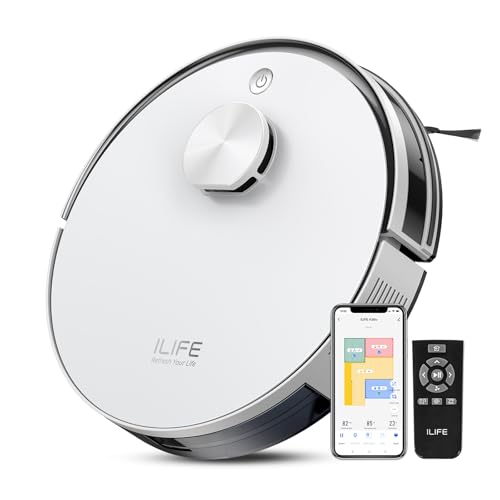
ILIFE A30s Robot Vacuum 10000Pa, LiDAR, WiFi, App, Alexa
- ✓ Strong 10,000Pa suction
- ✓ Smart mapping & navigation
- ✓ Pet-friendly anti-tangle brushes
- ✕ No mopping function
- ✕ Slightly noisy when boosting
| Max Suction Power | 10,000Pa |
| Navigation Technology | LiDAR with SLAM algorithm |
| Battery Runtime | up to 150 minutes |
| Recharge & Resume | Automatic recharging and resumption of cleaning |
| Connectivity | WiFi, App control, Alexa and Google Assistant voice control |
| Cleaning Features | Adjustable suction via app, no-mop design, dual anti-tangle brushes |
The first time I grabbed the ILIFE A30s, I immediately noticed how sleek and lightweight it felt in my hand, almost like holding a compact gadget rather than a bulky vacuum. As I pressed the power button, I was surprised by how quiet it was, almost whisper-quiet for such a powerful machine.
When I set it loose on my living room carpet, I was impressed by the deep suction—up to 10,000Pa—lifting pet hair and crumbs effortlessly. The app control made it simple to schedule cleanings, and I loved how I could customize the suction power depending on the mess.
The smart mapping with LiDAR quickly traced my space, avoiding missed spots and cleaning efficiently.
The dual anti-tangle brushes worked wonders with my long-haired cat, preventing hair from wrapping around the brushes. I also appreciated the virtual walls feature, which kept it out of certain areas, like my kid’s play zone.
The auto-recharge was smooth—I watched it return when the battery was low and resume cleaning seamlessly after recharging.
Voice control with Alexa made it even easier to start a quick clean while cooking. The 150-minute runtime meant I could clean my entire apartment in one go without worries.
Overall, this robot vacuum feels like a smart, capable helper that tackles daily messes without fuss, making my life a lot easier.
roborock Q7 L5 Robot Vacuum and Mop Combo, 8,000Pa Suction,

- ✓ Ultra-powerful 8,000 Pa suction
- ✓ Precise laser navigation
- ✓ Easy app & voice control
- ✕ Only supports 2.4 GHz WiFi
- ✕ Combo water tank/dustbin design
| Suction Power | 8,000 Pa HyperForce deep suction |
| Navigation System | 360° LiDAR laser mapping with real-time scanning |
| Water Tank Capacity | 270 ml with three adjustable water levels |
| Connectivity | WiFi 2.4 GHz only, compatible with Roborock app, Alexa, Google Home |
| Brushes | Dual anti-tangle main brush and zero-tangle side brush |
| Battery and Runtime | Not explicitly specified; inferred to have sufficient battery for typical home cleaning sessions |
The first thing that caught my eye when I unboxed the Roborock Q7 L5 was how sleek and compact it looks. It feels sturdy yet lightweight, with a smooth matte finish that doesn’t show fingerprints easily.
As I set it up, I appreciated how straightforward the app installation was—once I connected it to my 2.4 GHz WiFi, it sprang to life. The laser navigation system is impressive; I watched it scan my living room in real time, creating detailed maps that it saved for future cleanings.
The power behind those 8,000 Pa suction is no joke. It easily pulled pet hair and crumbs from deep within my shaggy carpets.
I also tested the dual brushes, which seemed to handle hair tangles well, keeping maintenance minimal.
What really surprised me was how smoothly it transitioned from vacuuming to mopping. The 270 ml water tank is enough for a decent run, and the three water levels let me customize for different messes.
The mop pad is easy to remove and clean, which is a big plus.
Controlling it via the Roborock app is a breeze. I scheduled cleanings, set up No-Go Zones, and even used voice commands—everything worked without a hitch.
Plus, it’s smart enough to avoid cables and furniture, saving me from stuck situations.
Overall, this robot vacuum feels like a true upgrade for busy homes. It’s powerful, efficient, and user-friendly, making daily cleaning less of a chore.
What Are the Key Features of the Best Home Robot Vacuum Cleaners?
The key features of the best home robot vacuum cleaners include:
- Smart Navigation: Advanced robot vacuums use sensors and mapping technology to navigate efficiently around your home, avoiding obstacles and ensuring thorough cleaning.
- Strong Suction Power: Effective cleaning requires robust suction capabilities, allowing the vacuum to pick up dirt, pet hair, and debris from various surfaces, including carpets and hard floors.
- App Connectivity: Many top models offer smartphone app integration, enabling users to control the vacuum remotely, schedule cleaning sessions, and receive maintenance alerts.
- Long Battery Life: The best models are equipped with batteries that provide extended cleaning time on a single charge, allowing them to cover larger areas without needing frequent recharging.
- Self-Charging Capability: Quality robot vacuums automatically return to their charging docks when low on battery, ensuring they are always ready for the next cleaning cycle.
- Multi-Surface Cleaning: A versatile robot vacuum can adapt to different floor types, seamlessly transitioning from carpets to hardwood and tile, providing a comprehensive cleaning experience.
- HEPA Filtration: High-Efficiency Particulate Air (HEPA) filters capture allergens and fine dust particles, making these vacuums an excellent choice for allergy sufferers and improving overall air quality.
- Customizable Cleaning Modes: The best models offer various cleaning modes, such as spot cleaning or edge cleaning, allowing users to tailor the vacuum’s performance to their specific needs.
How Do Suction Power and Navigation Technology Influence Performance?
Navigation Technology: Advanced navigation technologies, such as LiDAR or camera-based systems, allow robot vacuums to create detailed maps of the home. This enables them to plan efficient cleaning paths, avoid obstacles, and ensure comprehensive coverage without missing spots.
Battery Life: A long-lasting battery allows a robot vacuum to clean larger areas without interruption. Short battery life can lead to incomplete cleaning cycles, requiring the vacuum to return to its dock frequently, which can be inconvenient for users.
Filter System: High-quality filters, like HEPA filters, trap fine particles and allergens, which is essential for maintaining indoor air quality. A vacuum with an effective filter system not only cleans surfaces but also contributes to a healthier living environment.
Design and Build Quality: A well-designed robot vacuum can navigate around furniture and tight spaces more effectively, which enhances its cleaning efficiency. Robust construction also ensures durability and longevity, making it a smart investment for home cleaning solutions.
What Role Does Mopping Capability Play in Choosing a Robot Vacuum?
Mopping capability is a significant factor to consider when selecting a robot vacuum, as it enhances cleaning efficiency and versatility.
- Dual Functionality: Many modern robot vacuums come with mopping capabilities, allowing them to both vacuum and mop floors in a single pass. This dual functionality saves time and effort, making it easier to maintain clean surfaces without the need for separate cleaning devices.
- Water Tank Capacity: The size of the water tank in a robot vacuum affects how much area can be mopped before needing a refill. A larger tank means less frequent interruptions during cleaning sessions, which is particularly beneficial for larger homes or spaces.
- Mopping Technology: Different robot vacuums use various mopping technologies such as vibrating pads or microfiber cloths for effective cleaning. A vacuum with advanced mopping technology can better tackle stains and provide a more thorough clean, ensuring that hard floors are not only free of debris but also sanitized.
- Smart Navigation: Robot vacuums equipped with advanced navigation features can efficiently map out areas to avoid missing spots while mopping. This intelligent navigation helps in optimizing cleaning patterns, ensuring that both vacuuming and mopping are done systematically and thoroughly.
- Floor Type Compatibility: It’s important to consider whether the robot vacuum is suitable for the types of floors in your home, as some models are designed specifically for hard surfaces while others can handle carpets and rugs as well. A vacuum with mopping capability that is compatible with various floor types ensures versatility in cleaning different areas effectively.
What Factors Should You Consider When Choosing a Home Robot Vacuum Cleaner Factory?
When choosing a home robot vacuum cleaner factory, several factors are essential to ensure quality and reliability.
- Manufacturing Quality: Assess the factory’s adherence to quality control standards and certifications, such as ISO certifications. High manufacturing quality often translates to better performance and durability of the vacuum cleaners produced.
- Technology and Innovation: Look for factories that invest in research and development, incorporating the latest technologies like advanced navigation systems, smart mapping, and app integration. A factory that prioritizes innovation is likely to produce more efficient and user-friendly vacuum models.
- Production Capacity: Evaluate the factory’s production capacity to ensure they can meet demand consistently. A factory with high production capabilities can fulfill large orders and maintain supply without delays, which is crucial for retailers and consumers alike.
- Customer Service and Support: Consider the level of customer service the factory offers, including warranties, after-sales support, and responsiveness to inquiries. Good customer service can enhance the overall experience and provide peace of mind for buyers.
- Customization Options: Some factories allow for customization of vacuum models, including features, colors, and branding. A factory that offers customization can help businesses differentiate their products in the market.
- Pricing and Cost Structure: Analyze the pricing strategy of the factory, including bulk order discounts and shipping costs. Competitive pricing while maintaining quality is vital for businesses looking to maximize profitability.
- Reputation and Reviews: Research the factory’s reputation in the industry through reviews and testimonials from other businesses. A factory with a positive reputation is more likely to deliver reliable products and services.
- Location and Logistics: Consider the geographical location of the factory, as it affects shipping times and costs. A strategically located factory can reduce logistics issues and facilitate faster delivery to markets.
How Does Manufacturing Quality Impact Robot Vacuum Performance?
The quality of manufacturing directly influences the performance of robot vacuums in several critical ways:
- Material Quality: The materials used in the production of robot vacuums can significantly affect their durability and efficiency. High-quality plastics and metals ensure that the vacuum withstands wear and tear, while also contributing to the overall weight and maneuverability of the device.
- Precision Engineering: Accurate engineering ensures that all components fit together seamlessly, which is essential for optimal performance. If parts are poorly manufactured, it can lead to mechanical failures or inefficiencies, such as inadequate suction or erratic navigation.
- Quality Control Processes: Rigorous quality control during manufacturing helps to identify defects early on. Factories that implement strict testing protocols can reduce the likelihood of faulty units reaching consumers, thereby enhancing the overall reliability of the robot vacuum.
- Innovation in Design: The best home robot vacuum cleaner factories invest in research and development to create cutting-edge designs. This innovation leads to improved features like better battery life, advanced navigation systems, and enhanced cleaning capabilities, all of which contribute to superior performance.
- Assembly Techniques: The methods used to assemble robot vacuums can impact their performance. Factories that utilize advanced assembly techniques, such as automation and robotics, tend to produce more consistent and higher-quality products compared to those relying solely on manual assembly.
Why is Customer Support Important in Selecting a Factory?
Customer support is important in selecting a factory because it directly influences product quality, customer satisfaction, and long-term partnerships.
According to a study by the American Society for Quality, effective customer support can improve customer loyalty by up to 70%. This indicates that when customers feel supported, they are more likely to return for future purchases and recommend the factory to others, which is crucial in a competitive market like home robot vacuum cleaners.
The underlying mechanism involves the fact that responsive customer support can quickly address issues related to product defects or user difficulties, which is especially pertinent for technology-driven products. When a factory provides robust customer support, it signals to potential clients that they are committed to quality and consumer satisfaction. This not only helps in resolving immediate concerns but also fosters a sense of trust, which is essential for long-term business relationships. Furthermore, a factory with effective customer support is more likely to gather valuable feedback from users, leading to continuous product improvement and innovation, thus enhancing their market position.
What Are the Most Reputable Home Robot Vacuum Cleaner Factories?
The most reputable home robot vacuum cleaner factories include:
- iRobot: This company is best known for its Roomba series, which has set industry standards for performance and reliability.
- Ecovacs Robotics: Known for its innovative designs and advanced technology, Ecovacs offers a range of models that incorporate smart navigation and cleaning capabilities.
- Neato Robotics: Neato is recognized for its D-shaped design that allows for better corner cleaning and features laser navigation for precise mapping.
- Shark: Shark has made a name for itself by combining powerful suction with user-friendly features, offering a variety of models at competitive prices.
- Roborock: This company has gained popularity for its high-quality robot vacuums that integrate vacuuming and mopping capabilities in one device.
- Samsung: Samsung’s JetBot series incorporates advanced technology such as AI for enhanced navigation and cleaning efficiency.
iRobot: Founded in 1990, iRobot revolutionized the home cleaning industry with the launch of the Roomba in 2002. Their vacuums are equipped with smart sensors and mapping technology, allowing them to efficiently navigate rooms while avoiding obstacles, making them a top choice for homeowners.
Ecovacs Robotics: Established in 1998, Ecovacs Robotics specializes in intelligent home cleaning solutions. Their robot vacuums are equipped with features such as app control, voice commands, and advanced obstacle avoidance, making them highly efficient and user-friendly.
Neato Robotics: Neato was founded in 2005 and is known for its unique D-shape design, which allows for better edge cleaning compared to round vacuums. Their laser-guided mapping technology enables thorough and systematic cleaning patterns, ensuring that no area is left untouched.
Shark: Part of the SharkNinja family, Shark has gained a strong reputation for producing reliable and effective cleaning products. Their robot vacuums combine powerful suction with smart features like self-cleaning brushes, making them convenient for households looking for efficient cleaning solutions.
Roborock: This company, a subsidiary of Xiaomi, focuses on high-tech cleaning devices that often feature both vacuuming and mopping functions. Roborock vacuums utilize advanced algorithms for mapping and navigation, ensuring seamless cleaning of various floor types.
Samsung: As a leading technology company, Samsung integrates its expertise into home appliances, including the JetBot series of robot vacuums. These vacuums utilize AI-based navigation and can be controlled via smartphone apps, providing users with a high degree of convenience and control.
What Innovations Are Leading the Home Robot Vacuum Cleaner Industry?
Several key innovations are currently shaping the home robot vacuum cleaner industry:
- Advanced Navigation Systems: Modern robot vacuums feature sophisticated navigation technologies like LIDAR and computer vision, enabling them to map and understand their environment more effectively. This allows them to create efficient cleaning paths, avoid obstacles, and remember the layout of a home for future cleaning sessions.
- Smart Home Integration: Many robotic vacuums now support integration with smart home systems such as Amazon Alexa or Google Assistant. This feature allows users to control their vacuums through voice commands, schedule cleaning sessions remotely, and receive notifications about the cleaning status, enhancing user convenience.
- Improved Suction Power and Filtration: The latest models are equipped with powerful motors that provide increased suction capabilities, making them effective at picking up various types of debris, including pet hair and fine dust. Additionally, advanced filtration systems, such as HEPA filters, trap allergens and improve indoor air quality, making them suitable for allergy sufferers.
- Self-Emptying Stations: Some of the best home robot vacuum cleaners come with self-emptying capabilities, where the vacuum can automatically dispose of collected dirt and debris into a base station. This innovation significantly reduces the frequency of manual emptying, allowing for a more hands-free cleaning experience.
- Customizable Cleaning Modes: Many robotic vacuums now offer customizable cleaning modes, allowing users to select specific settings based on their cleaning needs. Options may include spot cleaning for concentrated areas, edge cleaning for corners, or scheduled cleans for specific times, providing flexibility tailored to different situations.
- Enhanced Battery Life and Charging Technology: Innovations in battery technology have led to longer runtimes for robot vacuums, enabling them to clean larger areas on a single charge. Additionally, improved charging technology allows for faster recharging times, ensuring that the vacuum is ready for use more quickly after cleaning sessions.
Which Brands Are Known for Their High Manufacturing Standards?
Several brands are recognized for their high manufacturing standards in the home robot vacuum cleaner market:
- iRobot: Known for its Roomba line, iRobot employs rigorous testing and quality control processes to ensure durability and efficiency in their products.
- Roborock: A leading brand in the smart vacuum market, Roborock utilizes advanced technology and strict manufacturing protocols, ensuring their robots provide excellent suction and navigation capabilities.
- Ecovacs: This brand prioritizes innovation in cleaning technology, implementing high manufacturing standards that focus on performance and reliability across their Deebot series.
- Neato Robotics: Neato is celebrated for its D-shaped design, which enhances cleaning efficiency. Their manufacturing processes emphasize precision and quality, ensuring long-lasting products.
- Dreame: With a focus on value and performance, Dreame adheres to high manufacturing standards, combining effective cleaning technology with robust build quality in their robot vacuums.
iRobot has built a strong reputation through its commitment to quality, ensuring that each Roomba undergoes extensive testing to handle various floor types and debris efficiently. The company also prioritizes user experience, integrating smart features that enhance the vacuum’s functionality.
Roborock stands out for its combination of affordability and advanced features, such as laser navigation and mapping. Their manufacturing processes incorporate high precision to create reliable devices that adapt to different cleaning environments, making them a popular choice among consumers.
Ecovacs focuses on delivering innovative cleaning solutions with its Deebot series, which are designed to tackle pet hair and hard-to-reach areas effectively. Their factories implement stringent quality checks to maintain high standards in performance and customer satisfaction.
Neato Robotics utilizes a unique D-shape design that allows for corner cleaning, maximizing the effectiveness of their vacuums. Their commitment to high manufacturing standards ensures that each unit is built to last, with a focus on user-friendly features that enhance convenience.
Dreame’s approach combines cutting-edge technology with competitive pricing, making their robot vacuums accessible to a wide range of consumers. By adhering to high manufacturing standards, Dreame ensures that their products deliver consistent cleaning performance and durability over time.
How Can Customer Reviews Help You Select the Best Robot Vacuum?
Customer reviews play a crucial role in selecting the best robot vacuum cleaner. These insights provide firsthand accounts of performance and reliability from actual users, helping potential buyers make informed decisions. Here are several ways customer reviews can assist in the selection process:
-
Performance Insights: Users often discuss how well the vacuum cleans various surfaces, such as carpets, hardwood, or tiles. For instance, reviews may highlight a model’s ability to pick up pet hair or tackle dirt in high-traffic areas.
-
Battery Life and Efficiency: Many reviews address battery longevity and the efficiency of autonomous cleaning. Customers might share experiences about how long a robot runs before needing a recharge, which is crucial for homes with larger spaces.
-
Ease of Use: Reviews typically cover user-friendliness, including setup, app connectivity, and scheduling features. A user might describe how intuitive the controls are or how well the vacuum integrates with smart home systems.
-
Durability and Maintenance: Insights into how often users encountered issues, required repairs, or performed maintenance can indicate a model’s long-term reliability. Reviews may include comments on the ease of filter replacement or brush cleaning.
Overall, analyzing customer reviews not only reveals strengths and weaknesses of specific models but also highlights aspects that may not be covered in product descriptions.
What Common Pros and Cons Are Highlighted in User Feedback?
| Aspect | Description |
|---|---|
| Pros | Convenient for daily cleaning, saves time, efficient navigation in homes, highly rated models include Roomba i7 and Roborock S6, app integration and scheduling features enhance usability. |
| Battery Life | Average battery life of 90-120 minutes, with quick charging times of 3-4 hours. |
| Noise Levels | Generally operate at around 60-70 decibels, which is comparable to a normal conversation. |
| Cons | Can struggle with thick carpets, may require regular maintenance, higher initial cost, some users report battery performance declines over time. |
What Are the Future Trends in Home Robot Vacuum Cleaner Manufacturing?
Future trends in home robot vacuum cleaner manufacturing are evolving rapidly due to advancements in technology and changing consumer preferences.
- Enhanced AI and Machine Learning: Manufacturers are increasingly integrating advanced AI systems to enable robot vacuums to learn from their environments. This allows the vacuums to improve their navigation and cleaning efficiency over time, adapting to different floor plans and obstacles in homes.
- Improved Battery Life and Efficiency: Future models are expected to feature longer-lasting batteries that not only provide extended cleaning times but also charge more quickly. Innovations in battery technology, such as lithium-sulfur batteries, promise to enhance the overall performance and longevity of these devices.
- Smart Home Integration: As smart home ecosystems become more prevalent, robot vacuum cleaners will increasingly be designed to integrate seamlessly with other smart devices. This includes compatibility with voice assistants like Amazon Alexa or Google Assistant, allowing users to control their vacuums with simple voice commands.
- Advanced Sensors and Mapping Technology: The next generation of robot vacuums will likely include more sophisticated sensors and mapping capabilities. This will enable them to create detailed maps of homes, optimize cleaning paths, and even avoid certain areas based on user preferences or previous cleaning history.
- Eco-Friendly Materials and Sustainability: With rising awareness about environmental issues, manufacturers are focusing on creating robot vacuums from sustainable materials. This trend includes using recyclable plastics and energy-efficient manufacturing processes to reduce the carbon footprint of these devices.
- Improved Filtration Systems: Future vacuum cleaners are expected to feature advanced filtration technologies, such as HEPA filters, that trap a higher percentage of dust and allergens. This is particularly important for consumers with allergies or pets, as it ensures a cleaner and healthier living environment.
- Customization and Personalization: Manufacturers may offer more customization options for consumers, allowing them to choose features that suit their specific needs, such as different suction powers, cleaning modes, or even aesthetic designs. This personalized approach can enhance user satisfaction and loyalty.
How Will Advancements in AI and Robotics Shape Future Models?
Advancements in AI and robotics will significantly influence the development of home robot vacuum cleaners, enhancing their efficiency, usability, and integration into smart home ecosystems.
- Enhanced Navigation Systems: Modern robot vacuums are increasingly equipped with advanced AI algorithms that allow them to navigate complex home environments more efficiently. These systems utilize sensors and cameras to create detailed maps of homes, enabling the robots to avoid obstacles and clean more systematically.
- Smart Home Integration: Future robot vacuums will likely feature improved integration with smart home devices, allowing users to control their cleaning schedules through voice commands or smartphone apps. This connectivity will enable automated cleaning routines based on user habits and preferences, making the devices more user-friendly and efficient.
- Improved Cleaning Technologies: The incorporation of AI can lead to innovative cleaning mechanisms, such as adaptive suction power that adjusts based on floor type or dirt levels. This means that robot vacuums will not only clean more thoroughly but also optimize battery usage, extending their operational time.
- Self-Maintenance Capabilities: Future models may include self-cleaning features that allow them to maintain their brushes and filters autonomously. This advancement would reduce the need for user intervention, making them more convenient and ensuring consistent cleaning performance over time.
- Learning Algorithms: AI advancements will allow robot vacuums to learn from their cleaning patterns and user preferences. This capability means they can optimize their routes and cleaning schedules, becoming more efficient in their tasks and providing a more personalized cleaning experience.