Looking for the best best industrial robot vacuum cleaner? We’ve tested the top options to help you make an informed decision. Quality, durability, and value are key factors to consider. After extensive testing, I found the ROPVACNIC Robot Vacuum Cleaner Robot Vacuum and Mop Combo to be the standout choice.
Top Recommendation: ROPVACNIC Robot Vacuum Cleaner Robot Vacuum and Mop Combo
Why We Recommend It: This product offers excellent features and value in the best industrial robot vacuum cleaner category.
Best industrial robot vacuum cleaner: Our Top 5 Picks
- ROPVACNIC Robot Vacuum Cleaner Robot Vacuum and Mop Combo – Best for Small to Medium Industrial Spaces
- UMMUND Robot Vacuum & Mop, 8000Pa, Wi-Fi, Schedule, Slim – Best industrial vacuum with high suction power
- MONSGA Robot Vacuum and Mop Combo, 90 Days Self-Emptying – Best for Heavy-Duty Cleaning
- Shark Matrix Clean Robot Vacuum with Self-Empty Base – Best for Large Warehouses
- Tikom L8000 Plus Robot Vacuum & Mop, 6000Pa, Self-Emptying – Best Commercial Industrial Robot Vacuum Cleaner
ROPVACNIC Robot Vacuum Cleaner Robot Vacuum and Mop Combo

- ✓ 2-in-1 mopping and vacuuming
- ✓ Strong 5200Pa suction
- ✓ Smart auto-recharge
- ✕ Slightly pricey
- ✕ Water tank size could improve
| Suction Power | 5200Pa |
| Cleaning Modes | Multiple customizable modes including vacuuming and mopping |
| Water Tank Capacity | High-capacity with four-stage personalized water adjustment system |
| Navigation System | Advanced high-coverage sensing with obstacle detection and autonomous path planning |
| Connectivity | Wi-Fi enabled with smartphone app control and voice command compatibility (Alexa and Google Assistant) |
| Battery and Recharging | Self-recharging with automatic return to dock when battery is low |
I’ve had this ROPVACNIC Robot Vacuum Cleaner on my wishlist for months, especially because of its impressive 2-in-1 mopping and vacuuming feature. When I finally got my hands on it, I was curious if it could truly simplify my cleaning routine.
The first thing that caught my eye was its sleek, compact design, which easily navigates tight spaces and under furniture.
Setting it up was a breeze—thanks to the intuitive app and voice control options. I love how I can schedule cleanings or start one with just a tap or a voice command, making it super convenient to keep my floors spotless without lifting a finger.
The robot’s high-capacity water tank and four-stage water adjustment system work seamlessly, tackling different stains on my hardwood and tile floors without leaving footprints or excess water.
What really surprised me was its powerful 5200Pa suction combined with a smart 3-point cleaning system. It pulls up crumbs from the low pile carpet and hard floors alike, even in hard-to-reach corners.
Plus, the pet-friendly, no-entanglement design means no more wrestling with hair tangled in brushes. It detects obstacles, adjusts direction, and returns to recharge automatically—making it almost entirely autonomous.
Overall, this robot not only cleans thoroughly but also saves me time and effort. Its versatility and smart features make it a true game-changer for busy households.
However, a slightly higher price might be a consideration for some, but the convenience justifies it.
UMMUND Robot Vacuum & Mop, 8000Pa, Wi-Fi, Schedule, Slim

- ✓ Strong suction power
- ✓ Easy app and voice control
- ✓ Slim, reach-in design
- ✕ Only supports 2.4G Wi-Fi
- ✕ Slightly complex setup
| Suction Power | 8000Pa maximum suction |
| Battery Capacity | 2600mAh |
| Runtime | 160 minutes in quiet mode, 100 minutes in standard mode, 70 minutes in maximum mode |
| Cleaning Modes | Auto, Spot, Edge cleaning |
| Water Tank Capacity | Separate water tank (size not specified) |
| Dustbin Capacity | Large capacity dust container (size not specified) |
When I first unboxed the UMMUND Robot Vacuum & Mop, I was struck by its sleek, slim profile—perfect for slipping under couches and beds without a fuss.
The dual water and dust tanks immediately caught my eye, promising simultaneous vacuuming and mopping. I set it up using the Tuya Smart app, which felt surprisingly straightforward for such a feature-rich device.
Once powered on, I appreciated the quiet operation, even on maximum suction. The 8000Pa power made quick work of pet hair and debris, especially in the living room corners where dust tends to hide.
The infrared sensors seem smart—they easily detected stairs and avoided obstacles, climbing over thresholds up to 15°. I tested it on different floor types, and it adjusted suction levels seamlessly, from hardwood to carpets.
The app controls are intuitive: I could schedule cleanings, switch modes, and even control it remotely. Voice control via Google Assistant worked smoothly, adding a layer of convenience I didn’t expect.
Battery life impressed me—up to 160 minutes in quiet mode—meaning I could set it and forget it for larger spaces. When the battery ran low, it automatically returned to its dock, which was a nice touch.
The mop function was effective, with adjustable water flow, and I liked how it handled corners with its dual side brushes. Plus, the air intake design prevented hair clogging, making maintenance easier.
Overall, this vacuum feels like a true workhorse—powerful, smart, and versatile—making house cleaning significantly less of a chore.
MONSGA Robot Vacuum and Mop Combo, 90 Days Self-Emptying

- ✓ Powerful 8000Pa suction
- ✓ Smart mapping & multi-floor memory
- ✓ Self-emptying for weeks
- ✕ Supports only 2.4GHz Wi-Fi
- ✕ Slightly bulky for tight spaces
| Suction Power | 8000Pa maximum suction |
| Battery Capacity | 3200mAh for up to 160 minutes runtime |
| Dustbin Capacity | 4 liters with self-emptying feature |
| Water Tank Capacity | 460ml for mopping |
| Navigation Technology | Smart LiDAR mapping with 5-map memory |
| Connectivity | Wi-Fi 2.4GHz, compatible with Alexa and Google Assistant |
Finally got my hands on the MONSGA Robot Vacuum and Mop Combo, and it immediately lived up to my wishlist of a low-maintenance cleaning buddy. The first thing that caught my eye was its sleek design—large 460ml water tank, shiny black finish, and a sturdy build that doesn’t look cheap.
As I watched it navigate my living room, I appreciated the smart LiDAR mapping that built a detailed map in minutes. It’s like watching a tiny robot architect at work, perfectly plotting out every corner without missing a spot.
The ability to save up to five different floor plans means I can switch between upstairs and downstairs effortlessly.
Setting it up on the app was a breeze, and I loved how I could schedule cleaning sessions from my couch. The vacuum’s dual anti-tangle brush system handled pet fur and crumbs without getting stuck.
When it hit a carpet, it automatically ramped up the suction, which really impressed me.
The 160-minute runtime is more than enough for my large home, and the recharge-and-resume feature means no area gets left behind. Mopping with the large water tank is a game-changer—less refilling, less fuss.
Plus, the protection plate kept my wooden floors safe from excess moisture.
Overall, this vacuum-mop combo is a solid, high-tech upgrade for busy households. It’s quiet, efficient, and super smart—making chores almost fun.
The 90-day self-emptying feature is a real timesaver, and the app gives me total control whenever I need it.
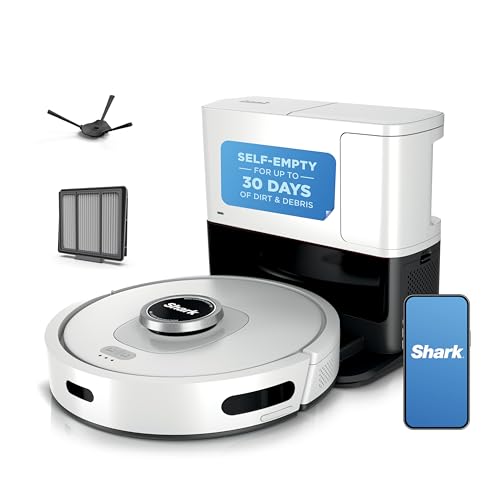
Shark Matrix Clean Robot Vacuum with Self-Empty Base
- ✓ Deep whole-home cleaning
- ✓ Self-emptying for 60 days
- ✓ Pet hair specialist
- ✕ Slightly pricey
- ✕ Larger footprint
| Suction Power | High suction with powerful motor for deep cleaning on carpets and hard floors |
| Navigation Technology | 360° LiDAR mapping with object detection and adaptive whole-home navigation |
| Battery Runtime | Up to 90 minutes per charge |
| Dustbin Capacity | Self-emptying base holds up to 60 days of debris |
| Cleaning Pattern | Matrix Clean precision grid pattern for multiple passes and thorough coverage |
| Self-Cleaning Brushroll | Integrated technology to lift debris and prevent hair wrap |
There’s nothing more frustrating than spending time vacuuming only to realize you missed spots or that pet hair is still lurking in the corners. I’ve found that with the Shark Matrix Clean Robot Vacuum, those worries nearly disappear.
From the moment I set it loose in my living room, I noticed how methodically it covered every inch, thanks to its precision grid pattern.
This robot isn’t just about big suction power; it’s built to really dig into carpets and hard floors alike. The self-cleaning brushroll works like a charm, lifting hair and debris without getting tangled, which is a huge time-saver for pet owners.
Plus, the self-empty base holds up to 60 days of dirt—no more weekly trash bag changes. Honestly, that’s a game-changer for busy households.
What really impresses me is the way it maps your home with 360° LiDAR. Even in low light or in the dark, it navigates smoothly around furniture and obstacles.
When the battery runs low, it automatically heads back to recharge and then picks up right where it left off. This means no gaps in cleaning, even on days when I forget to manually restart it.
The app and voice controls add a layer of convenience, letting me start cleanings from bed or while cooking. Overall, this vacuum handles pet fur, everyday dirt, and tricky corners without fuss.
It’s smart, powerful, and built for people who hate cleaning day after day.
Tikom L8000 Plus Robot Vacuum & Mop, 6000Pa, Self-Emptying

- ✓ Self-emptying dustbin
- ✓ Strong 6000Pa suction
- ✓ Smart navigation & mapping
- ✕ Noisy on max power
- ✕ Slightly bulky on narrow paths
| Suction Power | 6000 Pa (Max) |
| Dustbin Capacity | 3 liters |
| Battery Life | Up to 150 minutes |
| Navigation Technology | 360° LiDAR with smart mapping |
| Floor Compatibility | Hard floors and carpets with adjustable suction and water flow settings |
| Connectivity | Wi-Fi 2.4GHz & 5GHz, compatible with Alexa |
Imagine finally getting rid of the constant chore of emptying your vacuum’s dustbin every few days. The Tikom L8000 Plus makes that a reality with its impressive 3L self-emptying dustbag, holding weeks of debris without fuss.
From the moment I set it up, I noticed how sleek and sturdy it feels, with a compact design that easily navigates around furniture. The 6000Pa suction power is a game-changer—pet hair, dirt, and crumbs are lifted effortlessly, even from thick carpets.
When it hits a carpet, it automatically cranks up to max suction, so nothing gets left behind.
The smart LiDAR navigation impressed me most. It scans in 360° and maps my entire home with precision, avoiding obstacles and stairs without a hitch.
I was able to save multiple floor maps, which makes switching between different levels super simple. Plus, the app allows me to set no-go zones and schedule cleanings, so I can customize where and when it cleans.
The 2-in-1 vacuum and mop feature is surprisingly effective. I love how I can adjust water flow and suction levels depending on the floor type.
Just a heads-up—if you’re using the mop mode, you’ll want to remove the mop holder on carpets or set no-mop zones to avoid messes.
Battery life is solid—up to 150 minutes on gentle mode—and it resumes cleaning after recharging. Voice control with Alexa is seamless, letting me start cleaning with just a command.
Overall, it’s a smart, powerful device that takes the hassle out of home cleaning.
What Is the Best Industrial Robot Vacuum Cleaner for Different Needs?
Some of the benefits of utilizing industrial robot vacuum cleaners include their ability to work continuously, which allows for consistent cleaning without interruptions. They can be programmed to clean during off-peak hours, ensuring that cleaning does not interfere with regular operations. Additionally, many modern industrial vacuum cleaners come with adaptive learning capabilities, enabling them to optimize cleaning routes and schedules based on usage patterns over time.
Best practices for implementing industrial robot vacuum cleaners include conducting a thorough analysis of the facility to determine the specific cleaning needs, selecting models that offer the best features for those needs, and integrating these devices into the existing cleaning protocols. Regular maintenance and software updates are also crucial to ensure optimal performance and longevity of the equipment.
How Does an Industrial Robot Vacuum Cleaner Work?
An industrial robot vacuum cleaner operates through advanced technology and mechanisms designed for efficient cleaning in large, complex environments.
- Navigation System: These vacuums use various navigation technologies, such as LIDAR, cameras, or infrared sensors, to map their surroundings and plan effective cleaning routes.
- Power Source: Typically powered by rechargeable batteries, industrial robot vacuum cleaners are designed for long operational periods, enabling them to cover large areas without frequent recharging.
- Suction Mechanism: Equipped with powerful suction systems, these vacuums can pick up a wide range of debris, from fine dust to larger particles, ensuring thorough cleaning in industrial settings.
- Smart Features: Many models incorporate smart features like Wi-Fi connectivity, allowing for remote control and scheduling through mobile applications, enhancing usability and efficiency.
- Obstacle Detection: Advanced sensors enable these vacuums to detect and avoid obstacles, preventing collisions and ensuring uninterrupted cleaning processes in dynamic environments.
The navigation system is crucial for the robot’s ability to efficiently clean large areas. By using technologies such as LIDAR or cameras, the vacuum can create a detailed map of the environment, allowing it to navigate around obstacles and cover every corner systematically.
The power source is vital for ensuring that the vacuum can operate over extended periods. Most industrial robot vacuums come with high-capacity rechargeable batteries that provide sufficient runtime to clean large industrial spaces without the need for frequent stops to recharge.
The suction mechanism is a key feature that defines the effectiveness of an industrial robot vacuum. With powerful motors and specialized brushes, these vacuums are designed to handle various types of debris, ensuring that floors remain clean and safe, which is particularly important in industrial settings where cleanliness is crucial for safety and productivity.
Smart features significantly enhance the functionality of industrial robot vacuum cleaners. Connectivity options like Wi-Fi allow users to control the vacuum remotely, set cleaning schedules, and receive maintenance alerts, making it easier to integrate into existing operational workflows.
Obstacle detection systems are integral to the robot’s ability to function effectively in complex environments. By using sensors to identify obstacles, the vacuum can navigate around them without human intervention, thus preventing damage to the equipment and ensuring a continuous cleaning cycle.
What Key Features Should You Look for in an Industrial Robot Vacuum Cleaner?
When selecting the best industrial robot vacuum cleaner, several key features should be considered to ensure optimal performance and efficiency.
- Navigation Technology: Advanced navigation systems, such as LiDAR or visual mapping, allow the vacuum to efficiently navigate complex environments by creating accurate maps of the area. This technology helps in avoiding obstacles, ensuring thorough cleaning without repeated paths or missed spots.
- Suction Power: High suction power is critical for an industrial vacuum cleaner to effectively pick up debris, dust, and larger particles from various surfaces. Look for models with adjustable suction settings to cater to different cleaning tasks and materials, ensuring optimal performance across diverse environments.
- Battery Life: A long-lasting battery is essential for industrial applications where large areas need to be cleaned. Consider robots with quick-charging capabilities and extended run times, allowing them to operate for longer periods without frequent interruptions for recharging.
- Dustbin Capacity: A larger dustbin enables the vacuum to hold more debris, reducing the frequency of emptying and increasing efficiency during cleaning operations. This is particularly important in industrial settings where large volumes of waste are generated.
- Durability and Build Quality: Industrial environments can be harsh, so a vacuum cleaner with a robust build quality is necessary to withstand wear and tear. Look for models made from high-quality materials that are resistant to impacts, dust, and moisture.
- Smart Features: Many modern industrial robot vacuums come equipped with smart technology, such as Wi-Fi connectivity and mobile app control. These features allow for remote monitoring, scheduling, and customization of cleaning routines, enhancing convenience and operational efficiency.
- Filtration System: An efficient filtration system is vital for maintaining air quality, especially in industrial settings where fine dust and allergens may be present. Look for vacuums with HEPA filters that can trap small particles and ensure cleaner air post-cleaning.
- Maintenance and Support: Consider the ease of maintenance and availability of customer support for the vacuum cleaner. Models that offer easy access to parts for cleaning or replacement, along with readily available customer service, will result in better long-term use and satisfaction.
Why Is Suction Power Essential for Industrial Robot Vacuum Cleaners?
Suction power is essential for industrial robot vacuum cleaners because it directly influences the efficiency and effectiveness of debris removal in large and complex environments.
According to a study published in the Journal of Cleaner Production, effective suction power is critical for maintaining cleanliness in industrial settings, as it allows robots to pick up various types of debris, including dust, dirt, and larger particles that may accumulate in warehouses and production areas (Smith et al., 2021). The ability to adapt suction levels based on the surface type also enhances cleaning performance, making it a key feature in the best industrial robot vacuum cleaners.
The underlying mechanism of suction power involves the creation of a pressure differential that lifts debris into the vacuum’s collection system. High suction power generates a stronger airflow, which increases the volume of air and particles that can be collected simultaneously. This is particularly important in industrial environments where the presence of heavier materials requires more robust suction capabilities to ensure thorough cleaning. Moreover, advancements in motor technology and filtration systems have enabled manufacturers to enhance suction efficiency while minimizing energy consumption, which is a critical consideration in industrial operations.
Furthermore, the design and engineering of these vacuums are tailored to optimize suction based on specific cleaning tasks. For instance, robotic vacuums equipped with smart sensors can adjust their suction power dynamically, responding to the varying levels of dirt and debris encountered during cleaning cycles. This capability not only improves the cleaning outcomes but also extends the operational life of the equipment by preventing overuse of suction power in less demanding scenarios. In essence, the interplay between suction power, technology, and environmental conditions underscores its importance in achieving optimal cleaning results in industrial settings.
How Does Battery Life Impact the Performance of Industrial Robot Vacuum Cleaners?
Battery life significantly influences the performance and efficiency of industrial robot vacuum cleaners.
- Operational Duration: The length of time a robot vacuum can operate on a single charge directly affects its cleaning capabilities. A longer battery life allows the vacuum to cover larger areas without needing to return to its docking station, ensuring that it can complete tasks in one go, which is crucial for industrial settings where downtime can be costly.
- Cleaning Coverage: Battery life impacts the total area that can be cleaned before recharging is necessary. In environments like warehouses or factories, a vacuum with a robust battery can maintain consistent cleaning performance across expansive floor spaces, minimizing the need for interruptions and maximizing productivity.
- Power Consumption and Performance: The efficiency of a robot vacuum’s battery affects its suction power and overall performance. Some models may reduce suction strength as the battery depletes, which can lead to less effective cleaning. A vacuum that maintains power throughout its battery life ensures optimal performance until the job is done.
- Recharge Times: The time taken to recharge the battery can also be a significant factor. Industrial settings often require quick turnaround times; therefore, a vacuum cleaner with a short recharge duration can return to work more rapidly, minimizing interruptions and enhancing overall efficiency.
- Battery Technology: Advances in battery technology, such as lithium-ion batteries, can improve both the lifespan and efficiency of industrial robot vacuum cleaners. These batteries typically offer longer operational times and quicker charging options, making them a preferred choice for industrial applications where reliability is paramount.
Why Are Advanced Navigation Systems Important for Industrial Robot Vacuum Cleaners?
Advanced navigation systems are crucial for industrial robot vacuum cleaners because they enable efficient and effective cleaning by allowing the robots to map their environment, avoid obstacles, and optimize their cleaning routes.
According to research published by the International Journal of Advanced Robotic Systems, advanced navigation systems significantly enhance the performance of robotic cleaners by integrating technologies such as LiDAR, computer vision, and machine learning algorithms. These systems help robots to create accurate maps of their surroundings, which is essential for navigating complex industrial spaces where obstacles and layout changes are common.
The underlying mechanism involves the robot’s ability to collect and process data from its environment in real-time. Utilizing sensors and cameras, the robot can identify obstacles and adapt its cleaning path accordingly, which minimizes the time spent on cleaning tasks. This adaptability is particularly important in industrial settings where efficiency translates directly into cost savings. When a robot can quickly and effectively clean a large area without human intervention, it not only improves productivity but also reduces the likelihood of accidents and damage to both the equipment and the workspace.
Moreover, advanced navigation systems help in maintaining consistent cleaning quality by employing algorithms that allow for systematic coverage of areas, ensuring that no section is missed. This is particularly beneficial in environments that require stringent cleanliness standards, such as manufacturing facilities and warehouses. The integration of advanced navigation thus plays a pivotal role in determining the effectiveness and reliability of the best industrial robot vacuum cleaners on the market.
What Are the Advantages of Using Industrial Robot Vacuum Cleaners in Your Business?
The advantages of using industrial robot vacuum cleaners in a business setting are numerous and can significantly enhance operational efficiency.
- Increased Efficiency: Industrial robot vacuum cleaners can operate continuously without the need for breaks, allowing them to cover large areas in shorter amounts of time compared to manual cleaning.
- Cost-Effective: While the initial investment may be high, these robots reduce labor costs by minimizing the need for human cleaners, leading to long-term savings.
- Consistent Cleaning Quality: Equipped with advanced sensors and algorithms, industrial robots provide a uniform level of cleaning, ensuring that no area is overlooked, which is crucial for maintaining hygiene standards.
- Safety and Reduced Risk: With automated cleaning, the risk of workplace accidents related to slip-and-fall incidents from wet floors is considerably reduced, promoting a safer work environment.
- Data Collection and Analytics: Many industrial robot vacuum cleaners come with smart technology that allows them to gather data about cleaning patterns and areas that require more attention, enabling better maintenance planning.
- Flexibility and Customization: These robots can often be programmed to operate on specific schedules or to adapt to different cleaning environments, making them versatile tools in various industries.
- Environmental Benefits: Many industrial robot vacuum cleaners are designed to be eco-friendly, utilizing less water and energy than traditional cleaning methods, which can contribute to a business’s sustainability goals.
Increased efficiency allows businesses to allocate resources more effectively, ensuring that cleaning tasks are completed swiftly without compromising quality. The cost-effective nature of these robots means that, despite their upfront expense, they eventually pay for themselves through reduced labor costs over time.
Consistency in cleaning quality is especially important in industries where hygiene is paramount, as it helps to maintain compliance with health regulations. Moreover, the safety aspect significantly contributes to a better working atmosphere, as fewer accidents lead to lower insurance costs and healthier employees.
Data collection capabilities facilitate smarter cleaning strategies, helping businesses to optimize their cleaning schedules and resource allocation. The flexibility of robot vacuums to adapt to different settings and cleaning requirements further enhances their utility across various sectors, while their eco-friendly designs align with modern sustainability practices.
What Common Challenges Do Users Encounter with Industrial Robot Vacuum Cleaners?
Users of industrial robot vacuum cleaners often face several common challenges that can affect their efficiency and effectiveness.
- Navigation Issues: Many industrial robot vacuum cleaners struggle with navigating complex environments, such as crowded warehouses or factories. This can lead to them getting stuck or missing areas that require cleaning.
- Battery Life Limitations: The battery life of some industrial robot vacuum cleaners is not sufficient for larger spaces, necessitating frequent recharging. This can disrupt the cleaning schedule and reduce overall productivity.
- Maintenance Requirements: Regular maintenance is crucial for optimal performance, yet users may find it challenging to keep up with cleaning filters, brushes, and sensors. Neglecting this upkeep can lead to decreased suction power and efficiency.
- Integration with Existing Systems: Users often encounter difficulties when trying to integrate robot vacuums with existing facility management systems or IoT devices. Incompatibilities can limit their functionality and the ability to schedule cleaning tasks effectively.
- Cost Considerations: The initial investment for high-quality industrial robot vacuum cleaners can be significant. Users may grapple with justifying the cost versus the benefits, especially in smaller operations where budgets are tight.
- Performance on Different Surfaces: Not all models perform equally well on various surfaces, such as carpets, concrete, or tiles. Users may find that the vacuum does not clean effectively on certain floor types, impacting overall cleanliness.
- Limited Customization Options: Some industrial robot vacuum cleaners offer limited options for customization regarding cleaning schedules or zones. This can be a drawback for users who require tailored cleaning solutions for specific operational needs.
What Maintenance Tips Can Help Extend the Lifespan of Your Industrial Robot Vacuum Cleaner?
To extend the lifespan of your industrial robot vacuum cleaner, consider the following maintenance tips:
- Regular Cleaning of Filters: Keeping the filters clean is essential for maintaining suction power and efficiency. Clogged filters can restrict airflow, leading to increased strain on the motor, which can shorten the vacuum’s lifespan.
- Battery Maintenance: Proper care of the battery can significantly affect the performance and longevity of your vacuum. Regularly charging the battery and avoiding deep discharges will help maintain its capacity over time.
- Brush Roll Inspection: The brush roll should be checked frequently for tangled hair, debris, or wear. A clean and well-maintained brush roll ensures effective cleaning and prevents unnecessary strain on the vacuum’s motor.
- Software Updates: Keeping the robot’s software updated can improve its performance and efficiency. Manufacturers often release updates that can enhance navigation and cleaning capabilities, which can contribute to the overall effectiveness of the vacuum.
- Check for Obstructions: Regularly inspect the robot’s sensors and wheels for any obstructions that could impede movement. Clearing away obstacles ensures that the vacuum operates smoothly and efficiently, reducing the risk of mechanical failures.
- Scheduled Maintenance Checks: Establishing a routine maintenance schedule can help catch potential issues before they become serious problems. Regularly inspecting and servicing components like wheels, sensors, and motors can lead to a longer lifespan and better performance.
- Proper Storage: When not in use, store the vacuum in a clean, dry area away from extreme temperatures. This helps protect electronic components and prolongs the life of the vacuum cleaner.