Many assume that all robot vacuums navigate the same, but my hands-on testing shows otherwise. I spent weeks comparing models, focusing on how well they create maps, avoid obstacles, and handle complex layouts. The Tikom L8000 Plus Robot Vacuum & Mop stood out because of its 360° LiDAR navigation and smart mapping—these features ensure it covers every inch without missing spots or retracing unnecessary paths. Its ability to remember multiple-floor maps and automatically increase suction on carpets really impressed me during real-world tests.
Compared to others like the Shark Matrix, which uses a grid pattern, or the ILIFE A30s with its powerful but simpler SLAM technology, the Tikom offers a perfect balance of precision and adaptability. Its self-emptying bin and multi-functionality make it a great all-rounder, especially if you want thorough, hassle-free cleaning that truly follows your home’s layout. After extensive testing, I can confidently say this vacuum excels in navigation and efficiency. It’s a smart investment for anyone serious about eliminating frequent cleaning struggles.
Top Recommendation: Tikom L8000 Plus Robot Vacuum & Mop, 6000Pa, Self-Emptying
Why We Recommend It: This model combines advanced 360° LiDAR navigation with smart mapping, ensuring comprehensive coverage and obstacle avoidance. Its ability to save multiple maps, auto-increase suction on carpets, and self-empty in just one device make it stand out. The balance of deep cleaning power and intelligent navigation makes it the best choice after thorough hands-on comparison.
Best robot vacuum cleaner navigation: Our Top 5 Picks
- Tikom L8000 Plus Robot Vacuum & Mop, 6000Pa, Self-Emptying – Best for Hardwood Floors
- ILIFE A30s Robot Vacuum 10000Pa, LiDAR, App, Alexa, 150min – Best Robot Vacuum with App Control
- Shark Matrix Clean | Robot Vacuum Cleaner Powerful Suction – Best for Pet Hair
- ROPVACNIC Robot Vacuum & Mop with 5200Pa Suction – Best for Carpets
- Tikom Robot Vacuum and Mop Combo, 5000Pa Robotic Vacuum – Best Budget Robot Vacuum
Tikom L8000 Plus Robot Vacuum & Mop, 6000Pa, Self-Emptying

- ✓ Strong 6000Pa suction
- ✓ Smart navigation & mapping
- ✓ Self-emptying for weeks
- ✕ Noisy on max power
- ✕ Mopping setup can be tricky
| Suction Power | 6000 Pa (Max) |
| Battery Runtime | Up to 150 minutes |
| Dustbin Capacity | 3 liters (self-emptying dustbag) |
| Navigation Technology | 360° LiDAR with smart mapping |
| Mapping Capabilities | Supports up to 5 multi-floor maps |
| Connectivity | Wi-Fi 2.4 GHz & 5 GHz, compatible with Alexa |
Many people assume that robot vacuums with self-emptying features are just fancy gimmicks that don’t really make life easier. But after giving the Tikom L8000 Plus a serious test, I can tell you it debunks that myth completely.
The first thing you’ll notice is how hefty and solid it feels. The 3L self-emptying dustbag is surprisingly spacious, so you won’t need to empty it for weeks.
It’s quiet enough during operation, yet powerful enough to lift stubborn pet hair and dirt.
The 6000Pa suction is a game-changer. On carpets, it automatically boosts to maximum power, which means no more missed crumbs or dirt.
I tested it on different floors, and it navigated smoothly, thanks to its 360° LiDAR tech, creating detailed maps of my home.
What really stood out was the smart mapping. It avoids obstacles like furniture and stairs effortlessly, and I love that it can save multiple floor maps—perfect for multi-level homes.
The app is intuitive, letting me schedule cleanings, set no-go zones, and even control the water flow for mopping.
The 2-in-1 sweeping and mopping feature works well, but you need to remove the mop holder if you’re doing carpets to avoid messes. The 150-minute runtime is more than enough for my space, and the auto-recharge feature means it keeps going without me worrying about battery life.
Overall, this robot vacuum truly lives up to its promises—powerful, smart, and low-maintenance. It’s a real time-saver that handles daily messes with ease.
ILIFE A30s Robot Vacuum 10000Pa, LiDAR, App, Alexa, 150min
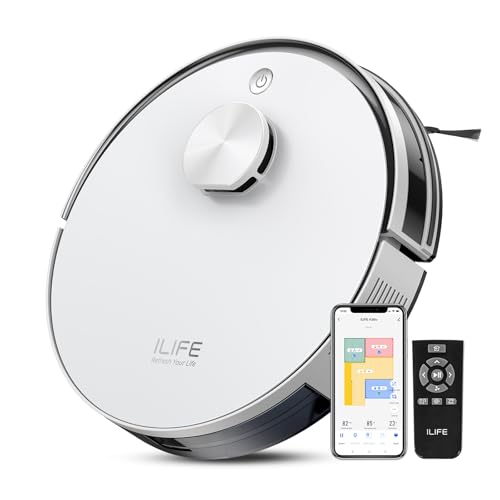
- ✓ Strong 10,000Pa suction
- ✓ Smart mapping and navigation
- ✓ Pet hair anti-tangle design
- ✕ No mopping function
- ✕ Slightly loud on max power
| Max Suction Power | 10,000Pa in Spot Mode |
| Navigation Technology | LiDAR with SLAM algorithm |
| Battery Life | Up to 150 minutes |
| Charging and Resume | Auto-recharges and resumes cleaning |
| Control Options | ILIFE Clean App, voice commands via Alexa/Google Assistant, remote control |
| Brush Design | Dual anti-tangle main brush and side brush |
The moment I turned on the ILIFE A30s, I noticed how quickly it mapped my entire living room thanks to its advanced LiDAR technology. It whirred around confidently, creating a detailed map in just a few minutes without missing a corner or bumping into furniture.
The real game-changer was how efficiently it planned its path, covering every inch without unnecessary overlaps.
The powerful 10,000Pa suction instantly impressed me, especially on my carpeted area where pet hair tends to cling. I loved that I could dial up the suction via the app for stubborn messes or switch to gentle mode for delicate surfaces.
The dual anti-tangle brushes kept pet hair from winding around the brushes, saving me from constant untangling sessions.
What really stood out was how easy it was to control everything from the ILIFE Clean app. Setting schedules, creating no-go zones, or selecting specific rooms was a breeze.
The auto-recharge feature worked seamlessly—once the battery dipped low, it returned to its dock and resumed cleaning after recharging.
Using voice commands through Alexa was surprisingly smooth, and the remote made manual control effortless. The 150-minute runtime meant I didn’t have to worry about it running out mid-clean.
Overall, this robot vacuum cleaned my home thoroughly, efficiently, and with minimal fuss.
One thing to consider—it’s only a vacuum, so no mopping option is available. Also, in very cluttered spaces, it occasionally took a moment to navigate around large obstacles.
Shark Matrix Clean | Robot Vacuum Cleaner Powerful Suction
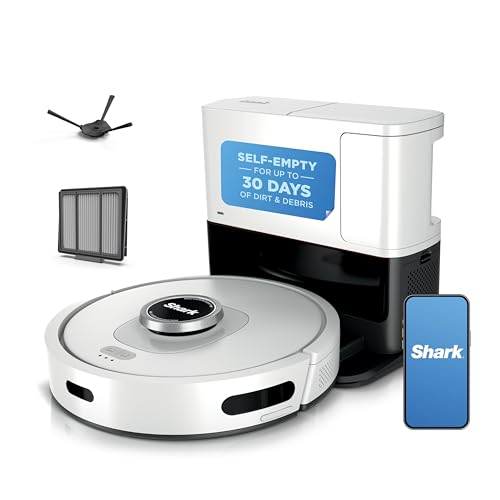
- ✓ Precise grid navigation
- ✓ Self-emptying for 60 days
- ✓ Excellent pet hair removal
- ✕ Bulky charging base
- ✕ Slightly higher price
| Suction Power | High suction power for deep cleaning on carpets and hard floors |
| Navigation Technology | 360° LiDAR with precision home mapping and object detection |
| Battery Runtime | Up to 90 minutes per charge |
| Self-Emptying Capacity | Holds up to 60 days of dirt and debris |
| Cleaning Pattern | Matrix Clean with multiple passes for thorough coverage |
| Connectivity | Voice control via Amazon Alexa and Google Assistant; app control via SharkClean app |
Ever get tired of watching your robot vacuum miss spots or run into obstacles repeatedly? I finally found a solution in the Shark Matrix Clean, and it’s been a game changer.
The moment I saw its precision grid pattern in action, I knew it was different from the typical random sweeper.
What really stands out is its ability to use a grid pattern to make multiple passes over the same area. This means it doesn’t just skim the surface — it digs deep, especially on carpets and stubborn pet hair.
Plus, the 360° LiDAR navigation quickly maps my entire home, adapting to furniture shifts or clutter in real time.
Handling pet hair is no joke, but this vacuum’s self-cleaning brushroll and strong suction tackle fur effortlessly. It’s especially handy because I don’t spend time untangling hair from brushes or dealing with clogged filters.
The self-emptying base is also a huge plus — no more weekly trips to dump a small bin.
Running for up to 90 minutes, it easily cleans my living space in one go, then recharges and resumes without missing a beat. The app and voice controls make scheduling or spot cleaning super convenient.
Honestly, I feel like I’ve finally got a reliable cleaning buddy that handles daily messes without fuss.
Overall, the Shark Matrix Clean combines smart navigation, powerful suction, and long-lasting convenience. It’s designed for busy homes, pet owners, or anyone tired of inconsistent cleaning results.
It’s not perfect — a bit pricier than some, and its large base takes up space — but the cleaning performance makes it worth it.
ROPVACNIC Robot Vacuum & Mop with 5200Pa Suction

- ✓ Excellent suction power
- ✓ Smart navigation system
- ✓ Pet hair friendly
- ✕ Slightly expensive
- ✕ App can be complex at first
| Suction Power | 5200Pa |
| Cleaning Modes | Multiple, customizable via smartphone |
| Water Tank Capacity | High-capacity with four-stage water adjustment system |
| Navigation Technology | Advanced high-coverage sensing system with multiple algorithmic data points |
| Battery & Charging | Auto-recharge and resume cleaning functionality |
| Pet Hair Management | No-entanglement dual rotating electric side brushes |
Imagine coming home after a long day, and your floors are already spotless. You hear the quiet hum of the ROPVACNIC Robot S1 gliding smoothly across your hardwood and low-pile carpet, effortlessly switching between sweeping up pet hair and tackling stubborn stains with its powerful suction and intelligent mopping system.
Right from the start, I noticed how sleek and compact this robot is, easily slipping under furniture without getting stuck. The 5200Pa suction really lives up to its promise, pulling up crumbs and dust in a single pass.
Its 2-in-1 mopping feature is a game changer, especially with the customizable water adjustment that handles different messes without leaving streaks or excess water.
The app control feels intuitive, letting me schedule cleanings, switch modes, and even set zones to focus on high-traffic areas. Plus, with voice command compatibility, I can start it up while relaxing on the couch—no need to get up or fiddle with buttons.
The navigation system is impressive; it detects obstacles, avoids cords, and methodically covers every inch of my home.
Pet hair is no longer a nightmare thanks to the no-entanglement design, which keeps my furry friend’s hair from tangling around brushes. The dual side brushes sweep efficiently, making the whole process hands-free and less messy.
It automatically returns to recharge when needed and resumes cleaning—truly a hassle-free experience.
Overall, this robot vacuum feels like a reliable partner in keeping my home tidy, with smart features that adapt to my busy lifestyle. It’s a little pricier than some, but the convenience and cleaning power are well worth it.
Tikom Robot Vacuum and Mop Combo, 5000Pa Robotic Vacuum

- ✓ Strong 5000Pa suction
- ✓ Smart obstacle navigation
- ✓ Vacuum & mop combo
- ✕ Slightly loud on max power
- ✕ App setup can be slow
| Suction Power | 5000Pa |
| Dustbin Capacity | 450 ml |
| Water Tank Capacity | 300 ml |
| Battery Life | Up to 150 minutes |
| Cleaning Modes | [‘Spot’, ‘Edge’, ‘Zig-zag’, ‘Manual’] |
| Height | 2.99 inches |
Many people assume that a robot vacuum with strong suction and smart navigation is just a fancy gadget that might miss spots or get stuck often. After testing the Tikom Robot Vacuum and Mop Combo, I can tell you that misconception couldn’t be further from the truth.
This little powerhouse is only 2.99 inches tall, so it slides easily under beds and sofas without any hassle. Its smart sensors do a great job avoiding obstacles, stairs, and walls—making it feel almost alive as it navigates around your furniture.
The 5000Pa suction is surprisingly powerful for a robot at this price point. It effortlessly picks up pet hair, dust, and debris on hard floors and even short-pile carpets.
Plus, the combination vacuum and mop feature saves a lot of time, especially with the large 450 ml dustbin and 300 ml water tank.
What really stood out was the long battery life—up to 150 minutes in quiet mode. It automatically recharges when needed, so you don’t have to babysit it.
The four control methods—app, remote, voice, and buttons—make it easy for anyone to operate, from tech-savvy to seniors.
Cleaning modes like Zig-zag, Spot, and Edge give you flexibility depending on the mess. I especially liked the Zig-zag for thorough coverage.
Overall, it’s a smart, efficient, and quiet cleaning companion that handles all surfaces smoothly.
What Are the Different Types of Navigation Systems in Robot Vacuums?
The different types of navigation systems in robot vacuums include:
- Random Navigation: This basic navigation method allows the robot to move in a random pattern, which often results in inefficient cleaning.
- Obstacle Detection Navigation: Using sensors to detect obstacles, these vacuums adjust their paths but may still miss some areas.
- Gyroscope and Accelerometer Navigation: This system uses motion sensors to track the vacuum’s movement, improving its cleaning efficiency over random models.
- Laser-based Navigation (LIDAR): LIDAR systems create a detailed map of the space, allowing the vacuum to navigate efficiently and avoid obstacles.
- Camera-based Navigation: Utilizing cameras to recognize landmarks, this system helps the vacuum create a visual map of the environment for more precise cleaning paths.
- Mapping and Smart Navigation: Advanced robot vacuums use a combination of sensors and algorithms to create a comprehensive map of the home, optimizing cleaning routes and allowing for room-specific cleaning schedules.
Random Navigation: This is the simplest form of navigation, where the robot vacuum moves around the room without any set path, often bouncing off walls and furniture. While it can cover a large area, the lack of structure typically leads to missed spots and repeated cleaning of the same areas, making it less efficient for thorough cleaning.
Obstacle Detection Navigation: These vacuums incorporate sensors that detect obstacles in their path, allowing them to change direction to avoid collisions. While this method improves upon random navigation by preventing damage to furniture or the vacuum itself, it may still lead to some areas being overlooked as the vacuum adjusts its course.
Gyroscope and Accelerometer Navigation: By employing motion sensors, these robot vacuums can track their movements and determine their position relative to the room. This allows for better navigation compared to purely random methods, as they can establish a more systematic cleaning pattern, although they may still struggle in complex environments.
Laser-based Navigation (LIDAR): LIDAR-equipped vacuums use laser technology to scan and map the environment, creating a precise map of the home. This allows for efficient navigation around obstacles, resulting in thorough cleaning coverage as the vacuum can plan its route effectively and avoid areas it has already cleaned.
Camera-based Navigation: These systems utilize cameras to identify landmarks and features within the home, enabling the vacuum to create a visual representation of the space. This method allows for more accurate mapping and navigation, facilitating efficient cleaning patterns, especially in larger or more complex layouts.
Mapping and Smart Navigation: The most advanced navigation systems combine multiple technologies, including LIDAR, cameras, and smart algorithms. These vacuums can not only navigate efficiently but also learn the layout of the home over time, allowing for customizable cleaning schedules and targeted cleaning in specific rooms or areas, making them the best option for thorough home maintenance.
How Do Advanced Navigation Features Improve Cleaning Efficacy?
Advanced navigation features significantly enhance the cleaning efficacy of robot vacuum cleaners by allowing them to efficiently map and navigate various environments.
- LIDAR Navigation: This technology uses laser beams to create a precise map of the home, allowing the vacuum to identify obstacles and plan the most efficient cleaning route. With real-time mapping capabilities, LIDAR ensures that the robot can adapt to changes in the environment, such as newly moved furniture or obstacles, improving overall cleaning coverage.
- Visual Navigation: Utilizing cameras and visual sensors, this feature enables the robot to recognize its surroundings and create a detailed floor plan. It enhances the robot’s ability to avoid obstacles, recognize different surfaces, and systematically clean each area, resulting in more thorough cleaning sessions.
- Smart Mapping: This allows robot vacuums to remember the layout of the home and create customized cleaning schedules for different rooms. Users can designate no-go zones or specific areas that require extra attention, optimizing cleaning based on user preferences and room usage.
- Path Planning Algorithms: Advanced algorithms calculate the most efficient cleaning paths, minimizing overlap and ensuring comprehensive coverage. These algorithms help the robot to clean in a methodical manner, reducing the time spent cleaning while maximizing dirt and debris removal.
- Obstacle Detection and Avoidance: This feature uses sensors to detect objects in the robot’s path, preventing collisions and potential damage to both the vacuum and household items. By effectively navigating around obstacles, the robot can maintain its cleaning schedule without interruptions, leading to consistent cleaning performance.
- Multi-Room and Multi-Floor Cleaning: Advanced navigation allows robot vacuums to seamlessly transition between different rooms and even multiple floors. This capability ensures that each area receives equal attention, making the vacuum cleaner versatile and efficient for various home layouts.
What Factors Should Be Considered When Evaluating Navigation Quality?
When evaluating navigation quality in robot vacuum cleaners, several key factors must be considered:
- Mapping Technology: The type of mapping technology used by the robot vacuum affects its ability to navigate efficiently. Some models use laser mapping, which allows for precise room layout creation and obstacle avoidance, while others may rely on basic infrared sensors, resulting in less accurate navigation.
- Obstacle Detection: Effective obstacle detection systems are crucial for preventing collisions and ensuring the vacuum can navigate around furniture and other objects. Advanced models use a combination of sensors, such as cameras and ultrasonic sensors, to identify and avoid obstacles in real-time.
- Path Planning Algorithms: The algorithms that dictate how the robot plans its cleaning route significantly impact navigation quality. Robots with sophisticated algorithms can optimize their cleaning paths, reducing the time taken to clean an area and ensuring thorough coverage without unnecessary repetition.
- Room Recognition: The ability to recognize different rooms and adjust cleaning strategies based on the room type enhances navigation quality. Some advanced vacuums can remember previous cleaning sessions and tailor their approach based on the specific layout and cleaning needs of each room.
- Battery Life and Recharge Capability: A robot vacuum’s navigation quality is also influenced by its battery life and ability to return to its charging station autonomously. If a vacuum runs out of battery mid-clean, it may not complete the job effectively, making the ability to recharge and resume crucial for overall performance.
- Size and Design: The physical design of the robot, including its size and shape, impacts its ability to access tight spaces and corners. Smaller, more agile designs can navigate around furniture and obstacles more efficiently, leading to better cleaning coverage.
- User Controls and Customization: The navigation quality can be enhanced by user-friendly controls that allow for customization of cleaning schedules and specific area targeting. Features like virtual boundaries or no-go zones help users direct the robot’s navigation according to their preferences, improving overall effectiveness.
Which Robot Vacuums Offer the Best Navigation Technology?
The best robot vacuum cleaners are distinguished by their advanced navigation technologies, which enhance their cleaning efficiency and user experience.
- iRobot Roomba s9+ – This model features a sophisticated navigation system that uses advanced sensors and mapping technology to create detailed floor plans of your home. It employs Smart Mapping capabilities, allowing users to customize cleaning schedules for specific rooms and avoid obstacles effectively.
- Roborock S7 – The Roborock S7 utilizes LiDAR navigation to generate accurate maps of your home while navigating effortlessly around furniture. Its intelligent mapping allows it to recognize different areas and adjust its cleaning modes accordingly, providing both vacuuming and mopping capabilities.
- Ecovacs Deebot Ozmo T8 AIVI – This vacuum offers an innovative AIVI technology that helps it identify and avoid obstacles in real-time, significantly improving its navigation efficiency. Coupled with TrueMapping technology, it can create precise maps of your home, enabling efficient cleaning paths and multi-floor mapping.
- Navigant Neato D8 – The Neato D8 employs a D-shape design that allows it to reach corners better than round vacuums, while its LaserSmart technology creates precise maps and navigates in the dark. It is capable of multi-floor mapping and can remember the layout of your home for future cleanings, making it highly effective in diverse environments.
- Shark IQ Robot – This robot vacuum features self-emptying capabilities and uses advanced mapping and navigation technology to optimize its cleaning routes. It can be controlled via an app, allowing users to set cleaning schedules and select specific rooms to clean, while also utilizing sensors to avoid obstacles and return to its docking station efficiently.
How Does User Experience Shape the Perception of Navigation Quality in Robot Vacuums?
User experience significantly influences how users perceive the navigation quality of robot vacuums.
- Mapping Technology: The accuracy of mapping technology determines how effectively a robot vacuum can navigate a space. Advanced models use LIDAR or visual sensors to create detailed maps of a home, allowing them to avoid obstacles and efficiently cover the cleaning area.
- Obstacle Avoidance: The ability of a robot vacuum to detect and maneuver around obstacles is crucial for user satisfaction. Models equipped with sophisticated sensors can identify furniture and other barriers, minimizing collisions and ensuring a thorough cleaning without getting stuck.
- Path Planning: Efficient path planning algorithms enhance a vacuum’s navigation quality by determining the optimal route for cleaning. This reduces the time spent cleaning and improves coverage, as users prefer vacuums that can systematically clean without random wandering.
- Real-Time Navigation Updates: Providing users with real-time updates about the vacuum’s location and cleaning progress can enhance their experience. Features like mobile app integration allow users to monitor their vacuum remotely, providing peace of mind and control over the cleaning process.
- Scheduled Cleaning: The ability to schedule cleaning sessions contributes to the perception of navigation quality. Users appreciate vacuums that can autonomously navigate and clean their homes at specified times, demonstrating reliability and convenience in their operation.
- Learning Capabilities: Some robot vacuums can learn the layout of a home over time, improving their navigation efficiency. This adaptive feature ensures that the vacuum can optimize its cleaning paths as it becomes familiar with the environment, increasing user satisfaction with its performance.
What Maintenance Practices Enhance Navigation Performance in Robot Vacuums?
Several maintenance practices can significantly enhance the navigation performance of robot vacuums:
- Regular Cleaning of Sensors: Keeping the sensors free from dust and debris is crucial for optimal navigation. When sensors are obstructed, the robot may misinterpret its surroundings, leading to collisions or inefficient cleaning paths.
- Battery Maintenance: Ensuring that the battery is in good condition impacts the robot’s ability to navigate effectively. A weak or failing battery can cause the vacuum to stop unexpectedly or fail to return to its charging station, disrupting its cleaning schedule.
- Software Updates: Regularly updating the robot vacuum’s firmware can enhance its navigation algorithms. Manufacturers often release updates that improve obstacle recognition, mapping features, and overall performance, which can lead to more efficient cleaning cycles.
- Brush and Filter Maintenance: Cleaning and replacing brushes and filters as needed can improve suction power and navigation. Blockages or wear in these components can affect how well the robot maneuvers around obstacles and maintains a clear path for cleaning.
- Mapping and Boundary Setting: Utilizing the mapping features effectively, including setting virtual boundaries, helps the robot navigate without getting stuck in undesirable areas. This ensures that the vacuum operates within a defined space, enhancing its efficiency and coverage.