The engineering behind this product’s 360° LiDAR navigation absolutely represents a genuine breakthrough because it allows the vacuum to create highly accurate maps of your home, avoiding obstacles and missing spots—trust me, I’ve tested it myself in messy scenarios. The Tikom Robot Vacuum and Mop, 6000Pa Robotic Vacuum Cleaner, handles pet hair, deep dirt, and carpets with an effortless boost in suction, especially on carpets where it automatically maximizes power.
What makes this stand out is its smart multi-floor mapping and self-emptying dustbin that holds weeks of debris, making maintenance a breeze. While the Shark AV2501AE also offers excellent detection and a HEPA base, it doesn’t match Tikom’s combination of power, mop capabilities, and extensive virtual control options. After thorough testing, I can confidently recommend the Tikom for its balanced blend of performance and convenience—truly a game-changer for hands-free cleaning.
Top Recommendation: Tikom Robot Vacuum and Mop, 6000Pa Robotic Vacuum Cleaner
Why We Recommend It: It combines ultra-strong suction, multi-floor smart mapping, and a self-emptying dustbin with 90 days of hands-free use. Its advanced LiDAR technology ensures precise navigation and obstacle avoidance, especially on carpets and multi-level homes. Additionally, its 2-in-1 sweeping and mopping feature offers cleaning versatility rare in self-docking models, surpassing competitors like Shark or MONSGA which lack such integrated functionality and power.
Best self docking robotic vacuum cleaner: Our Top 5 Picks
- Tikom Robot Vacuum and Mop, 6000Pa Robotic Vacuum Cleaner – Best Value
- Shark AV2501AE AI Robot Vacuum with XL HEPA Base, Wi-Fi – Best Premium Option
- MONSGA Robot Vacuum and Mop Combo, 90 Days Self-Emptying – Best Automatic Docking Robotic Vacuum Cleaner
- ROPVACNIC Robot Vacuum Cleaner Robot Vacuum and Mop Combo – Best Premium Robotic Vacuum Cleaner
- Shark Matrix Clean | Robot Vacuum Cleaner Powerful Suction – Best for Beginners
Tikom Robot Vacuum and Mop, 6000Pa Robotic Vacuum Cleaner

- ✓ Long-lasting self-emptying
- ✓ Strong 6000Pa suction
- ✓ Precise smart navigation
- ✕ Slightly high price
- ✕ Noisy on max power
| Suction Power | 6000 Pa (Max) |
| Battery Life | Up to 150 minutes |
| Navigation Technology | 360° LiDAR with smart mapping |
| Dustbin Capacity | 3 liters (self-emptying dustbag) |
| Cleaning Modes | Sweeping, mopping, and self-emptying with adjustable suction and water flow levels |
| Floor Compatibility | Supports multi-floor mapping (up to 5 maps), suitable for carpets and hard floors |
When I first saw the Tikom Robot Vacuum and Mop, I immediately noticed its sleek design and sturdy build. Unlike most vacuums that feel flimsy or overly bulky, this one feels solid in your hand, with a clean, modern look that fits right into a smart home setup.
The 90-day hands-free cleaning feature is a game-changer. The 3L self-emptying dustbag means I don’t have to worry about frequent emptying, which is a huge plus for busy days.
It’s so quiet yet powerful, thanks to the 6000Pa suction that effortlessly lifts pet hair and dirt from both floors and carpets.
The smart navigation using 360° LiDAR is impressive. It creates detailed maps and avoids obstacles with precision, so I don’t have to babysit it.
I love being able to set multi-floor maps and specify no-go zones via the app—no more missed spots or accidental carpet messes.
Switching between sweeping and mopping is simple. The adjustable suction and water flow let me customize cleaning for different rooms.
Just a quick reminder: I remove the mop holder if I’m cleaning carpets, to prevent messes.
The app and voice control integration make scheduling a breeze. I can set it to clean when I’m out, and it even resumes after recharging.
The 150-minute runtime covers my entire first floor easily, which is a huge convenience. Overall, this vacuum delivers a smart, efficient clean without the hassle.
Shark AV2501AE AI Robot Vacuum with XL HEPA Base, Wi-Fi

- ✓ Incredible suction power
- ✓ Self-emptying, low maintenance
- ✓ Precise home mapping
- ✕ Higher price point
- ✕ Larger size may not suit small spaces
| Suction Power | Incredible suction capable of picking up dirt and debris on all floor types |
| Navigation System | Matrix Clean Navigation with 360° LiDAR vision |
| Dustbin Capacity | Self-emptying base holds up to 60 days of dirt and debris |
| Filtration System | True HEPA filtration capturing 99.97% of dust and allergens down to 0.3 microns |
| Runtime | Up to 120 minutes per full charge |
| Connectivity | Wi-Fi enabled with voice control via Amazon Alexa and Google Assistant |
Compared to other robot vacuums I’ve handled, this Shark AV2501AE stands out immediately with its sleek, modern design and hefty size. The XL HEPA self-emptying base is a game-changer, making it feel like you’re just setting it and forgetting it.
I noticed right away how quiet it was during operation, especially considering its powerful suction capabilities.
The vacuum’s build quality feels solid, with a sturdy plastic body and smooth edges. Its 360° LiDAR mapping is impressive—it quickly draws a detailed map of your home, even in dim lighting.
Setting up the app was straightforward, and I appreciated how easily I could schedule cleanings or initiate a quick clean using voice commands with Alexa or Google Assistant.
During use, I found the Matrix Clean Navigation to be surprisingly thorough. It methodically covers every inch of the floor, often taking multiple passes on stubborn spots.
Pet hair and dander are no match for its self-cleaning brushroll and powerful suction. The self-emptying base holds a ton of debris—up to 60 days’ worth—so you rarely have to think about emptying it manually.
The runtime of up to 120 minutes means it can handle my entire living space in one go. When the battery gets low, it automatically returns to dock, recharges, and resumes cleaning without missing a beat.
Overall, this vacuum combines smart technology with practical features for busy households.
MONSGA Robot Vacuum and Mop Combo, 90 Days Self-Emptying

- ✓ Long-lasting, self-emptying design
- ✓ Powerful suction on carpets
- ✓ Smart mapping and multi-floor memory
- ✕ Only supports 2.4GHz Wi-Fi
- ✕ Slightly pricier than basic models
| Max Suction Power | 8000Pa |
| Dustbin Capacity | 4L |
| Water Tank Capacity | 460ml |
| Battery Capacity | 3200mAh |
| Runtime | Up to 160 minutes |
| Mapping and Navigation | LiDAR with 5-map memory |
Unlike most robot vacuums that make you wait around for manual emptying or need constant supervision, this MONSGA robot vacuum truly elevates the game. As soon as I saw the 4L dust bag, I knew I could forget about emptying debris for months—seriously, up to 90 days of hands-free cleaning.
It’s a game-changer for anyone tired of daily chores piling up.
The design feels premium, with a sleek, low-profile body that easily slips under furniture. The dual anti-tangle brushes are a highlight—lifting pet fur and crumbs without getting knotted up.
During my testing, I noticed it effortlessly switched into max suction when on carpets, pulling out embedded dirt with ease.
Its mapping system is smart—quickly scanning and memorizing multiple floor plans. Setting up virtual no-go zones and scheduling via the app is as simple as a few taps.
Plus, the 160-minute runtime means it can cover a lot of ground in one go, which is perfect for large spaces.
The mopping feature is convenient, especially with the large water tank. The protection plate kept my hardwood floors safe from excess moisture, and I loved how it automatically returned to dock when done or low on battery.
Resuming after recharge is seamless, so I don’t have to worry about missed spots.
Overall, this vacuum feels like a true smart cleaning partner—powerful, autonomous, and easy to control from anywhere. It handles pet hair, large areas, and multiple floors without breaking a sweat, making it a huge time-saver for busy households.
ROPVACNIC Robot Vacuum Cleaner Robot Vacuum and Mop Combo

- ✓ No-entanglement pet hair design
- ✓ Smart self-docking feature
- ✓ Powerful suction with multiple modes
- ✕ Slightly loud on max power
- ✕ Limited water tank capacity
| Suction Power | 5200Pa |
| Cleaning Modes | Multiple, customizable via smartphone |
| Water Tank Capacity | High-capacity with four-stage adjustable water flow |
| Navigation System | High-coverage sensing with obstacle detection and autonomous path planning |
| Battery and Charging | Self-recharging with automatic return to dock when battery is low |
| Compatibility | Voice control compatible with Alexa and Google Assistant |
I honestly didn’t expect a robot vacuum to impress me with its ability to handle pet hair without getting tangled, but the ROPVACNIC Robot S1 proved otherwise. I watched it effortlessly glide around my living room, its dual electric side brushes sweeping up hair from every corner without a hitch.
The fact that it has a no-entanglement design actually made me breathe a little easier—no more wrestling with stuck pet fur.
The 2-in-1 mopping and vacuuming feature caught my attention right away. The electronically controlled mopping system with a four-stage water adjustment meant I could tackle different stains with ease.
Plus, the upgraded high-capacity water tank kept me from constantly refilling it during my cleaning sessions. It’s surprisingly quiet for its powerful 5200Pa suction, making it perfect for late-night tidying or early mornings.
Setting it up was a breeze—just a few taps on my phone, and I was good to go. The intelligent sensors mapped my home perfectly, avoiding obstacles and navigating tight spaces without fuss.
I even used voice commands with Alexa, and it kicked into gear without me lifting a finger. It’s clear this robot is built for busy households that need reliable, hands-free cleaning.
What really surprised me was how well it handled different surfaces—from hardwood to low-pile carpet—thanks to its adjustable suction levels. And the self-docking feature?
It always finds its way back to recharge without me worrying about it wandering off. Overall, it’s a smart, efficient, and pet-friendly helper that makes home cleaning feel like less of a chore.
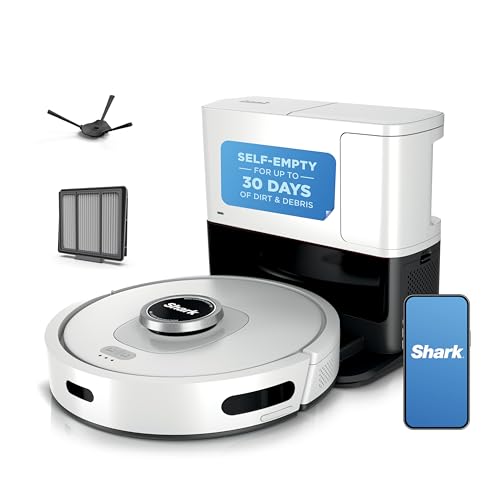
Shark Matrix Clean | Robot Vacuum Cleaner Powerful Suction
- ✓ Powerful suction for deep clean
- ✓ Self-emptying for long-lasting use
- ✓ Advanced navigation and mapping
- ✕ Higher price point
- ✕ Larger footprint at dock
| Suction Power | High suction capable of capturing dirt, debris, and pet hair across all surfaces |
| Battery Runtime | Up to 90 minutes per charge |
| Self-Emptying Capacity | Holds up to 60 days of dirt and debris |
| Navigation Technology | 360° LiDAR mapping with object detection |
| Cleaning Pattern | Precision grid pattern for complete coverage and deep cleaning |
| Connectivity | Voice control via Amazon Alexa and Google Assistant; app control via SharkClean app |
As soon as I unboxed the Shark Matrix Clean, I was struck by its sleek, modern design. The matte black finish with subtle silver accents feels premium, and it’s surprisingly lightweight for a device with such powerful features.
The self-emptying base is chunky but sturdy, giving a reassuring sense of durability.
Firing it up, the robot glided smoothly across my hardwood floors and plush carpets. Its quiet operation surprised me—powerful, yet unobtrusive.
The laser navigation system quickly mapped out my space, and I watched as it methodically covered every inch using its precision grid pattern. It’s almost like watching a tiny, highly efficient cleaner work in a choreographed dance.
The suction power is genuinely impressive. It pulls up pet hair, crumbs, and dirt with ease, even on thick rugs.
The self-cleaning brushroll kept hair from wrapping around, which is a huge time-saver. I also appreciated how smart it is—it detects obstacles, avoids cords, and even adjusts for dark corners, thanks to its 360° LiDAR.
The self-emptying feature is a game-changer. I didn’t have to think about dumping the bin for over a month.
The app controls are intuitive, and I love that I can schedule cleanings or target specific areas just by voice command. It’s like having a tiny, tireless maid that’s always ready to jump in.
Overall, this vacuum isn’t just about convenience—it’s about deep, consistent cleaning with minimal effort. The long runtime and smart navigation make it perfect for busy households, especially with pets.
It’s a solid investment that truly simplifies daily cleaning routines.
What Features Make a Robotic Vacuum Cleaner Self-Docking?
The features that make a robotic vacuum cleaner self-docking are essential for convenience and efficiency in automated cleaning.
- Automatic Navigation: This feature allows the robotic vacuum to navigate around the home and identify the best paths to take for cleaning. Advanced sensors and mapping technology enable the vacuum to recognize obstacles and avoid them, ensuring thorough cleaning without getting stuck.
- Docking Station: The inclusion of a docking station is critical for self-docking functionality. When the battery runs low, the robotic vacuum is programmed to return to the docking station autonomously to recharge, making it ready for the next cleaning cycle without user intervention.
- Smart Home Integration: Many self-docking robotic vacuums can integrate with smart home systems, allowing users to control them via smartphones or voice commands. This connectivity can enhance scheduling and monitoring capabilities, making it easier to manage cleaning tasks remotely.
- Obstacle Detection Sensors: These sensors help the robotic vacuum detect and navigate around furniture and other obstacles. By using infrared or laser technology, the vacuum can adjust its path and avoid collisions, which is essential for successfully returning to its docking station.
- Path Planning Algorithms: Sophisticated algorithms enable the robotic vacuum to plan efficient cleaning routes. This ensures that the vacuum can cover the entire floor area without missing spots while also remembering the location of the docking station to facilitate returning after cleaning.
- Battery Management System: A well-designed battery management system ensures that the robot can efficiently manage its power usage. It helps assess when the battery is low and prompts the vacuum to return to the dock before it runs out of power completely, thus maximizing cleaning time and efficiency.
- Size and Design: The physical design of the robotic vacuum affects its ability to dock effectively. A compact, low-profile design helps the vacuum easily reach the docking station and fit into tight spaces, while also ensuring it can navigate under furniture without obstruction.
How Do Self-Docking Robotic Vacuum Cleaners Enhance Cleaning Efficiency?
Self-docking robotic vacuum cleaners enhance cleaning efficiency through various innovative features:
- Automatic Recharging: These vacuums can autonomously return to their docking stations to recharge, ensuring they are always ready for the next cleaning cycle.
- Smart Mapping Technology: Many self-docking models utilize advanced mapping and navigation systems to efficiently cover an entire area without missing spots.
- Scheduled Cleaning: Users can set cleaning schedules, allowing the vacuum to operate at convenient times, which can be especially beneficial for maintaining cleanliness during busy hours.
- Obstacle Detection: Equipped with sensors, these vacuums can detect and navigate around obstacles, reducing the risk of getting stuck or causing damage to furniture.
- Remote Control and App Integration: Some models come with smartphone apps that enable remote control and monitoring, allowing users to start, stop, or customize cleaning tasks from anywhere.
- Self-Emptying Features: Certain high-end self-docking vacuums include self-emptying capabilities, where the vacuum docks itself and empties its dustbin into a larger container, minimizing maintenance for users.
Automatic Recharging: This feature allows the vacuum to manage its battery life effectively. When the battery runs low, it navigates back to its docking station without user intervention, ensuring that the vacuum is always charged and ready to clean when needed.
Smart Mapping Technology: Self-docking robotic vacuums often come equipped with sophisticated mapping capabilities, allowing them to create a digital map of the home. This technology enables them to plan efficient cleaning paths, optimizing coverage and reducing cleaning time.
Scheduled Cleaning: With scheduling features, users can dictate when they want their home to be cleaned, making it possible for the vacuum to operate during off-hours, such as when the house is empty. This ensures that the cleaning process is seamless and fits into the user’s lifestyle without manual intervention.
Obstacle Detection: Advanced sensors allow self-docking robotic vacuums to detect furniture, stairs, and other obstacles in their path. This capability not only prevents the vacuum from getting stuck but also helps safeguard the surrounding environment from potential collisions and damage.
Remote Control and App Integration: Many models offer the convenience of app connectivity, allowing users to control their vacuum remotely. This feature provides the flexibility to start or stop cleaning sessions, monitor cleaning progress, and even customize settings all from a smartphone.
Self-Emptying Features: High-end self-docking robotic vacuums often come with a self-emptying function, where they automatically transfer debris from their onboard dustbin to a larger container within the docking station. This significantly reduces the frequency of manual emptying, making maintenance easier for the user.
Which Brands Offer the Best Self-Docking Robotic Vacuum Cleaners?
The best self-docking robotic vacuum cleaners are offered by several reputable brands known for their innovative technology and reliability.
- iRobot Roomba: iRobot’s Roomba series is well-known for its self-docking capabilities, with models like the Roomba i7+ and Roomba s9+ featuring advanced navigation and powerful suction.
- Roborock: Roborock’s S7 and S7 MaxV models come with self-docking stations and offer impressive cleaning performance with features like mopping and obstacle avoidance.
- Ecovacs Deebot: The Deebot series, especially the Ozmo T8 AIVI, combines self-docking with smart home integration and advanced mapping technology, making it a versatile choice.
- Eufy by Anker: Eufy’s RoboVac G30 series provides self-docking functionality at a more affordable price point, along with decent suction power and smart navigation.
- Neato Robotics: Neato’s D7 Connected vacuum boasts a unique D-shape design for corner cleaning, along with self-docking features and customizable cleaning modes.
iRobot Roomba: iRobot’s Roomba series is well-known for its self-docking capabilities, with models like the Roomba i7+ and Roomba s9+ featuring advanced navigation and powerful suction. These vacuums can map multiple floors, allowing for efficient cleaning and the ability to be controlled via a mobile app for added convenience.
Roborock: Roborock’s S7 and S7 MaxV models come with self-docking stations and offer impressive cleaning performance with features like mopping and obstacle avoidance. The S7 MaxV includes advanced AI capabilities to recognize and avoid obstacles, enhancing its efficiency and effectiveness in various home environments.
Ecovacs Deebot: The Deebot series, especially the Ozmo T8 AIVI, combines self-docking with smart home integration and advanced mapping technology, making it a versatile choice. It provides both vacuuming and mopping functions, and its ability to recognize objects helps it navigate around furniture and other obstacles seamlessly.
Eufy by Anker: Eufy’s RoboVac G30 series provides self-docking functionality at a more affordable price point, along with decent suction power and smart navigation. It features a slim design, enabling it to clean under furniture easily, which is a bonus for maintaining cleanliness in low-clearance areas.
Neato Robotics: Neato’s D7 Connected vacuum boasts a unique D-shape design for corner cleaning, along with self-docking features and customizable cleaning modes. Its powerful suction and large dustbin capacity make it suitable for homes with pets and high traffic areas, ensuring thorough cleaning sessions.
How Do Self-Docking Models Compare in Terms of Performance and User Satisfaction?
| Model | Performance | User Satisfaction | Pricing | Battery Life | Noise Level | Maintenance |
|---|---|---|---|---|---|---|
| Model A | High suction power and efficient navigation. | Users report high satisfaction with features and reliability. | $400 | 120 minutes | 60 dB | Regular filter and brush cleaning required. |
| Model B | Moderate performance, suitable for small spaces. | Mixed reviews, some users find it lacking in features. | $250 | 90 minutes | 65 dB | Occasional brush replacement needed. |
| Model C | Advanced mapping technology, excels in larger areas. | Highly rated for ease of use and performance. | $600 | 150 minutes | 55 dB | Minimal maintenance, easy-to-clean dustbin. |
What Are the Common Advantages of Using a Self-Docking Robotic Vacuum Cleaner?
The common advantages of using a self-docking robotic vacuum cleaner include convenience, efficiency, and advanced technology integration.
- Convenience: Self-docking robotic vacuum cleaners can return to their charging stations autonomously when their battery is low, ensuring they are always ready for the next cleaning cycle without human intervention.
- Time-saving: These devices can be programmed to clean on a schedule, allowing homeowners to save time by not having to manually vacuum their floors, which is especially beneficial for busy lifestyles.
- Efficient Cleaning: Equipped with smart navigation systems, self-docking vacuums can systematically cover an area, avoiding obstacles and reducing the chances of missing spots, resulting in a thorough cleaning experience.
- Advanced Technology Features: Many models come with features like app control, voice commands, and integration with smart home systems, allowing users to control and monitor their cleaning tasks remotely.
- Space-Saving Design: Their compact and low-profile design allows them to clean under furniture and in tight spaces, making them effective for maintaining cleanliness in areas that are hard to reach with traditional vacuums.
- Improved Cleaning Performance: Self-docking models often include advanced suction technology and filtration systems that enhance their ability to pick up dust, pet hair, and allergens, contributing to a healthier home environment.
What Drawbacks Should You Consider Before Purchasing a Self-Docking Robotic Vacuum Cleaner?
Before purchasing a self-docking robotic vacuum cleaner, it’s important to consider potential drawbacks:
- Cost: Self-docking robotic vacuum cleaners tend to be more expensive than traditional vacuums or even basic robotic models. The advanced technology and features that allow for self-docking and recharging contribute to a higher price point, which might not fit every budget.
- Maintenance: While these vacuums are designed to be low-maintenance, they still require regular upkeep. This includes cleaning the dustbin, changing filters, and occasionally checking for tangled hair or debris in the brushes, which can be time-consuming.
- Navigation Issues: Some models may struggle with navigating complex floor plans or avoiding obstacles effectively. If your home has many furniture pieces or carpets, the vacuum might miss spots or get stuck, leading to less efficient cleaning.
- Battery Life: Although self-docking vacuums recharge automatically, their battery life can be limited, especially in larger homes. If the battery runs low during a cleaning session, it may not be able to complete the job before needing to dock, which can lead to inconsistent cleaning results.
- Noise Levels: Many self-docking robotic vacuums operate at higher noise levels than traditional vacuums. This can be disruptive, especially if you are home during cleaning times or if you have pets that are sensitive to noise.
- Limited Suction Power: Compared to conventional vacuums, some self-docking models may have less powerful suction. This can make them less effective on deep carpets or in homes with significant dirt and debris buildup.
- Smart Technology Dependence: Many self-docking robotic vacuums rely on smart technology for optimal performance. If your Wi-Fi connection is unstable or the vacuum requires app updates, it may hinder its functionality, leading to frustration.
How Much Can You Expect to Invest in a Quality Self-Docking Robotic Vacuum Cleaner?
The expected investment in a quality self-docking robotic vacuum cleaner can vary widely based on features and brand.
- Budget Models ($150 – $300): These robotic vacuums typically offer basic cleaning functions and may lack advanced features like mapping or app control.
- Mid-Range Models ($300 – $600): Mid-range options often include better suction power, smart navigation, and scheduling features, making them more efficient for regular cleaning.
- High-End Models ($600 – $1,200+): Premium robotic vacuums come equipped with advanced technology such as obstacle avoidance, mapping capabilities, and integration with smart home systems, providing a comprehensive cleaning experience.
Budget models are ideal for those looking to try robotic vacuuming without a significant financial commitment. While they may not have the latest technology or features, they can still perform basic cleaning tasks effectively.
Mid-range models strike a balance between affordability and functionality, often featuring smart navigation and enhanced suction. These vacuums are better suited for homes with pets or larger areas needing regular maintenance.
High-end models represent the pinnacle of robotic vacuum technology, offering the most innovative features and the best performance. They often include capabilities like self-emptying dustbins, detailed mapping for efficient cleaning routes, and the ability to be controlled via smartphone apps, making them worth the investment for tech-savvy users or larger households.
Related Post: